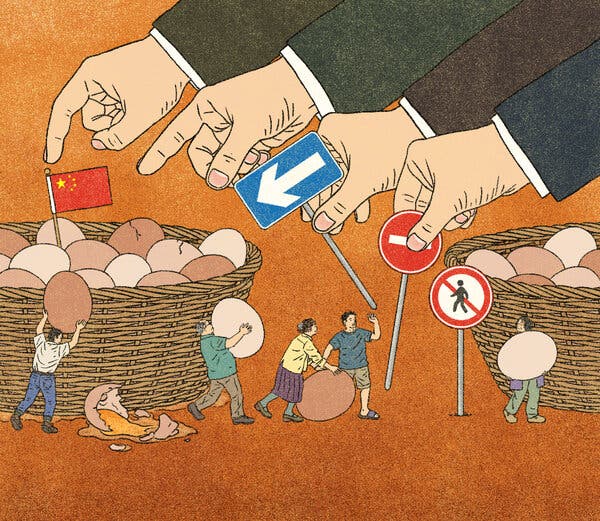
China has historically maintained barriers between its citizens and the outside world, such as the Great Firewall and travel restrictions. However, financial freedom remained, allowing families to accumulate and diversify wealth.
This financial freedom is now being restricted. Chinese citizens have increasingly invested in overseas securities, particularly in the U.S. stock market. Recently, Beijing decided to close informal investment channels, instructing Hong Kong and Singapore-based brokerages serving mainland clients to wind down their accounts within two years. New regulations now cover individual overseas investments, threatening to seize ‘illegal gains,’ though this term remains vague.
In Hong Kong, a traditional hub for overseas investments, banks and brokerages have imposed stricter account-opening requirements. Some firms have allowed only the sale, but not the purchase, of U.S. stocks to mainland clients. Additionally, the Chinese social media platform RedNote has cracked down on posts explaining how to open U.S. stock trading accounts.
Beijing aims to use private wealth to support its state-led efforts for technological self-reliance and national rejuvenation. Xi Jinping emphasized that financial freedom must align with national security, cautioning against risks from opening up and from geopolitical adversaries’ actions.
Geopolitical tensions also limit Chinese investors’ options. Recently, SpaceX excluded Chinese investors from its initial public offering amid U.S.-China rivalry. China’s financial barriers emerge precisely when its citizens seek better investment opportunities abroad.
 Google Fined for Breaching EU Privacy Rules
  South China Sea Tensions Rise after Collision between Chinese and Philippine Ships
  North Korea’s Hypersonic Weapon Test Amid Global Tensions
  Austin Tice: A Search for Answers
 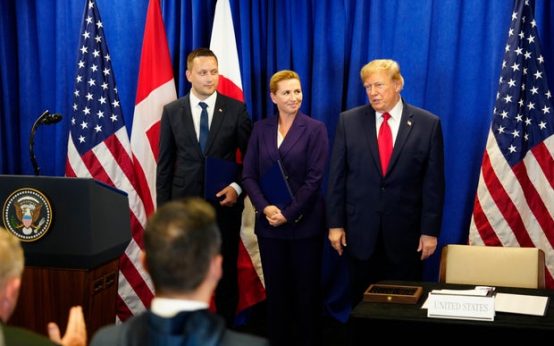 U.S., Denmark, and Greenland Forge New Security Agreement
 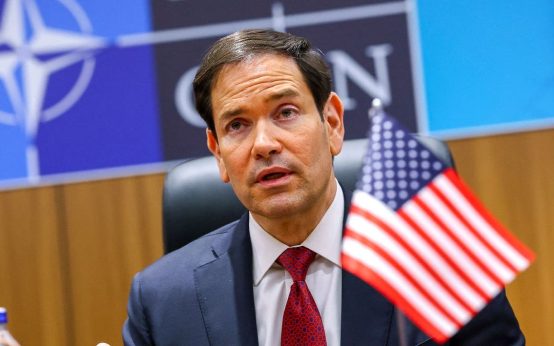 Secretary Rubio Discusses Middle East Conflict and NATO Relations