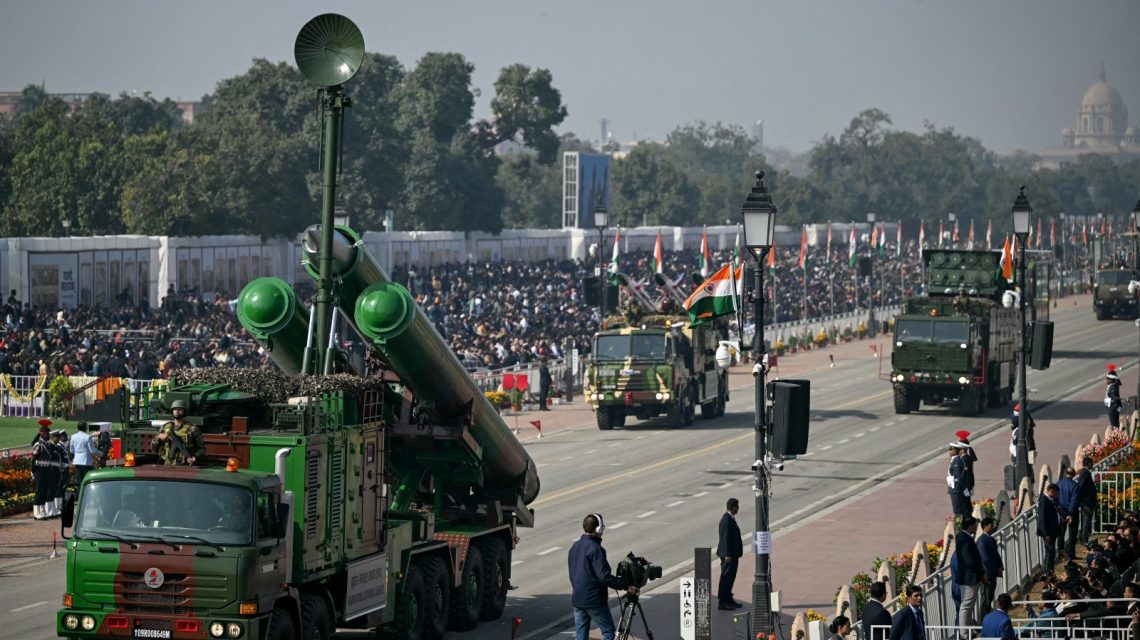
Vietnam plans to become the second foreign purchaser of India’s BrahMos cruise missile. Analysts suggest this move highlights a significant regional security concern. Warmer relations with Beijing have not mitigated fears about China’s growing military prowess.
Deal Confirmation
The deal, previously speculated but unconfirmed, was acknowledged by Indian Defense Secretary Rajesh Kumar Singh on May 30 during the Shangri-La Dialogue security summit in Singapore. Singh also mentioned that a similar agreement with Indonesia is nearing finalization.
China remains Vietnam’s largest trade partner, and the countries have worked to strengthen ties recently. However, Vietnam stays cautious about China’s military capabilities and its intentions in the South China Sea.
India’s Strategic Efforts
This deal signifies another advancement in India’s strategy to bolster defense ties across Southeast Asia, aligning with its “Act East” policy. Newsweek contacted the Chinese Embassy in Hanoi and Vietnam’s Foreign Ministry for comments.
Features of BrahMos
The BrahMos missile is co-developed by India and Russia and is regarded as the fastest operational cruise missile available. It has an export version range of approximately 180 miles and speeds nearly three times the sound, complicating interception.
Vietnam plans to acquire a shore-based version, enhancing its capability to target threatening naval vessels near its coast. Commodore (Ret.) Seshadri Vasan highlighted the missile’s speed, stealth, and precision in an interview with Sputnik news agency.
Prior Implementation
The Philippines was the first to operate the BrahMos system, receiving initial components and missiles in 2024. The U.S.-aligned nation is undergoing a $35 billion military upgrade, partly due to territorial disputes with China in the South China Sea.
Persistent Disputes
Vietnam has long-standing territorial disagreements with China, such as those over the Paracel Islands and the Gulf of Tonkin. While these disputes are generally less visible than those involving the Philippines, they continue to cause friction.
Vietnam aims to balance its economic interactions with China against enhanced security partnerships with other countries like the U.S., India, Japan, and Australia. Huong Le-Thu from the International Crisis Group emphasized Vietnam’s ongoing commitment to diversifying defense partnerships despite improved ties with China.
Strategic Context
China’s People’s Liberation Army maintains a larger and more sophisticated military force. Many technologies used in the BrahMos are familiar to Chinese defense planners, which suggests the missile is not designed to shift the regional power significantly.
India’s Regional Strategy
This agreement solidifies New Delhi’s “Act East” approach, enhancing ties within East and Southeast Asia while countering China’s influence in the Indo-Pacific. India also aims to deepen its involvement with the Quad, a strategic alliance including the U.S., Japan, and Australia.
Vietnam and India value strategic independence and avoid formal alliances with major powers. Although closer ties with India are beneficial, Vietnam recognizes that it cannot fully replace the U.S.’s regional security role.
 Ireland Faces Calls to Boycott Matches Against Israel
  Social Media Influencer Faces Serious Charges
  U.S. Military Expansion in Greenland
  The Autocratic Age: A Closer Look
  Venezuelan Migrant Arrest in Texas Sparks Outrage
  Senator Calls for Halt in Diesel Exports Amid Rising Fuel Costs