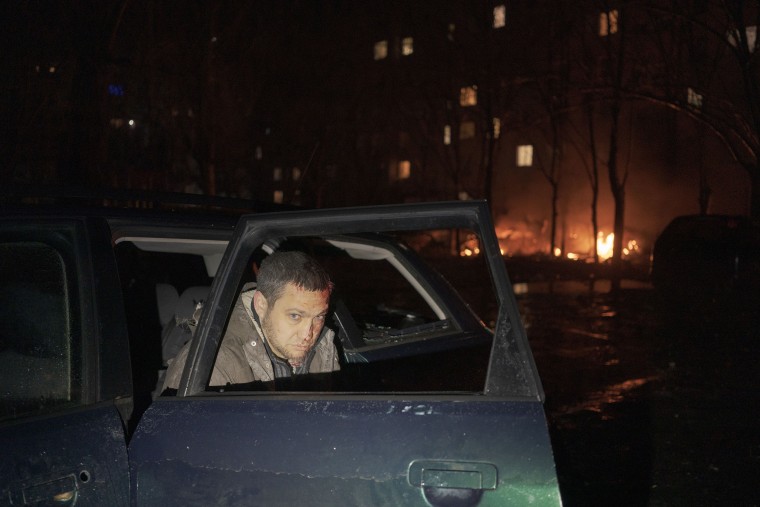
Donald Trump, known for his penchant for deadlines, has utilized this approach in efforts to resolve some of the world’s prolonged conflicts since assuming office. In the past year, the president has employed firm timelines as a strategy to encourage either peace-building or at least some progress in entrenched disputes.
Among his tactics, Trump set specific deadlines for Hamas to respond to U.S.-backed peace plans in Gaza. Additionally, he demanded a two-month cutoff for Iran to agree to a new nuclear deal and proposed several potential deadlines for a resolution between Ukraine and Russia.
According to Ukrainian President Volodymyr Zelenskyy, Trump has established yet another deadline: an agreement to end the nearly four-year-long war should be reached by June. Zelenskyy stated to journalists, “The Americans aim for a resolution by the beginning of this summer and will likely exert pressure on the involved parties based on this timeline.” He further added, “They want everything aligned by June and are determined to bring an end to the conflict.”
Neither the White House nor Moscow has defiantly confirmed the June target, and there was no immediate response from the White House to inquiries made by NBC News regarding this matter.
However, experts caution that mere deadlines may not be enough to alter the core dynamics of a war that is ready to enter its fifth year. Previous peace negotiations have frequently stalled over unresolved fundamental issues.
There have been multiple instances where Trump has specified timelines during the Ukraine conflict. During his campaign, he boldly vowed to conclude the conflict within 24 hours of taking office—a promise he later described as more aspirational than literal. Trump’s special envoy to Ukraine, Keith Kellogg, suggested an agreement could emerge within 100 days of Trump’s inauguration, a scenario that did not materialize.
Over time, Trump proposed several informal deadlines, such as fixed windows for Moscow to partake in discussions and publicized timeframes for reaching a resolution. However, these attempts have not resulted in sustainable ceasefires or agreements. A deadline from August the previous year also lapsed without achieving peace, as did aspirations of reaching a pact by Thanksgiving. In December, Trump announced that a draft agreement to end the war was “close to 95% done.”
Last month, Ukraine, Russia, and the U.S. engaged in their inaugural trilateral negotiations focusing on a peace settlement, with additional discussions slated to occur in the U.S. shortly, according to Zelenskyy.
While officials have labeled these talks as constructive, substantial challenges remain. Foremost among these is the status of territory in eastern Ukraine, where Moscow remains steadfast in its demands. The Kremlin specified that Kyiv’s military must withdraw from regions still partially controlled by Ukrainian forces as a condition for any peace agreement, a stipulation Kyiv staunchly rejects.
Senior fellow Moritz Brake, affiliated with the Center for Advanced Security, Strategic and Integration Studies, speculated that a resolution might emerge if one side collapses under pressure. “Both sides are likely banking on different objectives in this aspect,” he explained during an NBC News interview, with Ukraine possibly seeking leverage in the “fragmentation of Russia’s war efforts,” whereas Russia anticipates forcing Ukraine to surrender on the battlefield.
Michael Bociurkiw, a nonresident senior fellow at the Atlantic Council’s Eurasia Center, echoed concerns over time constraints. He noted, “Time is not on Ukraine’s side. Zelenskyy is in a tight spot, with territory being the main issue. He cannot yield even slightly on this matter, given the sacrifices made.”
Bociurkiw predicts that failing to reach the June timeline could lead to U.S. pressure on both parties, potentially disadvantaging Ukraine. He pointed out, “If Trump applies pressure on Kyiv and Moscow, Ukraine might end up at a disadvantage.” Furthermore, attempts to turn the war in Ukraine’s favor, such as acquiring higher-powered and longer-range missiles, could be suddenly thwarted by a conversation between Trump and Putin.
Keir Giles, a senior consulting fellow at Chatham House, reciprocated Bociurkiw’s thoughts. He observed that while the Trump administration hesitated to pressure Russia significantly, it remained equipped to exert influence on Ukraine. “Two possibilities could end the war,” he stated. “Either Ukraine decides it must capitulate as life becomes impossible in its cities, or significant pressure is applied on Russia to conclude the conflict, even if it results in a ceasefire solidifying Russia’s current areas of control.”
Winter exacerbates the situation for Ukraine’s civilians, suffering from extended periods without energy or heat due to Russian attacks on infrastructure. Over the past weekend, nuclear power plants had to reduce operations following strikes, reported Ukrainian energy company DTEK via X, with Zelenskyy noting the launch of over 400 drones and approximately 40 missiles overnight.
Despite political maneuvers and negotiations, the human toll continues as lives are lost, and conditions on the ground remain largely unchanged. Bociurkiw emphasized, “I do not foresee an end to this war by summer. Ukraine endures severe hardship, particularly among civilians, and a resolution appears unlikely without some form of miracle.”
Author: Freddie Clayton, a freelance journalist based in London.
 U.S.-Iran Relations: Rising Tensions and Diplomatic Maneuvers
  Olympic Biathlon Drama: Scandals and Medals
  Tragic Week in Italy’s Mountains: Avalanches Claim Multiple Lives
  Love Letters Reveal an Intimate World War II Romance
  Investigative Efforts Continue in Nancy Guthrie’s Disappearance
  Prince William’s Stance on Prince Andrew and Epstein Scandal