
BANGKOK — Thailand’s political scene experienced a significant shift on Monday as Prime Minister Anutin Charnvirakul’s Bhumjaithai Party secured an unexpected victory in the general election. As the dust settles, coalition discussions are set to commence shortly.
According to Reuters’ calculations, which are based on election commission data, Bhumjaithai captured 192 of the 500 available seats in Thailand’s parliament, with 94% of votes tallied. This strong performance placed them well ahead of competitors after Sunday’s election.
In contrast, the progressive People’s Party, which had consistently ranked high in pre-election polls, found itself behind with 117 seats. Meanwhile, the Pheu Thai party, previously holding significant influence, landed in third place with 74 seats.
Additionally, several smaller parties collectively secured 117 seats in the 500-seat parliament. However, due to the country’s proportional electoral system, the exact number of party-list seats remains subject to change.
Bhumjaithai’s success can be attributed to receiving 30.2% of the votes, thereby consolidating the conservative base amidst a surge of nationalism. This shift resulted in Bhumjaithai winning many seats formerly dominated by the Pheu Thai party, associated with the affluent Shinawatra family.
Addressing coalition-building and cabinet formation, Anutin expressed the need for clarity on final numbers, indicating ongoing internal party discussions on future strategies. He has also intimated that, if re-elected, the current ministers of finance, foreign affairs, and commerce would continue their roles in his cabinet.
The prime minister originally called for this election merely months after taking office, leveraging a surge in nationalist sentiment following Thailand’s brief three-week skirmish with Cambodia. Anutin hailed the election outcome as “a victory for all Thais.”
However, the People’s Party has declined any prospect of forming a coalition with Anutin’s leadership. The party’s leader, Natthaphong Rueangpanyawut, affirmed on Sunday night that they wouldn’t attempt to lead an opposing coalition. The People’s Party held the lead over Bhumjaithai in January, according to polls.
In addition to these political developments, voters overwhelmingly supported a constitutional change proposal, with nearly two-thirds desiring to replace the charter established after the 2014 military coup. Critics argue that the existing constitution grants excessive power to an unelected senate.
Implementing the new constitution is expected to be a protracted process, potentially taking at least two years. This timeline involves conducting an additional two referendums to ratify both the drafting procedure and the final document.
 Increased Interest in Gun Ownership Following Controversial Federal Actions
  Bipartisan Bill Seeks to Insulate Consumers from Data Center Power Costs
  Michigan Democratic Senate Candidates Debate Corporate PAC Contributions Amid Labor Forum
  Senator Mitch McConnell Returns Home After Hospitalization
  Former Deputy to Ex-Special Counsel Jack Smith Announces Congressional Run in Virginia
 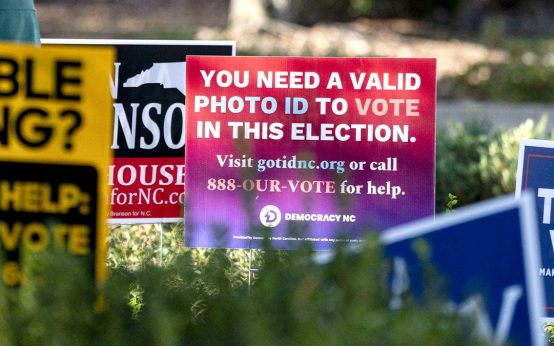 House of Representatives Prepares for Vote on Federal Voter ID Legislation