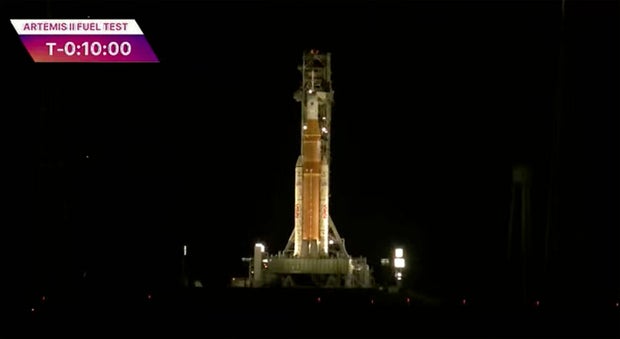
On February 3, 2026, NASA experienced setbacks during a crucial countdown rehearsal for the Artemis II moon mission. The exercise, intended to prepare for a potential February launch, was halted due to a significant hydrogen leak. As a result, NASA officials announced that the mission’s launch, which aims to send a crew of four astronauts around the moon, is now expected to occur in March at the earliest.
Jared Isaacman, NASA Administrator, stated on X, “With the conclusion of the wet dress rehearsal today, we are moving off the February launch window and targeting March for the earliest possible launch of Artemis II.” He emphasized the importance of these tests, saying, “We fully anticipated encountering challenges. This is precisely why we conduct a wet dress rehearsal. These tests are meant to identify issues before flight, ensuring a successful launch day.”
The Artemis II crew consists of Commander Reid Wiseman, Victor Glover, Christina Koch, and Canadian astronaut Jeremy Hansen. Initially, they were scheduled to travel to Florida to finalize launch preparations but will now remain at the Johnson Space Center in Houston. They will spend time with their families and continue their pre-flight quarantine.
“These tests are designed to surface issues before flight and set up launch day with the highest probability of success.” — Jared Isaacman
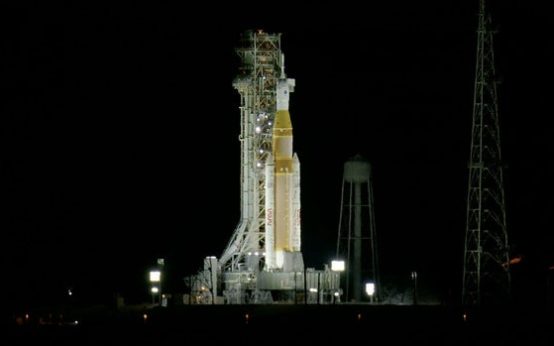
The planned rehearsal, which started on a delayed schedule due to cold weather on Florida’s Space Coast, faced multiple challenges. On Monday, after confirming the readiness of both weather conditions and the launch team, Launch Director Charlie Blackwell-Thompson authorized the remote-controlled fueling process. The NASA Space Launch System (SLS) rocket stood on pad 39B at Kennedy Space Center, prepared to undergo this critical test.
The start of the operation was delayed by 45 minutes but progressed smoothly for some time. Engineers began loading the SLS first stage tanks with supercold liquid oxygen and hydrogen, followed by the rocket’s upper stage. However, a problem arose when a hydrogen leak was detected in an umbilical plate connecting a fuel line to the rocket’s base, halting operations twice, with the tank only 77% full at the final pause.
In efforts to resolve the issue, engineers allowed the interface to warm up, expecting the seals to reseat, and then adjusted the propellant flow. Despite reaching “stable replenish” with full tanks, additional issues, such as communication dropouts, prolonged the countdown. Originally set for a simulated launch at 9 p.m. EST, the countdown extended late into the night. Ultimately, a significant increase in the earlier hydrogen leak prompted an abort at T-minus five minutes and 15 seconds.
Post-test analysis will be conducted to address the problems faced during the wet dress rehearsal (WDR), and necessary repairs will be implemented. Isaacman mentioned, “The team will fully review the data, troubleshoot each issue encountered during WDR, make the necessary repairs, and return to testing. We expect to conduct an additional wet dress rehearsal and then target the March window,” with five potential launch dates available from March 6 to March 11.
The SLS rocket, intended for future Artemis moon missions, is the world’s most powerful operational launcher, standing at 332 feet tall. It utilizes two strap-on solid fuel boosters and four main engines burning liquid oxygen and hydrogen fuel, generating a thrust of 8.8 million pounds at liftoff. The rocket’s inaugural mission in 2022 faced challenges, such as fuel leaks and propellant flow issues, leading to extended delays. However, numerous upgrades and improvements have been completed since then.
Launch Director Blackwell-Thompson expressed optimism prior to the recent test: “Why do we think that we’ll be successful? It’s the lessons that we learned.” She elaborated on the insights gained from the Artemis I test flight, which informed the strategies for preparing and loading the Artemis II vehicle.
While the latest rehearsal encountered setbacks, including leakage at the tail service mast umbilical, NASA remains determined to rectify the issues and ensure a successful March launch.
 Impacts of Recent Solar Flares on Northern Lights and Communication
  NASA’s Artemis II Moon Mission and Upcoming Space Ventures