When former FBI agent Katherine Schweit learned of Nancy Guthrie’s disappearance, memories of a case from rural Wisconsin over two decades ago came to mind. In February 2003, an 88-year-old grandmother was kidnapped from her home, placed in the trunk of her car, and taken to the abductor’s property where she was chained inside a trailer. Her grandson, who owned a construction company, began receiving ransom demands for her release.
With Schweit’s involvement in the investigation, they apprehended the suspect and rescued the woman five days after her ordeal began. However, Schweit noted differences in the Guthrie case. “If someone were abducting for ransom, they would initially communicate with the family to secure the cash and return the victim,” she remarked.
This remains a puzzling aspect for investigators, experts, and the public following this high-profile case. Even recent home surveillance footage doesn’t clarify the motivation behind Guthrie’s disappearance.
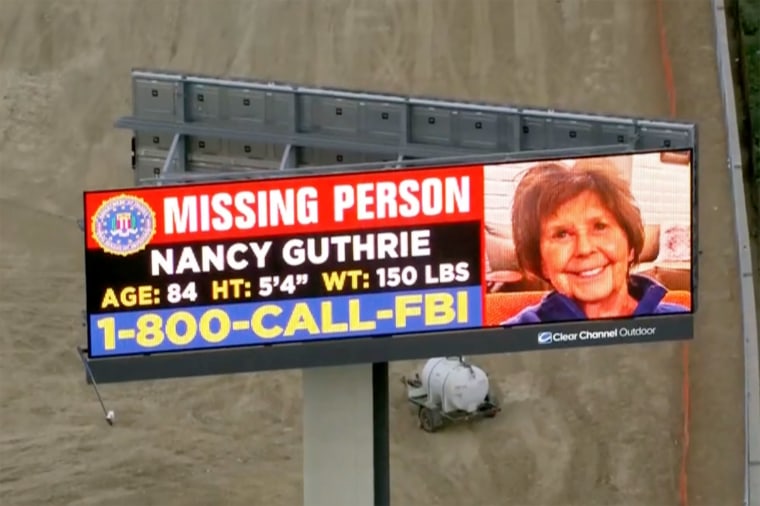
The 84-year-old mother of NBC’s ‘TODAY’ show co-anchor Savannah Guthrie vanished near Tucson, Arizona, after family dropped her home on January 31. Eleven days later, her abductors remain unidentified.
The FBI recently released surveillance images showing a person in a ski mask and gloves, appearing to carry a handgun. This person approached the house cautiously, seemingly to evade the camera. Former NYPD detective and current adjunct professor, Michael Alcazar, believes these images could generate valuable tips to identify the individual.
Abductions of adults are unusual in the U.S., particularly those not involving familiar or criminal disputes. Chip Massey, a former FBI hostage negotiator, likens the situation to the infamous 1932 Lindbergh baby kidnapping.
Despite a potential ransom note sent to media outlets, the initial note lacked specific communication methods. Another note, different from the first, was received by a local TV station without demand for ransom.
Massey highlights the communication void complicating law enforcement efforts. “Without direct communication, my skills are limited,” he said. Written messages can mislead investigators, making identification difficult.
The authorities disclosed that Guthrie’s blood was found on her porch and, given her mobility challenges, her need for daily medication is critical. Retired agent Jim Cavanaugh expressed skepticism about the ransom’s authenticity, noting a Google search shows Guthrie’s Apple Watch in public pictures, potentially misleading the investigation.
Cavanaugh further explains Tucson’s proximity to cartel activity along the border, yet doubts cartel involvement as Guthrie isn’t a typical target. He speculates a local criminal could be responsible but didn’t anticipate the national attention, complicating the situation. They could have backed out, but questions remain: why wasn’t Guthrie released, and where is she now?
Another angle investigators consider is a mistaken identity that led to complications. Alternatively, it might not be ransom-related, but a person harboring a personal grudge.
Schweit underscores the geographical challenges near Guthrie’s home, making it easy for an abductor to leave undetected. In this remote area of Tucson, homes are dispersed across desert landscapes, complicating law enforcement efforts. Without eyewitness accounts or more footage, investigators must analyze distant camera recordings searching for clues.
The FBI’s behavioral analysis teams in Quantico are examining extensive data, hoping to find connections leading to the suspect. Schweit notes, “It’s not a straight path, unlike what movies suggest. The FBI, however, is adept in conducting intricate investigations. She’s out there, and they will find her. The goal is to do so swiftly.”