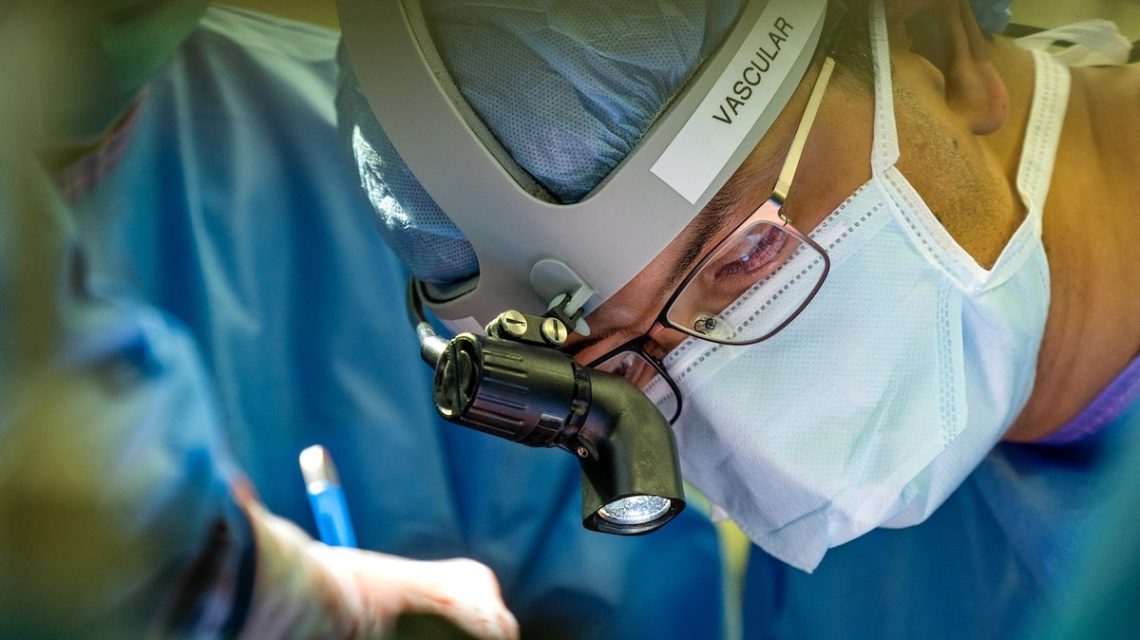
Surgeons at Northwestern Medicine in Chicago recently achieved a medical breakthrough by keeping a critically ill patient alive for 48 hours following the removal of both his lungs. The patient, a 33-year-old man from Missouri, was initially flown to Northwestern Memorial Hospital after suffering lung failure due to a flu infection in the spring of 2023. His condition worsened, leading to severe pneumonia and sepsis, ultimately causing his heart to stop, prompting the medical team to administer CPR.
Dr. Ankit Bharat, head of thoracic surgery and the executive director of the Northwestern Medicine Canning Thoracic Institute, explained the dire situation: The infection had rendered his lungs untreatable by any antibiotics due to extreme resistance, causing them to liquefy and continue spreading.
To prevent this, the lungs were removed, but doing so posed a significant risk of immediate heart failure.
The lungs serve as a crucial shock absorber for the heart. Without them, the heart has to pump against heightened resistance, which can cause it to fail quickly. Furthermore, a lack of blood flow from the lungs to the left heart can lead to chamber collapse or deadly clots.
While the patient was on life support, the medical team developed a total artificial lung system (TAL). This system performed crucial functions such as gas exchange and maintaining blood flow to the heart to keep the patient alive post-lung removal. Dr. Bharat noted, We preserved the natural physiology of the heart, allowing it to regulate blood flow with a ‘flow-adaptive’ design instead of relying on a machine.
Remarkably, within a day of the lungs’ removal, the patient’s condition started to improve due to the elimination of the infection.
After 48 hours, the patient was sufficiently stable for a double-lung transplant. Now, two years on, he has returned to his everyday life. Dr. Bharat confirmed, The patient is thriving, with excellent lung function, intact heart function, and complete independence.
This success marks the first application of such a system, which includes a self-regulating shunt that mimics lung physics and uses dual return tubes to maintain normal blood flow through the heart’s left chambers.
A recent case study, published in the journal Med, disclosed a molecular analysis of the removed lungs, revealing extensive scarring and damage. These findings imply that in extreme cases of acute respiratory distress syndrome, transplantation may be the only effective solution. The TAL system offers hope for patients awaiting lung transplants, particularly those with severe acute respiratory distress syndrome combined with necrotizing pneumonia or septic shock.
Dr. Bharat emphasized the potential of the TAL system, stating, With over 80% mortality among infected patients turned down for transplants, this technology enables us to stabilize and successfully bridge them to transplantation.
Future plans include developing durable, implantable artificial lungs for long-term use, not just as a temporary bridge to transplantation.
Melissa Rudy is the senior health editor at Fox News Digital. For tips, you can reach her at [email protected].
 Highlights of February 2026: From Health Mysteries to Fitness Wonders
  The Health Implications of Low-Fat vs. Low-Carb Diets on Heart Disease
  Medicaid Work Requirements and Their Impact on Vulnerable Populations
  The New York Times Rethinks Its Stance on Marijuana Legalization
  Tennessee Hospital Faces Flood Challenges: New Location Unveiled
  Exclusive GMA Viewer Discounts on Popular Brands