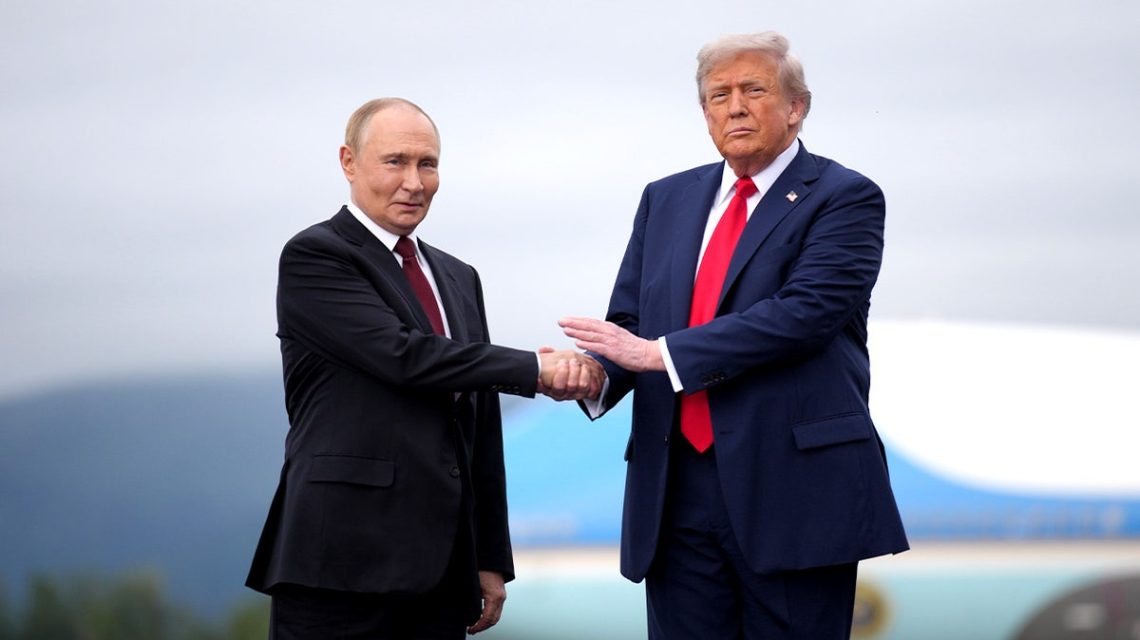
The expiration of an historic nuclear arms reduction agreement brings a critical shift in global nuclear policy, ending a period where the United States and Russia have been subject to binding limits on their nuclear weapons arsenals. The absence of this framework introduces a novel environment not encountered in over fifty years, where there is no regime of inspection to monitor future developments in either nation’s nuclear capabilities.
Rethinking Nuclear Strategy
According to Matt Korda, Associate Director of the Nuclear Information Project at the Federation of American Scientists, the ending of the New START treaty necessitates a reassessment of nuclear strategies that have been in place for over a decade. He explains, “Both countries have long relied on the assumption that the other would abide by central limits, guiding their nuclear modernization efforts. Without these limits, both the United States and Russia will need to adapt their programs to suit a more unpredictable nuclear future.”
Russia’s Suspension and Lack of Engagement with China
Russia had already halted its participation in New START back in 2023, ceasing inspections and data-sharing activities. However, the treaty’s formal expiration further dissolves legal boundaries that controlled the sizes of the world’s largest nuclear arsenals. Without any subsequent agreements, the current U.S. administration has underscored the necessity of involving China in any future arms control discussions due to its expanding nuclear stockpile. Secretary of State Marco Rubio stated, “For effective arms control in the 21st century, it’s essential to involve China, considering their rapid nuclear expansion.”
Nonetheless, experts remain skeptical about China’s willingness to limit its arsenals, as its stockpile is expected to reach 1,000 warheads by 2030, which is still far behind the U.S. and Russia, each possessing approximately 4,000 warheads.
Current Global Nuclear Landscape
Globally, there has been a reduction in nuclear arms, with stockpiles decreasing to around 12,000 from over 70,000 at the end of 1986. While Russia proposed extending New START by a year, Korda views this as recognition of shared limitations rather than a shift in Russian strategy. He remarked, “It’s not in Russia’s interest to spur an arms race when they’re embroiled in current modernization challenges and focused on military needs in Ukraine.”
Without inspections and data exchanges, nations will heavily rely on their intelligence capabilities, leading to increasing uncertainties and prompting preparations for worst-case scenarios, Korda adds. “Countries must now depend on national means to monitor each other’s nuclear forces,” he explained.
The Prospect of Nuclear Expansion
Critically, the immediate concern lies not in the expansion of new nuclear weapons but in the potential rapid deployment of existing warheads. Ankit Panda of the Carnegie Endowment for International Peace highlights that Russia could quickly enhance its capability by adding more warheads to current missile systems, a process known as “uploading.” Panda comments, “The Russians could potentially act faster in deploying additional warheads compared to the United States.”
Korda acknowledges that a full-scale “upload” could take around two years, involving substantial financial investments. “In a dire scenario, it could nearly double the size of their active arsenals,” he stated. However, long-standing industrial limitations pose significant challenges to maintaining an expanded nuclear force, particularly for the U.S., which currently lacks the production infrastructure of its Cold War era.
Constraints and Future Concerns
Nicole Grajewski at the Carnegie Endowment for International Peace points out that while Russia might surpass the U.S. in warhead production, it faces constraints in missile and delivery system production. As the conflict in Ukraine continues, resources are diverted towards conventional weaponry, thereby limiting the expansion of comprehensive delivery mechanisms crucial under New START’s scope.
Grajewski expressed concern over less conventional nuclear advancements that bypass existing treaty frameworks, such as Russia’s development of capabilities like the Poseidon nuclear-powered torpedo.
Future Directions for Arms Control
Former President Donald Trump had previously advocated for arms control involving Russia and China but also hinted at resuming U.S. nuclear testing if other nations progressed in their testing activities. In October, he instructed the Department of Defense to initiate a nuclear testing program, emphasizing, “Given other nations’ testing, I’ve ordered that we begin to equalize our testing efforts.”
 Increased Interest in Gun Ownership Following Controversial Federal Actions
  Bipartisan Bill Seeks to Insulate Consumers from Data Center Power Costs
  Michigan Democratic Senate Candidates Debate Corporate PAC Contributions Amid Labor Forum
  Senator Mitch McConnell Returns Home After Hospitalization
  Former Deputy to Ex-Special Counsel Jack Smith Announces Congressional Run in Virginia
  U.S.-Iran Relations: Rising Tensions and Diplomatic Maneuvers