The New START Treaty, the last standing agreement between the United States and Russia aimed at limiting the number of deployable nuclear weapons, is set to expire on Thursday. This prospect signals the conclusion of over five decades of strategic arms control pacts between two nations that possess the largest nuclear arsenals globally.
Established in 2010, the New START Treaty restricted each country to a maximum of 1,550 deployed strategic nuclear weapons. It also mandated thorough on-site inspections and notifications to verify compliance. Nevertheless, since the outset of the Ukraine conflict, Russia has ceased providing necessary notifications and suspended inspections. Yet, according to the State Department’s recent report, Russia is thought to have stayed within the agreed limits.
In 2021, then-President Joe Biden brokered a five-year extension of the treaty, though further extensions are not permitted. Earlier this year, President Donald Trump remarked to The New York Times that the treaty’s expiration is inevitable if no new agreement is reached. A White House representative has indicated that decisions about future nuclear arms control measures will be determined in due course. The president has expressed interest in maintaining nuclear limitations and involving China in forthcoming negotiations.
Secretary of State Marco Rubio highlighted the challenge of excluding China from negotiations due to its rapidly expanding nuclear arsenal, which is predicted to surpass 1,000 weapons by 2035, escalating from around 200 in 2019 as per Pentagon estimates. The current treaty is exclusively bilateral between the U.S. and Russia, whose arsenals contain approximately 4,300 and 3,700 nuclear warheads, respectively, based on data from the Federation of American Scientists.
Russian President Vladimir Putin proposed that both countries adhere to the current treaty conditions for an additional year without drafting a new agreement. Former Under Secretary of State for Arms Control, Rose Gottemoeller, endorsed this suggestion as a feasible option, emphasizing that it provides an opportunity to stabilize strategic relations with Russia and oversee nuclear weapons negotiations.
However, former U.S. officials such as Retired Adm. Charles Richard and Tim Morrison have voiced concerns that the treaty fails to address important issues, particularly ignoring China’s arsenal and excluding non-strategic nuclear weapons like tactical ones. Despite these shortcomings, Gottemoeller conveyed the necessity of having some agreement over none, stating that facing both China’s expansion and Russia’s potential aggression without a guiding framework would not serve U.S. interests.
With the treaty nearing expiration, there is worry that other nations might pursue their nuclear ambitions, a situation Morrison underscored as a heightened proliferation risk. He also highlighted the aging U.S. nuclear stockpile, stressing the need for significant investment to maintain credible deterrence capabilities.
The reliability of arms control treaties depends on the ability to respond decisively to violations, Morrison explained, noting that by 2035, every U.S. nuclear weapon will have outlived its intended design lifespan by three decades.
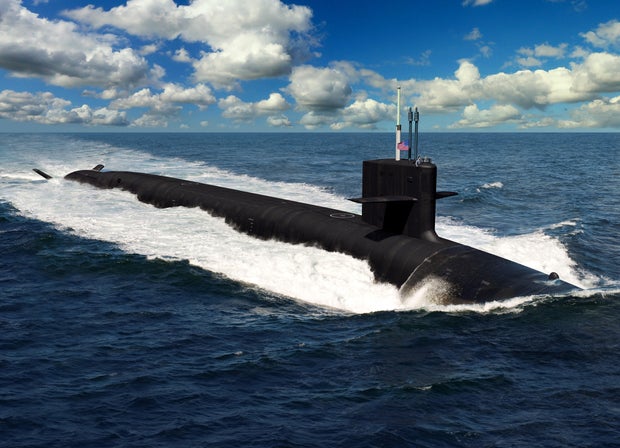
Reinforcing U.S. nuclear capabilities, especially enhancing the defense industrial base, is deemed essential by former officials. This involves advancing the production of the Columbia-class submarines poised to replace the Ohio-class subs, forming a crucial component of the nuclear triad.
Adm. Richard emphasized the need for increased resources across all triad elements, particularly bombers and ballistic missile submarines. He advocated for expanding triad capabilities and bolstering its overall capacity.
 Increased Interest in Gun Ownership Following Controversial Federal Actions
  Bipartisan Bill Seeks to Insulate Consumers from Data Center Power Costs
  Michigan Democratic Senate Candidates Debate Corporate PAC Contributions Amid Labor Forum
  Senator Mitch McConnell Returns Home After Hospitalization
  Former Deputy to Ex-Special Counsel Jack Smith Announces Congressional Run in Virginia
  U.S.-Iran Relations: Rising Tensions and Diplomatic Maneuvers