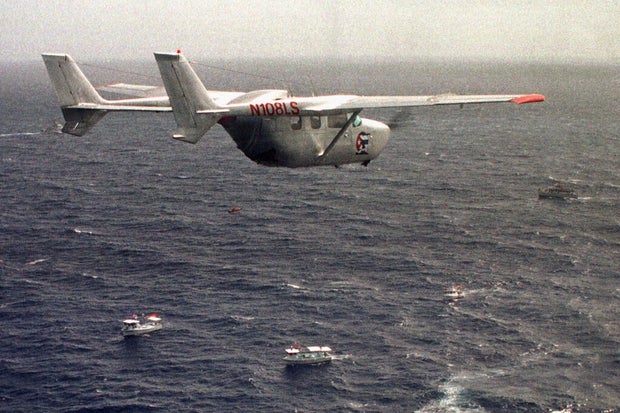
In February 1996, three civilian airplanes operated by a Cuban exile group departed from a Miami-area airport. Their mission was to search for people escaping Cuba on rafts. However, two of these planes were shot down by a Cuban fighter jet, leading to the deaths of four individuals.
Nearly 30 years later, this incident has become the focus of a federal criminal case against Raúl Castro, who once led Cuba following his brother Fidel’s retirement. The United States has indicted 94-year-old Castro and five others for their alleged involvement. The charges include murder and conspiracy to kill U.S. nationals. This indictment signifies an escalation in the U.S.’s ongoing pressure campaign against Cuba.
Brothers to the Rescue, the organization that operated the planes, was founded in the early 1990s by José Basulto, a Cuban American who participated in the Bay of Pigs invasion. This group conducted search-and-rescue missions between Florida and Cuba, helping many people fleeing the country on makeshift vessels. According to Basulto, the group also aimed to support opponents of Castro. By the mid-1990s, U.S. policy changes resulted in fewer people taking dangerous sea journeys after the Clinton administration stopped automatically admitting them.
The Cuban government accused Brothers to the Rescue of violating its airspace and distributing anti-Castro leaflets, which it labeled illegal and provocative. Cuba claimed the group intended to attack its electrical infrastructure, based on allegations from a former member who returned to Cuba in 1996.
Before the shootdown, federal officials expressed concerns about unauthorized flights over Cuba, warning Basulto on multiple occasions. A January 1996 memo from a Federal Aviation Administration official cautioned, “Worst case scenario is that one of these days the Cubans will shoot down one of these planes.” Basulto maintained that there was no plan to drop leaflets on the day of the incident.
Three planes departed Opa Locka Airport on February 24, 1996, heading toward Cuba. Basulto announced to Havana’s air traffic controllers that his plane was entering Cuba’s air defense zone. An air traffic controller warned him of the risk, to which Basulto replied, “we are ready to do so as free Cubans.” Shortly after, a Cuban MiG-29 shot down two of their Cessnas, killing a U.S. citizen and a green card holder, as well as two American citizens in the second aircraft. Basulto’s plane, carrying him and three crew members, safely returned to Florida.
An ICAO investigation concluded that the shootdowns occurred over international waters, disputing Cuba’s claim of airspace violation. International law prohibits firing on civilian planes within a country’s airspace, and the ICAO noted that Cuba did not attempt less drastic measures like radio communication.
Cuba has persistently defended its actions, stating the group encroached on the country’s sovereignty. Fidel Castro later admitted he gave general orders to stop these incursions, but denied specifically ordering the Cessnas to be shot down.
Following the shootdowns, the U.S. swiftly enacted tighter sanctions on Cuba. Former President Bill Clinton condemned the attack, stating it had no legal basis under international law. One individual later faced a murder conspiracy conviction related to the shootdown, accused of spying for Cuba. After over a decade in prison, he returned to Cuba as part of a 2014 prisoner swap. Two fighter pilots and Cuba’s air force chief were also charged with murder in federal court but were not tried.
In civil court, the families of the deceased pilots sued the Cuban government, receiving substantial monetary damages. The case has seen renewed interest, with Florida lawmakers and the Cuban American community calling for Raúl Castro’s indictment.
The indictment coincides with strained U.S.-Cuba relations. The Trump administration has imposed an oil blockade on Cuba, worsening energy shortages. Charges against Raúl Castro arise months after the U.S. captured Venezuela’s former President Nicolás Maduro, a Cuban ally, for prosecution in New York.
José Basulto expressed hope for Castro’s indictment, stating, “It’s time for them to pay.”