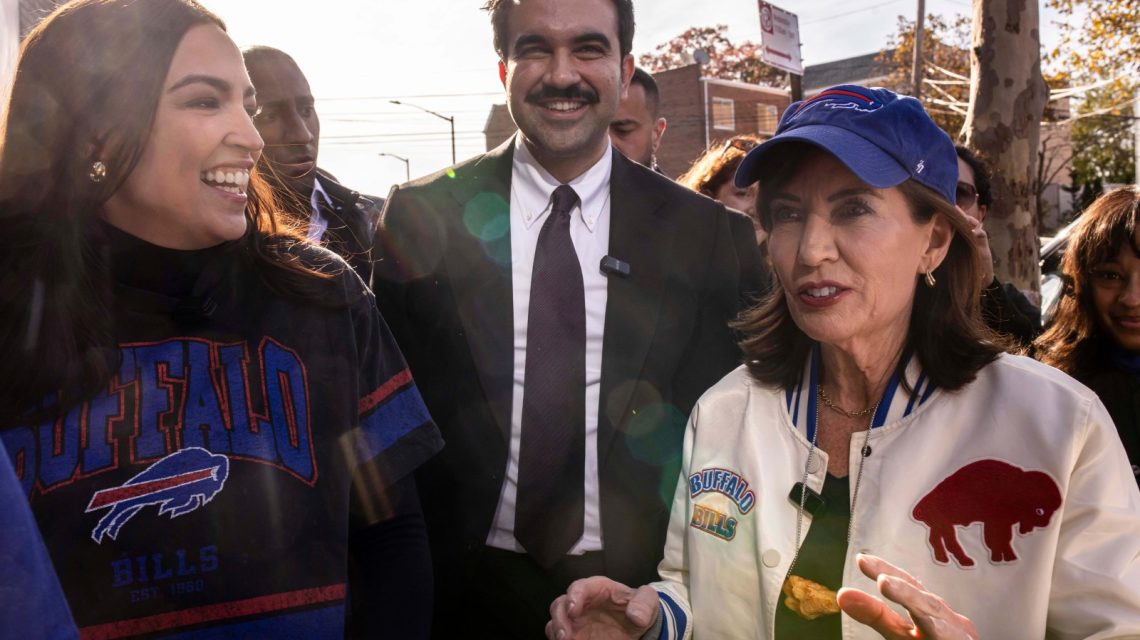
New York City Mayor Zohran Mamdani appeared in a video on November 3, discussing men’s health initiatives. He highlighted a $4 million investment in prostate cancer care. Unexpectedly, attention shifted to his new mustache. Two days prior, he replaced his familiar beard with a solitary strip of hair. Many noticed its resemblance to classic film villains or a young Charlie Chaplin experimenting with style.
The mayor clarified his mustache supports Movember, an annual event promoting men’s health. Movember encourages unusual appearances to spark conversations and boost donations. Mamdani’s mustache seems to fulfill the first aim, attracting public attention.
Reactions varied. Some Instagram admirers praised Mamdani’s new look. Others remained unimpressed, likening him to cultural icons such as “Super Mario in disguise.” Others compared him more locally, noting he resembled the “guy selling kebabs outside Shay Stadium.” Reactions reached serious comparisons to Saddam Hussein. Conservative commentator Will Chamberlain suggested the mustache might deflect accusations of Islamism.
Though initially a health campaign symbol, the mustache has deep political roots. For instance, in the Ottoman Empire, facial hair distinguished reformers from the established order. Avner Wishnitzer, a Middle Eastern history professor at Tel Aviv University, notes that during the Ottoman era, beards signified maturity and patriarchal authority. Meanwhile, younger officials preferred mustaches, symbolizing a break from tradition.
As reformers progressed through the Ottoman hierarchy, mustaches became more prominent. Even Ottoman rulers like Sultan Mehmed V adopted them, despite the earlier bearded tradition. Wishnitzer, while clarifying no direct link to Mamdani’s case, makes a point about grooming choices gaining political weight.
Turkey later saw facial hair embody political ideology explicitly. During the 1970s, political factions favored distinctive mustaches. Ultranationalists preferred long, downward-curving styles, while leftists opted for fuller ones. Religious conservatives leaned towards closely trimmed variations. These styles, during politically charged times, had serious implications.
Years later, Turkish bureaucrats reportedly shaved off styles associated with President Recep Tayyip Erdogan after an electoral setback. Here, facial hair shifted with political fortunes.
Research indicates appearance influences political perceptions. For example, U.S. congressional candidates with facial hair were seen as more masculine and less supportive of feminist agendas. In Australia, a study found masculine-looking politicians perceived as less honest and competent, regardless of their legislative records.
According to Pierce Dignam, a sociologist at the University of Central Florida, personal presentation shapes public perceptions. A politician’s appearance might signal group membership in a political context.
Mamdani explained his mustache is a Movember effort, not a political statement. However, history shows that politicians may not control their appearance’s implications. The mustache could gain unforeseen associations, dictated by public perception. The political value, if any, likely depends on observers as much as on the wearer.
 Current Global Events and Personal Finance Guidance
 Senator Jon Ossoff’s Potential as a 2028 Presidential Contender
 New York Politician Dismisses Reptilian Allegations After Viral Video
 Trump Criticized for Photo with Putin
 House Minority Leader Hakeem Jeffries Discusses Potential Impeachment Actions
 Kim Jong Un Ignores Outreach from President Trump