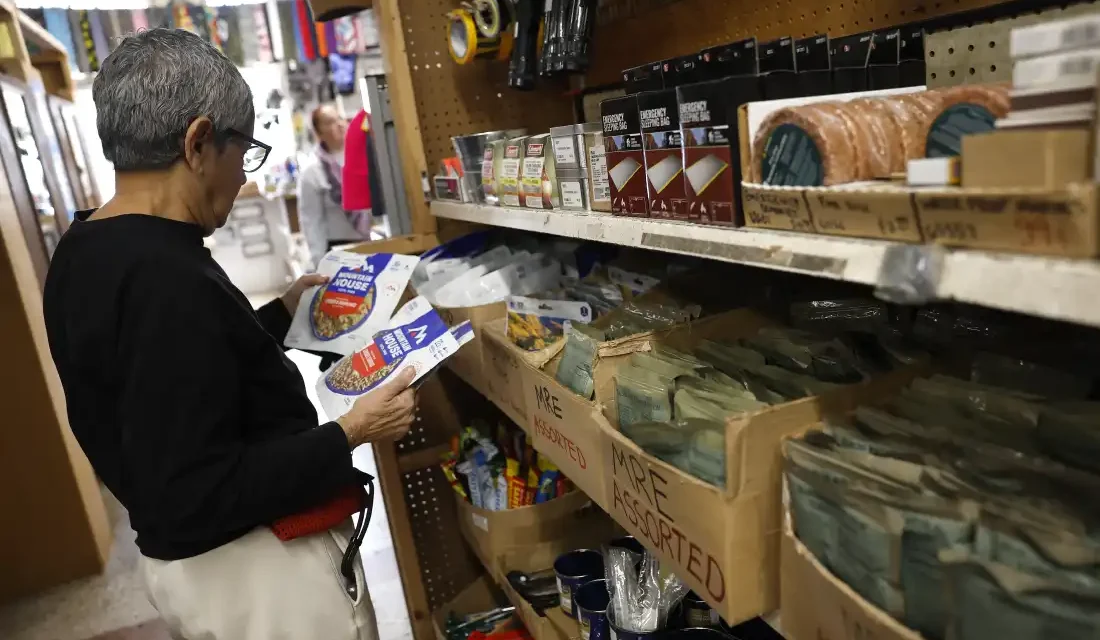
A woman in Los Angeles was seen purchasing emergency supplies at The Surplus Store on November 18, 2026. This activity follows recent technology outages that have prompted many to stock up on essentials like food, water, battery-powered radios, and survival kits. Concerns over disruptions to critical services have increased.
Teri Brown, worried about the potential collapse of the U.S. electrical grid, AI issues, and political unrest, has begun preparing. Living in the Denver suburbs with her husband Richard, she is stocking their home with extra food, some of which is freeze-dried, and two 55-gallon water tanks. They are now considered ‘preppers,’ preparing for worst-case scenarios. Brown, at 47, is aware of the stigma attached, saying, “I don’t often discuss this openly as it might make me look like I’m wearing a tinfoil hat.”
Recent tech outages, such as the Microsoft email issue, Apple Pay disruptions, and a nationwide ground stop at airports, have made many Americans uneasy. The Pentagon’s announcement about military bases preparing for possible power grid failures adds to these concerns. European governments have warned citizens to stockpile essential supplies like food and medicine.
These events have led people to seek basic survival tips from preppers. Brown feels validated by recent outages. Social media influencer Krystal Christensen, known online as CharminglyFrugal and DoomsDayQueen, has noticed increased interest in her content. “Young people, including Gen Z, are worried about what to do if the power fails,” she said.
“I’m seeing Gen Z showing up and going, ‘I’m nervous. If the lights go out, what do I do?'”
Panic buying and price increases pose further challenges. Christensen advises only purchasing items truly needed and avoiding panic buying. Her recent video from a Utah Costco highlighted scarcity, with generators quickly selling out.
Longtime prepper Derrick James from Maine reported an increase in sales after mentioning a specific emergency radio, which sold out on Amazon within two days. “Prices for MREs, typically used by the U.S. military, have doubled,” he added.
Deanne Criswell, former FEMA administrator under President Biden, explained that a one-size-fits-all approach to preparedness doesn’t work. She suggests understanding local risks like tornadoes, hurricanes, or blizzards and preparing accordingly. Not everyone will be cut off from supplies for long periods, so preparing should be localized.
Monique Imroth, living in San Diego County, prepares mainly for wildfires. She mentions that preparedness isn’t necessarily for apocalyptic events but for unexpected occurrences. “It’s about being ready for anything that could happen any day,” she said.
“It’s not like you’re prepping for the zombie apocalypse… You’re prepping for whatever weird thing happens on Tuesday.”
Imroth advises using regular shopping trips to buy extra canned goods or other supplies. This helps during everyday challenges like sudden job loss. “Ensure a well-stocked pantry and set aside some savings to navigate tough times,” she recommended. Preparing ahead reduces panic and anxiety when unexpected events occur.
 Jason Kelce and Family’s NFL Journey
 Extensive Black Friday Deals Across Various Categories
 Top Black Friday Fashion Deals of the Year
 A Journey from Burnout to Boundaries
 A Thanksgiving Adventure in Zion National Park
 Deaf Texas Student-Athlete Secures Multiple College Offers