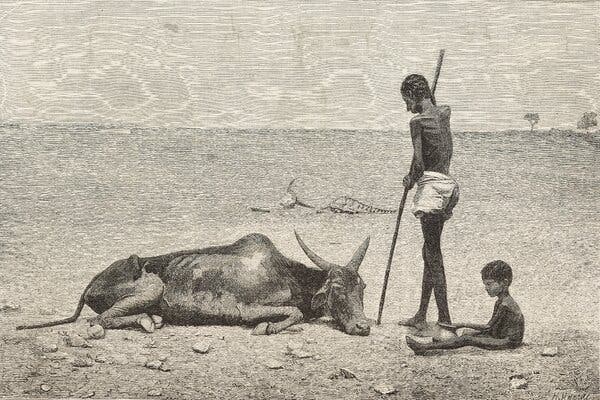
El Niño, a natural phenomenon involving shifts in Pacific Ocean winds and water temperatures, significantly affects global weather patterns. Its impact has been observed for centuries, bringing about droughts, heat waves, and even intensifying epidemics. These changes have left their mark on human history.
Historically, some researchers attribute political and economic crises in ancient civilizations, such as Egypt and the Moche in present-day Peru, to the effects of El Niño. Notably, the famine of 1877-78, driven by El Niño, caused millions of deaths in the tropics. This event contributed to the persistent inequities recognized today as the ‘first world’ and ‘third world’.
Currently, scientists are monitoring a new El Niño phase that could become one of the strongest recorded. They emphasize that while modern societies are more resilient than in the past, new vulnerabilities exist. Forecasts suggest potential widespread consequences.
Today, nations employ oceanic gauges and early warning systems to track El Niño. Agriculture has advanced, and many at-risk countries maintain strategic grain reserves. Though experts do not foresee large-scale famine, the phenomenon could strain the global system.
Present challenges include fertilizer shortages due to issues like the Strait of Hormuz’s closure. Rising energy prices, linked to conflicts in Ukraine and Iran, tighten national budgets. Additionally, cuts in foreign aid from countries like the United States have reduced the safety net for poorer nations.
 Investigation into Far-Left Groups Organizing Protests
  Deadly Dispute Over Beach Chairs in Greece
  Couple’s Fortunate Detour Saves Them from Himalayan Disaster
  Communities Continuing Recovery from Hurricane Helene Explored through Graphic Novel
  Senator Criticizes Planned White House Welcome for Xi Jinping
  Potential Russian Incursion in Estonia Tests NATO’s Resilience