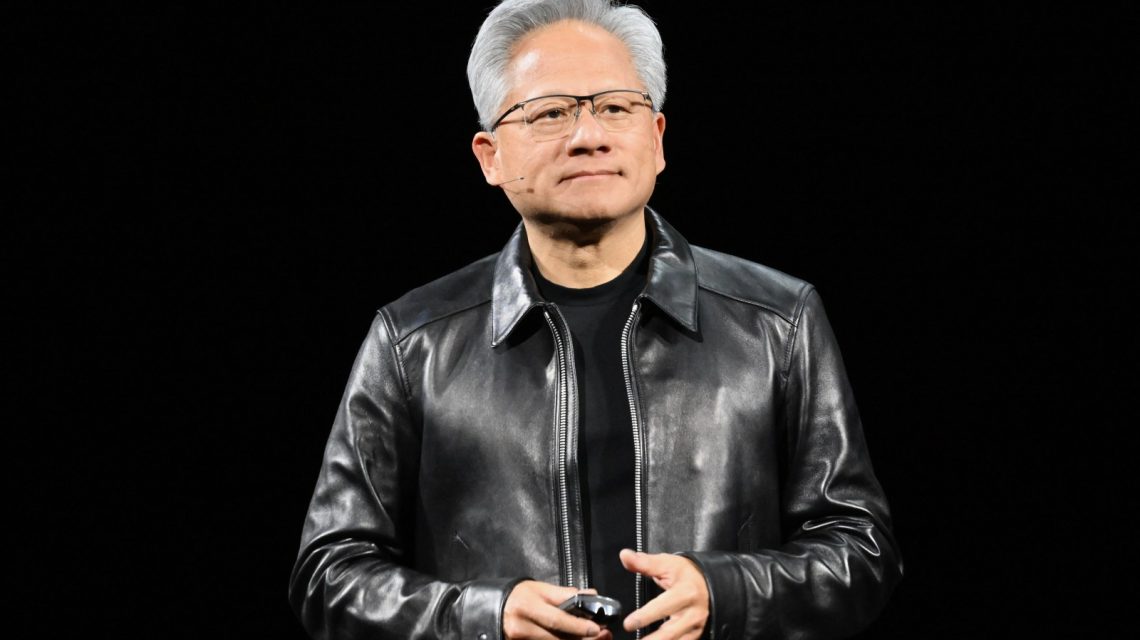
Nvidia stands at a significant crossroads as the personal controversies surrounding its former CEO and ongoing congressional scrutiny cast a shadow over its financial performance. Nvidia recently announced that Jensen Huang has resigned from his role as CEO and president, giving up his board seat. This decision follows allegations of two affairs, one involving an employee and the other with a Chinese national suspected by some U.S. intelligence officials to be linked to Beijing’s Ministry of State Security.
Amidst internal and external calls for Huang’s return, including those from President Donald Trump, the company has appointed Colette Kress as interim CEO. Kress, alongside Nvidia, will face a crucial public test with the release of the company’s third-quarter financial report, set for Tuesday at 1:20 p.m. PT. This report covers the months ending October 25, 2026, during Huang’s leadership, prior to the recent scandals. While these events might not directly affect the report, analysts consider them a possible trigger for further concerns or a chance for reassurance. The earnings call following the results offers Kress an opportunity to reinforce investor confidence in Nvidia’s direction despite Huang’s departure.
Beyond replacing Huang, the financial results provide insight into Nvidia’s AI-chip and data center product demand. The U.S. midterm elections and questions about AI investment sustainability introduce additional uncertainty to Nvidia’s immediate future and that of the broader tech sector.
Nvidia at a Pivotal Moment
The upcoming financial results arrive at a tense moment for Nvidia, with the company dealing with stock market declines and increased scrutiny from Washington. Before Tuesday’s market opening, Nvidia shares have dropped 28% over the past month and 10.4% over the past week. This decrease occurred within a challenging period for tech stocks, as AI and data center spending concerns and worries about an AI financial market bubble are scaring investors. The New York Times report about Huang’s alleged affair with a Chinese national has been a catalyst, though some U.S. intelligence sources have disputed the accuracy of these allegations. The Justice Department stated they have not concluded that the individual collaborated with China’s government, and a Chinese government spokesperson described the reports as fabricated.
Amid these reports of affairs and Huang’s resignation, Nvidia’s stock continues to decline. This backdrop amplifies the significance of Tuesday’s financial results and earnings call.
The U.S. Commerce and Justice Departments recently confirmed a lengthy investigation into Megaspeed, an ex-Nvidia client, suspected of rerouting restricted Nvidia chips to China. Megaspeed proclaimed its willingness for government scrutiny and its commitment to transparent operations in line with U.S. laws. Nvidia has no indication that trade secrets or national security were jeopardized by its interaction with Megaspeed. The Commerce Department has also introduced interim rules limiting China’s access to advanced chips, affecting shipments to data center companies in several countries amidst bipartisan Congressional pressure for stricter semiconductor export controls.
Expectations for Nvidia’s Upcoming Results
After achieving $96.2 billion in the second quarter, Nvidia forecasts third-quarter revenue of $108 billion, with a margin of error of ±2% and a gross margin of 74%. These estimates align closely with the average provided by Yahoo Finance’s analyst poll. Nvidia is expected to claim approximately $109 billion in revenue for the quarter, which is an impressive 91% increase from $57 billion in the corresponding quarter last year, alongside $2.47 adjusted earnings per share. Data center demand guidance will be under scrutiny given ongoing concerns about spending in this sector.
The results may either boost Nvidia’s stock or extend current challenges, as analysts emphasize the earnings call as a platform for Nvidia to reassure shareholders about its trajectory and reliability as an AI contender. Daniela Hathorn of Capital.com remarks that while investors anticipate $109 billion in revenue, the primary focus will be on data-center demand, margins, forward guidance, and the company’s leadership transition assurances. Strong results can bolster confidence in the AI sector, yet a failure to address future investment returns may mitigate positive earnings impacts. Conversely, disappointing guidance could further propel the stock’s decline.
Updates on Nvidia’s leadership transition bear significant weight due to Huang’s role in elevating Nvidia’s status during the AI boom. As Yorkville Ives & Co. analysts note, “Nvidia remains the leader in GPU chips for AI development, far ahead of its closest competitor, and demand will likely stay on course regardless of Huang’s absence.” With Colette Kress stepping in as Interim CEO, a smooth quarterly report and guidance are pivotal to dispelling the recent cloud over the company’s operations.
 U.S. Army Sergeant Admits to Providing Military Information to China
 Amtrak Train Derailment in Louisiana After Collision with Truck
 Concerns Over AI Superintelligence Grow as Experts and Policymakers Weigh In
 Jensen Huang Returns to Nvidia as CEO Amidst Employee Support
 Jensen Huang Reinstated as Nvidia CEO
 Jensen Huang Returns as Nvidia CEO with US Government Support