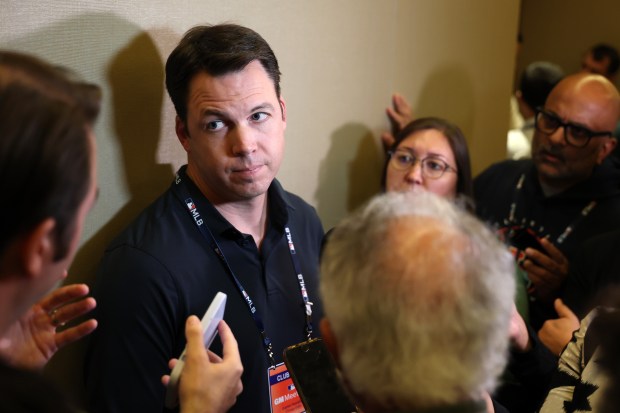
Goaltender Connor Hellebuyck faced a cold reception upon returning to Winnipeg after a trade to the New Jersey Devils. Fans jeered as he sat out the game, a decision from Devils GM Sunny Mehta, who explained that playing Hellebuyck could lower the team’s ‘expected win probability.’ The Devils lost 4-2, leaving Hellebuyck without his chance to compete.
Mehta’s statement reflects a broader trend of complex, business-oriented language in sports management. Former Cubs owner Philip K. Wrigley noted the dual nature of sports as both a passion and a business, a sentiment seemingly lost in modern executive communication. What fans often hear now sounds disconnected from traditional sports talk.
Sports executives often resort to elaborate phrasing to obscure or soften their messages. For example, Chicago Cubs GM Carter Hawkins said, ‘all scenarios are on the table,’ a phrase offering little clarity. These expressions tend to mask intentions rather than reveal them.
Risk is a frequent topic in these circles. Chicago Blackhawks GM Kyle Davidson spoke about the cautious approach needed when deciding on changes, emphasizing the desire to avoid regrettable mistakes. The language used often reflects business jargon rather than straightforward communication.
Meanwhile, sports agents like Scott Boras contribute their own style. When discussing pitcher Tarik Skubal, Boras employed metaphors and wordplay. His colorful language contrasts with the often dry corporate speak of baseball executives.
Boston Red Sox executive Craig Breslow, with his recent title change from chief baseball officer to president of baseball operations, exemplifies shifts in titles intended to reflect confidence in leadership without altering responsibilities.
The prevalence of corporate language persists despite some sports professionals leaning towards more informal communication. Milwaukee Brewers manager Pat Murphy exemplified this when he candidly spoke to a player on a hot mic. However, such straightforwardness is rare and often apologetic.
The ongoing use of complex terminology highlights a growing disconnect between sports management and traditional sports culture. Fans and writers alike often yearn for plain speaking in an era dominated by corporate rhetoric.
 Natalie Kussow’s Fast Start with the Minnesota Gophers
 College Football Market Sees Unprecedented NIL Deals
 Pete Crow-Armstrong: A Season of Milestones
 Gabrielle Carle: Dual Pursuit of Soccer and Medicine
 Chicago Bears’ Midseason Analysis: Prospects and Predictions
 Philadelphia Eagles Make Major Roster Changes