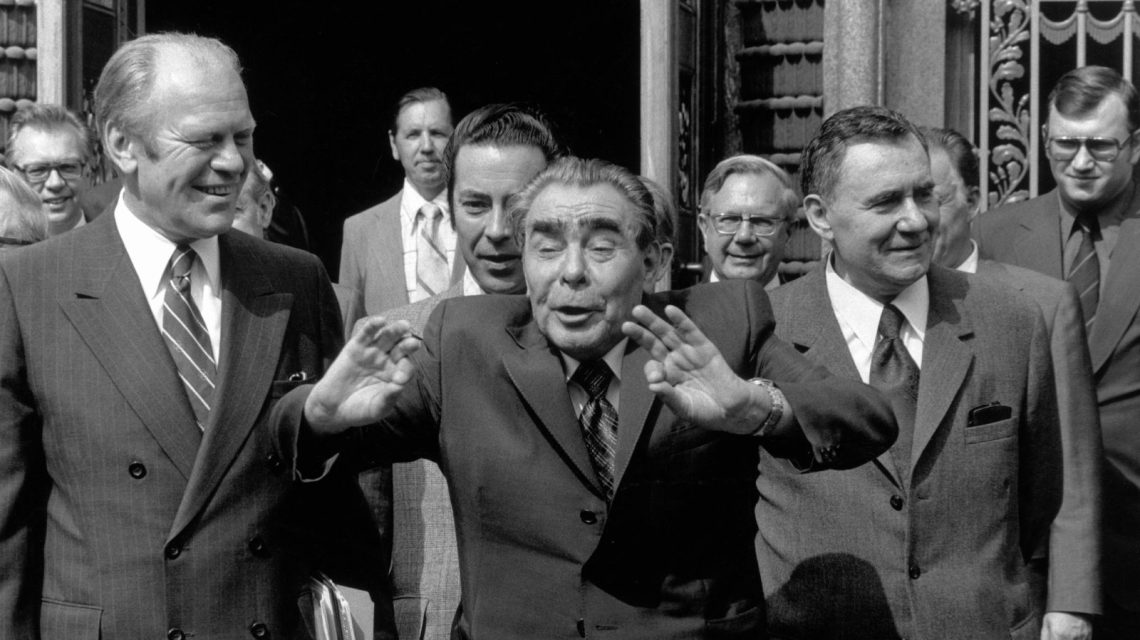
Russia’s lead negotiator, Vladimir Medinsky, recently emphasized a broader goal beyond peace talks with Kyiv and Washington in Abu Dhabi. He aims for a comprehensive European security system, referencing a “new, modern Yalta and Potsdam.” Medinsky suggests a system akin to the Helsinki Accords of 1975, which set foundational security norms in Europe. Moscow views revisiting these principles as key to lasting peace.
The Helsinki Final Act involved 35 countries, including the U.S. and the Soviet Union. It was a diplomatic milestone during the Cold War, acknowledged for setting clear, albeit non-binding, guidelines for European security. During that era, Soviet leader Leonid Brezhnev welcomed it as a diplomatic win. The agreement established crucial principles like sovereign equality and the non-use of force against sovereign states.
“No consideration may be invoked,” the documents insisted, “to justify force contrary to that principle.”
Yet, Russia’s actions over recent years appear to breach these principles. The annexation of Crimea in 2014 and its later full-scale invasion of Ukraine challenge the Helsinki guidelines. Russia further demands that Ukraine abandon NATO ambitions, contravening Helsinki’s allowance for state sovereignty in geopolitical choices.
Moscow accuses the West of similar breaches. Russian officials trace the conflict back to Western actions eroding Russian security, highlighting NATO’s eastward expansion. Moscow argues that these expansions, coupled with European military support to Ukraine, violate the concept of inseparable European security outlined in the 1999 Charter for European Security.
Despite Russia’s call for a new security structure, engaging Europe remains elusive. Despite affirming Helsinki’s inclusivity, Medinsky noted the absence of European participants in Abu Dhabi. Russian leaders believe Europe’s political elite harbors contempt for Russia, further complicating talks.
Evgeny Buzhinsky, a retired Russian lieutenant general, questions Europe’s ability to engage effectively, citing perceived Russophobia. Yet, some U.S. envoys, like Jared Kushner, insist on European involvement in future negotiations. However, internal EU discord on representation persists, implying challenges in unified negotiation stances.
 Trump Administration Seeks to Appeal Block on Golf Course Closure
 U.S. Soldier Alleges Ignored Warnings Before Iranian Drone Attack
 Rep.-Elect Joe Strada’s Vision for Accountability and Opportunity in Congress
 African Governments Forge New Ties with Russian Drone Production
 Megaspeed Denies Wrongdoing Amid Nvidia CEO Scandal
 Trump Criticizes Biden on Air Traffic Control Issues