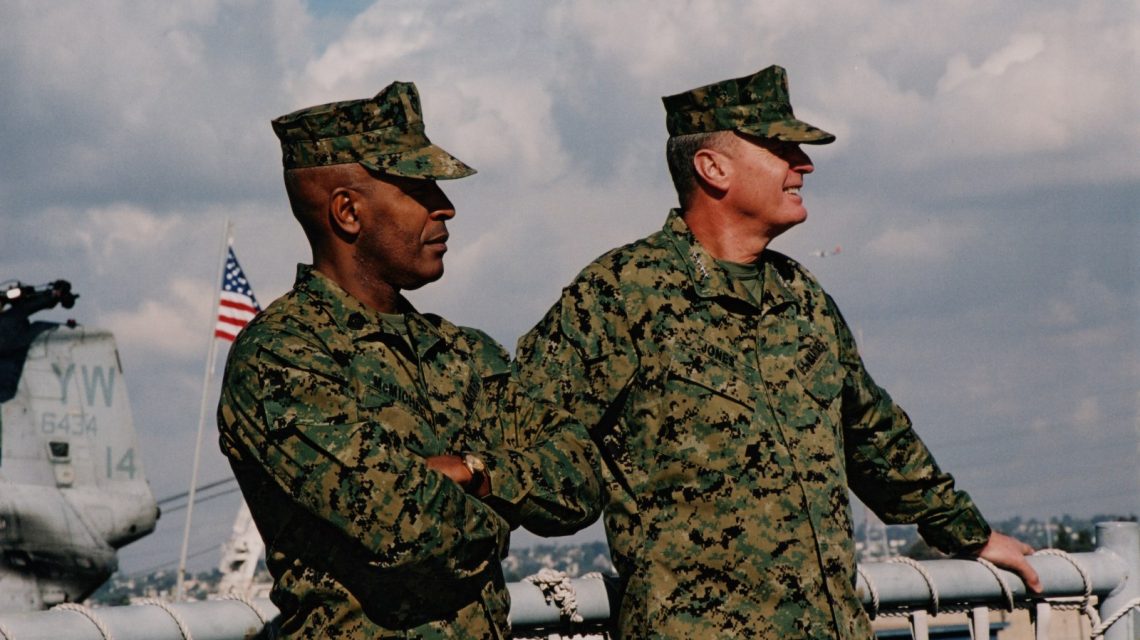
In 1999, during a routine morning, Sergeant Major Alford L. McMichael received unexpected news. His superior, a three-star general, informed him about an incoming call from General Jim Jones. It was a monumental call for McMichael, though he initially missed it while at the shower. When he eventually answered, General Jones offered him the position of the 14th sergeant major of the Marine Corps. McMichael accepted eagerly, fulfilling a dream shared by many enlisted Marines.
General James L. Jones at the time had just secured his nomination to become the 32nd Commandant of the Marine Corps. He interviewed several candidates, ultimately selecting McMichael as a key decision he regards highly. Both Jones and McMichael recently discussed their experiences with Newsweek on the occasion of the Marine Corps’ 251st birthday, coinciding with Veterans Day. They recounted their efforts to engage with younger Marines, understanding their challenges and proposing changes based on grassroots feedback.
Jones credited enlisted Marines for training officers, recalling his own time as a platoon leader in Vietnam. According to him, while officers might misdirect their superiors, enlisted personnel always see through to the truth. McMichael described his role as essential for conveying messages from the lower ranks to the top, striving to ensure senior leadership heard the concerns of junior Marines.
Supported by Jones, McMichael organized symposiums to foster dialogues with younger noncommissioned officers (NCOs). Through these efforts, they identified numerous issues requiring attention, from housing to education and uniform affordability. Addressing these foundational concerns, they believed, ensured consistent functioning and morale within the Corps.
Jones emphasized the importance of listening to ideas outside one’s immediate circle. Commandants could mandate changes, but lasting policy required widespread agreement. At a recent visit to Camp Lejeune, both Jones and McMichael noted the close relationship between enlisted personnel and officers, indicating effective communication channels. They also introduced Veteran Strong, a program aiming to support veterans by enhancing their access to essential resources and advice for financial management and education opportunities.
The collaboration between Jones and McMichael extends beyond the Marine Corps. In 2003, Jones became NATO’s supreme allied commander, marking a historic moment for Marine leadership in the alliance. He noted that while NATO expanded, many of its new members lacked the same respect for noncommissioned officers. Recognizing McMichael’s capabilities, Jones created a senior enlisted adviser role for him. McMichael embraced the opportunity to enhance the position and foster a network among NATO’s enlisted leaders—a move both regarded as transformative.
McMichael reflects on two crucial calls from Jones that shaped his career. His journey underscores the dual importance of being both a good follower and a leader. He attributes his growth to the strong mentorship and guidance he’s received, acknowledging the profound impact of effective leadership.