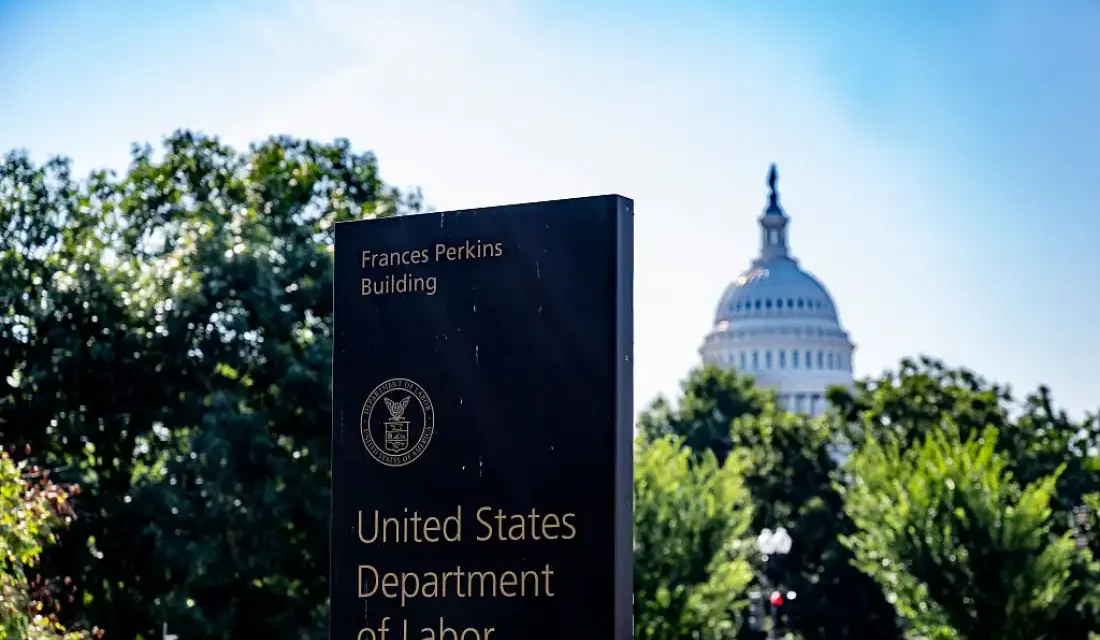
The U.S. Supreme Court justices appeared divided during a session concerning the authority of federal regulatory agencies to levy fines against businesses that breach federal laws. This issue raises questions about the role of agencies like the Department of Labor.
For decades, farmers have used a federal immigration program to employ migrant workers temporarily for crop harvesting. Apart from wages, farmers must provide essential needs, including housing and food. The Department of Labor oversees these arrangements to ensure fair treatment of both foreign and domestic workers.
The Department of Labor fined Sun Valley Orchards, a New Jersey-based business, $500,000 for violations such as unsanitary conditions, overcrowded housing, malfunctioning sinks, and not paying agreed wages. Sun Valley disputes these charges, claiming that the Department lacks the constitutional authority to impose fines through administrative processes and argues for a jury trial when appealed to a federal court.
During the session, Chief Justice John Roberts expressed concerns about the potential overreach of the executive branch, suggesting it might infringe upon the judicial branch’s responsibilities. Deputy Solicitor General Sarah Harris defended the Department of Labor, noting that requiring all civil penalties to go through federal courts would severely disrupt numerous federal programs like Medicare and student loans.
Justice Elena Kagan questioned the feasibility of always taking cases to court. Harris explained that this would lead to under-enforcement due to limited resources. Robert Johnson, representing Sun Valley, argued that penalties should be adjudicated by federal courts, not administrative agencies. Justice Ketanji Brown Jackson countered by highlighting Congress’s intent to prevent foreign workers from undermining domestic labor.
Justice Brett Kavanaugh criticized Johnson’s proposal, citing a lack of clarity. Justice Samuel Alito likened the description to a disorganized opinion, with Justice Kagan humorously noting that they do not write such opinions.
In her rebuttal, Harris warned of significant consequences if the court ruled against the government, potentially disrupting various regulatory frameworks. She stressed the urgency, indicating that legislative solutions might be needed.
 Turning Point USA Responds to Controversy Over Charlie Kirk Remarks
 Politics and Scandal in the AI Industry: The Impact of Jensen Huang’s Controversy
 Federal Investigation into SPLC Involves Informant Allegations
 Kennedy Family Opposes Trump’s Arch Near Arlington
 Gov.-elect Xavier Becerra Assembles Transition Team
 Auditing ICE’s Body-Camera Program Compliance