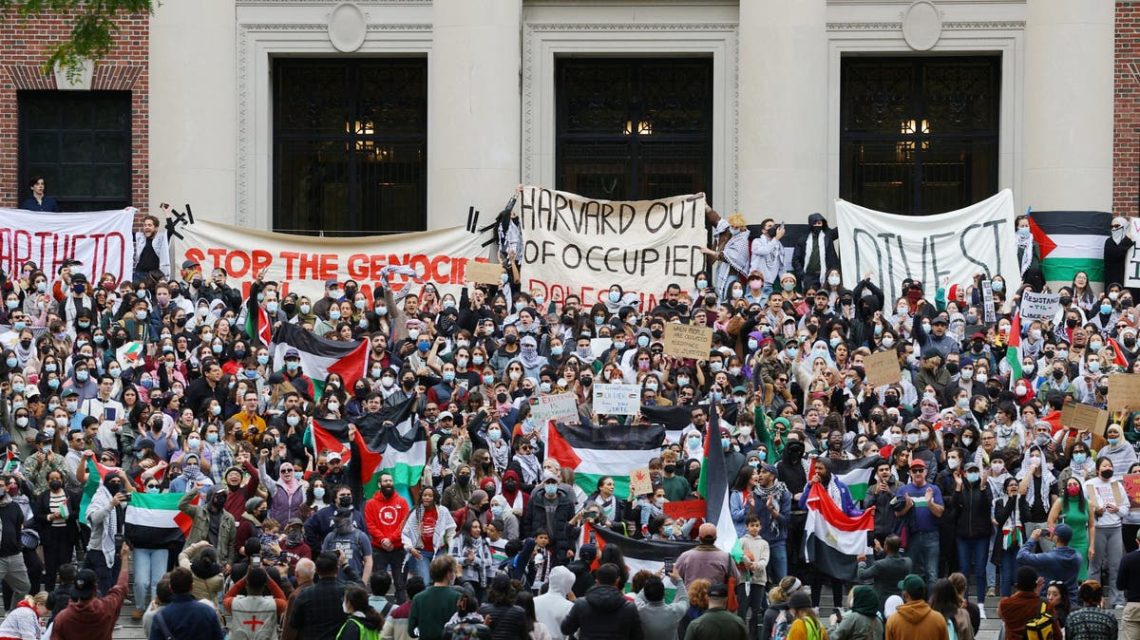
The Department of Justice has filed a lawsuit against UCLA, accusing the university of failing to protect Jewish and Israeli students from discrimination and violence. This comes after a 2024 protest where agitators allegedly attacked students with physical violence and pepper spray.
Human rights attorney Brooke Goldstein has highlighted how antisemitism is becoming politicized. As questions are raised about the behavior of universities, some have noted controversial actions by student groups following events in the Middle East.
At the heart of the issue is the reaction to Hamas’ attack on October 7, 2023. Criticism has arisen concerning various campus actions, such as the Harvard Palestine Solidarity Committee allegedly blaming victims of the attack, or the projection of controversial messages by student groups. These actions have sparked discussions on how universities should respond to conflicts abroad.
Instances include protests where American flags were replaced by Palestinian ones, and graffiti with threatening messages appeared on national monuments. Such events raise concerns about expressions of antisemitism and the actions of university administrations.
Broader implications involve financial influences on campuses. Foreign contributions to U.S. universities have totaled $67.6 billion since 1986, with significant amounts coming from countries like Qatar. This financial involvement brings questions about the influence of foreign policies on U.S. academic institutions.
Former U.S. President Trump emphasized the need for transparency about foreign funding in universities, with some universities only disclosing large amounts after investigations.
Some have urged a reassessment of how universities handle foreign money and how they allow students to express political views. This includes demands for universities to reject funds from countries associated with terrorism and to uphold high standards of student conduct.
As Secretary of State Marco Rubio pointed out, the intent for foreign students is to pursue education, not political activism. Universities have the right to enforce a campus culture that aligns with these goals.
These discussions challenge universities to consider their roles in fostering an ‘America First’ ethos, promoting education that supports national interests. Focusing on technological innovation and infrastructure may help maintain global leadership.
Dr. Sheila Nazarian, an Iranian-American physician, draws parallels with historical events in Iran, warning against education systems influenced by radicalization. The history of universities worldwide offers lessons in ensuring education serves constructive purposes.
 Trump Dismisses Third Impeachment Prospects
 Custody Dispute Involving Rep. Max Miller Delayed
 Attorney General Addresses Post-Midterm Democratic Threats
 Senator Elizabeth Warren and the Future of Crypto Regulation
 Bipartisan Opportunities in Foreign Policy
 Political Shifts and Concerns Post-Midterms