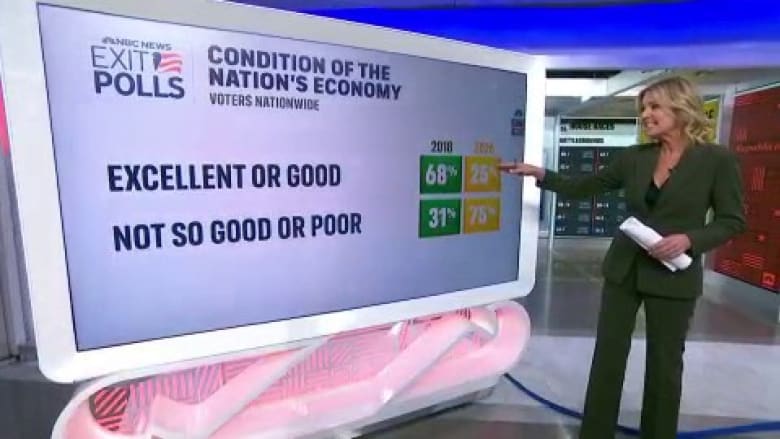
The recent midterm elections highlight stark differences in public perception of the economy between Trump’s first term and now. In 2018, during Trump’s first term, exit polls indicated 68% of Americans viewed the U.S. economy as excellent or good. Today, only 25% share that sentiment, with 75% rating the economy as not so good or poor according to NBC News’ Exit Polls.
Americans are increasingly uneasy about their personal finances too. In 2018, 85% felt their family’s financial situation was improved or unchanged compared to two years prior. Currently, 82% report their financial circumstances are worse or unchanged compared to two years ago.
Factors contributing to this discontent include consumer prices rising faster than wages; inflation stands at 3.7% while wage growth lags at 3%. Families have spent $1,988 more on food and housing in 2025 compared to 2024, struggling to keep pace financially.
Trump’s policies are under scrutiny from voters, with over six in 10 blaming them for elevated prices. Nearly two-thirds believe Trump’s tariffs have harmed the national economy, with similar sentiments about the effect on local economies.
Voter dissatisfaction with economic policies is translating into ballot box decisions.
In Texas, NBC News interviewed voters with diverse perspectives. Cindy Bonilla Candanedo, a newly minted citizen, supported Democratic candidates due to public school funding and healthcare concerns. Beth Burgess voted for candidates across parties, expressing disapproval of political gridlock. Charlie Beal backed Democrats, citing high costs and immigration policy concerns under Governor Abbott’s administration. Curtis Lorn leaned Republican, attributing negative traits to Democrats.
In Indiana, Democrats saw promising early voting numbers, indicating potential electoral gains. J.D. Ford led GOP Rep. Victoria Spartz by 27 points in Hamilton County, a significant shift compared to past voting trends.
Alaska set records with over 105,000 early votes received, surpassing 2022 figures. Here, the Senate race features Democrat Mary Peltola against Republican Sen. Dan Sullivan. Negative views of the Republican Party have risen since 2022, now at 59% versus 52% previously. Voter sentiment is mixed; 57% favor capitalism while 32% support socialism.
Abdul El-Sayed’s Michigan campaign resonated with voters focused on economic issues and personal values. Voter Aimon Islam criticized government spending on global conflicts and advocated for domestic investment.
The Senate race hinges on several battlegrounds, including Georgia, Michigan, North Carolina, Ohio, and Iowa. Indiana and Kentucky’s early polling results will be watched for Democratic momentum.
Concerns over artificial intelligence feature prominently in voters’ minds. Exit polls showed 76% oppose data centers, with significant opposition to AI’s societal impact.
As the Trump administration analyzes results, party leaders focus on turnout strategies. Questions surrounding immigration enforcement remain critical, with 57% believing measures have gone too far.
Rep. Debbie Dingell from Michigan reassured voters about Democratic unity despite leadership endorsements for a Republican candidate, emphasizing party solidarity.
Voting participation saw disruptions due to logistical issues and external threats across several states. Technical glitches in Florida, Westchester County ballot tabulation problems, and various voting machine failures sparked concerns.
In Georgia, polling hours extended due to safety drills. Meanwhile, Pennsylvania faced technical challenges delaying voting start times.
The nation faced unprecedented voter attention, with election monitoring by the Department of Justice at record levels. Furthermore, the controversy over noncitizen voter lists prompted multiple judicial interventions.
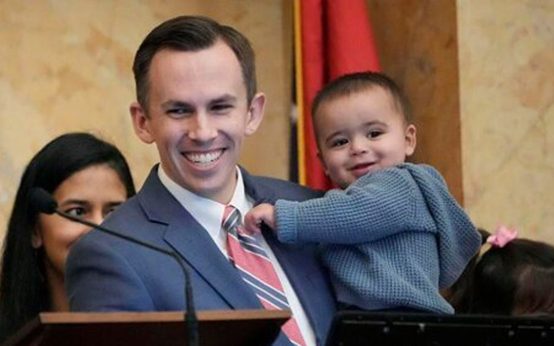 Mississippi State Auditor Shad White Announces Gubernatorial Bid
 Trump Dismisses Third Impeachment Prospects
 Custody Dispute Involving Rep. Max Miller Delayed
 Attorney General Addresses Post-Midterm Democratic Threats
 Senator Elizabeth Warren and the Future of Crypto Regulation
 Bipartisan Opportunities in Foreign Policy