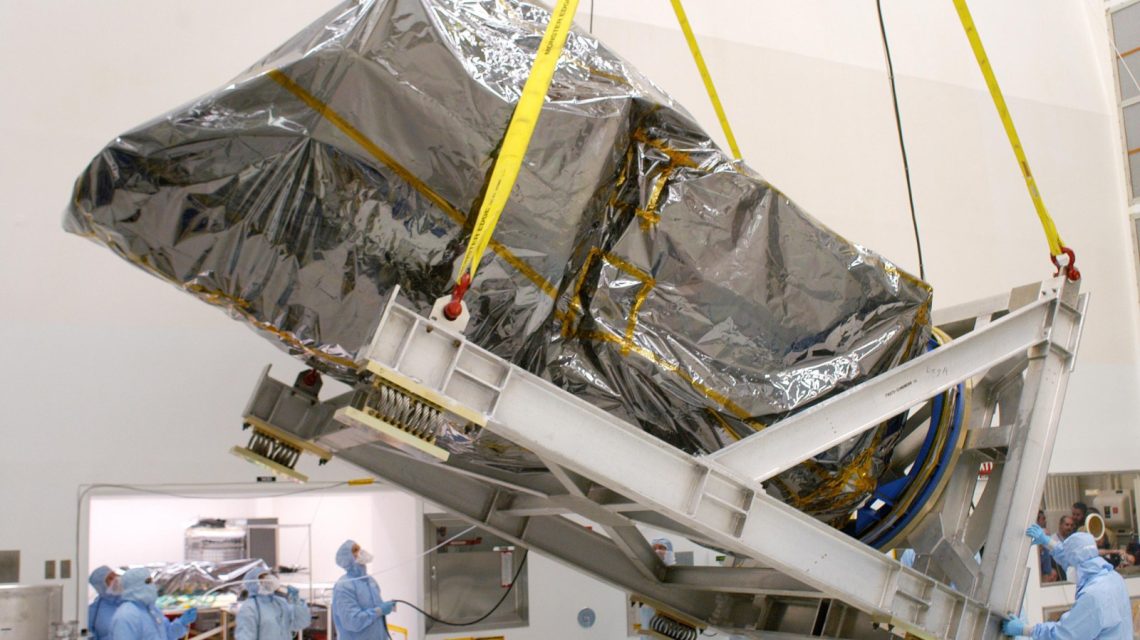
The Swift Observatory, a NASA space telescope that has been crucial in studying cosmic explosions, is expected to re-enter Earth’s atmosphere within days. After over two decades in orbit, questions arise about the survival of any components after its fiery descent and the possible location of debris.
Re-entry Details
The U.S. Space Force projects that the Swift Observatory’s re-entry will occur around Friday following accelerated orbital decay due to intense solar activity. While most of the 1.5-ton observatory will disintegrate upon entry, NASA notes that denser components, such as tungsten parts and mirror sections, might endure and reach the Earth’s surface.
Officials anticipate any surviving debris will likely land in a marine environment, though the precise impact site remains unknown. The re-entry zone covers vast global regions, including parts of Africa, Australia, India, Southeast Asia, and Central and South America.
Challenges in Predicting Re-entry Path
The difficulty in determining the exact re-entry path lies in atmospheric variable changes that can shift a spacecraft’s final trajectory significantly. The re-entry forecasts generally refine only hours before a satellite’s return, with the U.S. Space Force monitoring Swift’s descent closely.
Factors Contributing to Swift’s Re-entry
Swift’s re-entry results from a failed attempt to prolong its mission. NASA had engaged Katalyst Space to rescue Swift using the robotic spacecraft Link, intended to modify the telescope’s orbit. Technical challenges impeded the maneuver, and Link consequently re-entered Earth’s atmosphere without completing the task, leaving Swift on its current trajectory.
Another factor influencing Swift’s descent is heightened solar activity in recent years. Such activity increases atmospheric density, impacting satellites in low-Earth orbit with additional drag, hastening their altitude loss.
Swift’s Contributions to Astronomy
Swift Observatory, launched in 2004, was instrumental in observing gamma-ray bursts, the universe’s most powerful explosions. Throughout its 22-year mission, it identified over 2,000 gamma-ray bursts and approximately 1,400 stellar explosions. Additionally, Swift provided data on black holes, comets, and asteroids, functioning as an early-warning apparatus for larger observatories like the Hubble and James Webb Space Telescopes.
In late October, Swift descended below operational altitudes, prompting mission controllers to deactivate its systems and conclude one of NASA’s longest astrophysical missions.
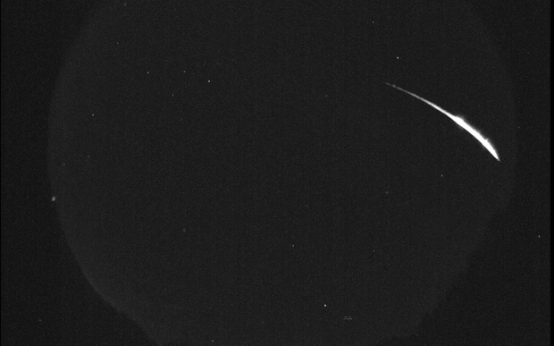 Meteor Lights Up Skies Over North Carolina and Tennessee
 Can AI Possess Consciousness and Emotion?
 NASA Opens Applications for Aspiring Astronauts
 Scrutiny and Leadership in Focus
 NASA Seeks Next Generation of Astronauts for Moon and Mars Missions
 Restoring Confidence in American Scientific Careers