
Chinese viewers perceive the political unrest in America differently than Westerners, viewing it as a civic lesson unavailable in their own country. When I left China at 26 as a graduate student, my trust in the Communist Party began to falter the moment I boarded a Boeing 747, illustrating industrial capabilities China had not achieved. Raised in a closed, leader-focused society, Chinese viewers find the American political landscape full of unexpected elements that Westerners often overlook.
Despite the restrictions of the Great Firewall, U.S. politics are increasingly visible in China. Clips of White House briefings, court decisions, and congressional hearings are shared on platforms like Weibo and WeChat, although they must evade censorship. Others use VPNs to access more content. In democracies, political chaos is common, yet during the Trump administration, conflicts between the presidency, Congress, and the courts amplified the drama. For example, the Supreme Court ruled against the emergency powers law Trump used for tariffs in February and later struck down his order on birthright citizenship in June. No single entity can control the outcomes, and even if exhausting for Americans, residents of China watch attentively and silently learn key lessons.
Lessons Observed
- Life Continues Amid Chaos: In the U.S., life proceeds largely untouched by political turbulence. In China, where the party dominates government and institutions, top-level turmoil affects everyday life markedly, as demonstrated by the Cultural Revolution. Contrastingly, the United States continues to lead in global innovation despite political challenges.
- A Higher Authority than the Ruler: American founding principles assert that people have intrinsic rights not granted or revocable by the government. Whether based in theology or natural law, this concept usually captures Chinese viewers’ interest, diverging from their leader-centered tradition.
- Decision-Making Based on Facts: In America, judicial decisions rely on evidence and laws openly debated between parties. In China, verdicts often align with party interests, contributing to a conviction rate exceeding 99 percent.
- Rule of Law over Men: In America, even the president faces legal constraints. Supreme Court decisions have challenged both Trump’s tariffs and Biden’s student loan forgiveness plan. Despite partisan efforts to circumvent the law, the checks and balances originally designed by the founders persist.
- Freedom of Speech and Organization: While Chinese law ostensibly ensures these freedoms, practical expression is heavily restricted. American citizens, in contrast, regularly critique leadership, organize, protest, and litigate freely. Chinese state media portray these freedoms as chaotic, suggesting a decline in the West versus a rising East.
On Chinese social platforms, only voices in accord with the official narrative survive, censoring dissent. Notable figures like Liu Xiaobo and Ren Zhiqiang have faced severe consequences for their criticisms. Even AI in China encounters censorship, evading controversial subjects when queried.
Public perceptions within China remain elusive due to the high cost of dissent, and many overseas Chinese exercise caution. However, those who speak freely describe a nation not crumbling but exemplifying freedoms unattainable in their native land. The apparent chaos of American politics reflects a deeper liberty, where power is checked and innovation flourishes. It is the sound of a society engaging in self-reflection, contrasting with obedience to a singular authority.
Yan Zhou, a native of China and a Ph.D. holder in mathematical economics from UCLA, represents these observations. Yan is now an independent researcher in Seattle and authored “From Scripts to Worldviews.”
 Hurricane Trudy Advances Toward Mexico
  ADL Criticizes Wikipedia Over Unaddressed Biased Edits
  Sally Rooney’s Books Pulled from UK Amid Controversy
  Hong Kong’s Financial Resilience Amid Political Changes
  U.S. Army Expands Operations in Latin America
 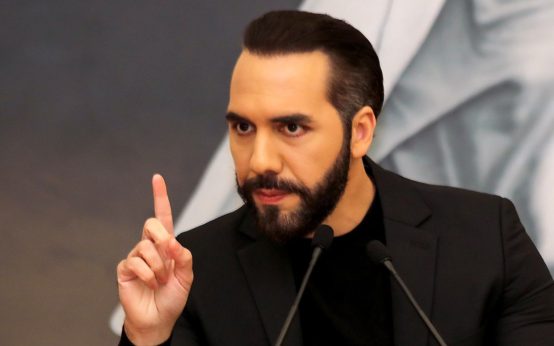 Salvadoran President Neyib Bukele Plans Conditional Release from Overcrowded Prisons