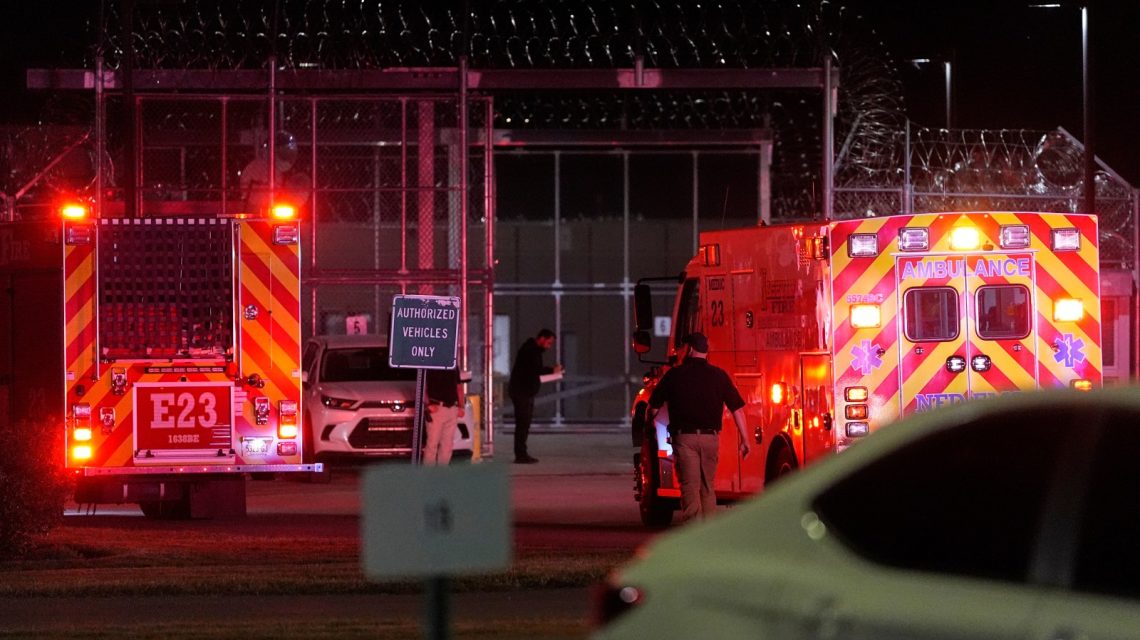
Christa Pike, a death row inmate in Tennessee, survived an execution attempt. This occurred after she received two doses of pentobarbital and was taken to a hospital. This situation raises a rare legal issue: whether a state can attempt to execute someone again after a failed execution. The legal background indicates a potential second attempt may be lawful, although Pike’s medical status and the investigation’s findings could introduce complications.
Legal Considerations
The key legal question is if a second execution would violate the Eighth Amendment, which prohibits cruel and unusual punishment. Eric Berger, a law professor at the University of Nebraska, noted the precedent set by the Supreme Court case Louisiana ex rel. Francis v. Resweber. This case suggests the Eighth Amendment does not prevent a state from reattempting an execution after a failure.
Probably,
Berger said regarding Tennessee’s ability to conduct another execution. He pointed out that Governor Bill Lee has ordered a third-party review and paused other executions scheduled for 2026. This followed scrutiny over execution practices after another inmate’s execution was halted.
Background on Christa Pike’s Case
In 1995, Pike was convicted for the brutal murder of fellow Job Corps student Colleen Slemmer. Driven by jealousy, Pike and accomplices lured Slemmer to a remote location and murdered her. Pike kept a part of Slemmer’s skull as a trophy, later showing it to classmates. Convicted of first-degree murder, Pike received a death sentence in 1996 at age 20. She spent decades on death row and would have been Tennessee’s first woman executed in over 200 years.
Current Status of Christa Pike
Currently, Pike is in a medical facility, reportedly receiving life-saving care after surviving the execution attempt. Legal complexities arise if she incurred neurological damage, potentially affecting her competency to face execution. If Pike is deemed mentally incompetent, execution would be prohibited under the Eighth Amendment following the Ford v. Wainwright ruling from 1986.
Medical experts suggested Pike might survive with or without injuries, including brain damage, depending on IV-line issues, the drug’s effectiveness, or her body’s reaction.
Colleen Slemmer’s Story
Slemmer, at 19, moved to Knoxville for job training. Her family described her as kind and optimistic, hoping for a better life. Slemmer’s mother supports Pike’s death sentence, citing delayed justice. Pike’s co-conspirators faced different fates: Tadaryl Shipp, ineligible for execution due to being a minor, received life imprisonment. Shadolla Peterson cooperated and got probation.
Precedents and Legal Implications
Resweber remains the leading case addressing failed executions. In 1947, Louisiana’s failed electric chair execution of Willie Francis led to a second attempt. The Supreme Court allowed it, rejecting claims of a constitutional violation. Despite its legacy, Berger noted Pike’s situation diverges from modern examples like Romell Broom’s Ohio case, where injection didn’t proceed due to access issues. In Pike’s case, drugs were administered.
Berger warned that legal arguments against another execution attempt could face steep challenges under current laws. However, Pike’s scenario remains partly uncharted. No known execution where drugs were given and an inmate survived mirrors this case. This has reignited debate over the reliability of lethal injections amid historic botched executions.
For now, Tennessee has paused executions, awaiting the investigation’s outcome. The state’s future actions depend on this review and Pike’s health, alongside upcoming legal arguments.