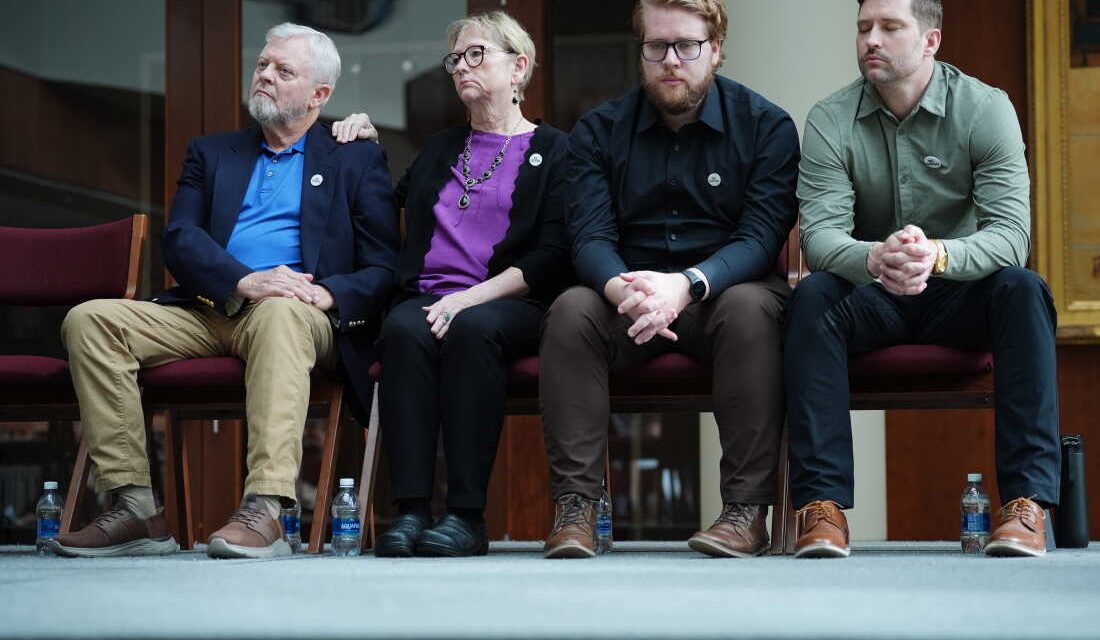
The family of Renee Good, comprising her father Tim Ganger, mother Donna Ganger, and brothers Luke and Brent Ganger, attended a news conference in Minneapolis after filing lawsuits against the U.S. government and immigration officials. Good, aged 37, was killed in January during an immigration enforcement operation conducted by the Trump administration in Minnesota.
Two civil lawsuits have been filed by the family. The first lawsuit accuses the government of wrongful death, alleging that Immigration and Customs Enforcement (ICE) officer Jonathan Ross used excessive force against Good, violating both agency policies and the Fourth Amendment. The lawsuit seeks damages for the suffering endured by Good and her partner, Becca Good, who witnessed the incident and has since experienced emotional distress.
Renee Good was shot multiple times by Ross while in her car. Initially, federal officials claimed Good had used her vehicle as a weapon; however, video evidence disputes this assertion. The second lawsuit takes a more unusual approach, alleging a conspiracy by federal officials to infringe on the civil rights of Minnesota residents. It describes Good’s death as a result of a planned effort targeting Somali and Hispanic communities for aggression and fear. Key legal reference includes the Ku Klux Klan Act of 1871, enacted during the Reconstruction era to combat terrorism by the KKK.
“The second lawsuit is very unusual,” noted Rachel Moran, a University of St. Thomas law professor, highlighting its striking use of conspiracy charges similar to those applied by the Trump administration against protesters of its immigration tactics.
The family’s legal representative, Ben Berkman, argues that the first lawsuit addresses the immediate actions taken by federal officers against Good, while the second questions the larger strategy behind those actions. According to Berkman, it aims to hold accountable all officials involved in placing officers, like Ross, on the street that day. These officials reportedly include Stephen Miller, Kristi Noem, Tom Homan, and Gregory Bovino, among others.
While NPR sought a response from the Department of Homeland Security, none was received. A White House spokesperson, Lauren Bis, responded by stating their intention to defend against the lawsuits vigorously. The case also references ten unnamed federal agents present at the scene, whom the government has not identified.
Despite the civil charges, there have been no criminal charges filed. DHS has not disclosed any ongoing investigations into the killing of Renee Good or others like Alex Pretti, also killed by Border Patrol agents. As of now, local officials in Minnesota have not filed any charges or revealed findings from any investigations.
During the press conference, Renee Good’s family expressed frustration over the lack of accountability and investigation. Civil lawsuits are perceived as a means to hold institutions accountable beyond individual actions.
“No accountability, no investigation, no expression of condolence, no change in policy is completely mind-blowing,” said Brent Ganger, Renee’s brother. “We will not wait any longer. The time is absolutely now for accountability.”
Brent and Donna Ganger recently testified before Congress regarding fatal shootings by federal immigration officers. Renee’s partner, Becca Good, also shared her perspective, emphasizing the personal loss and impact on their family. They have a young son, and Becca spoke of milestone moments her partner will now miss.
“I got ready to put our son in first grade. I went to Back To School Night on my own.” Becca Good stated. “This Halloween, it’s our son’s favorite holiday. I’ll take him trick-or-treating, without her hand in mine.”