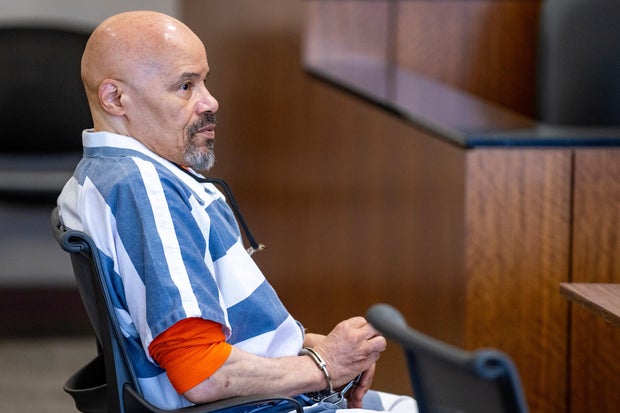
On Monday, a Utah judge ordered the release of Douglas Stewart Carter, a 71-year-old man who spent decades on death row, on bail. The decision came despite objections from the victim’s family, following the revelation that newly analyzed DNA evidence did not match Carter. Carter was originally sentenced to death in 1985 for the murder of Eva Olesen, an aunt of the Provo police chief at the time.
Carter’s conviction was based primarily on a confession and testimony from witnesses who claimed he had boasted about killing Olesen. Both witnesses later recanted their statements. No physical evidence linked Carter to the crime, and the state Supreme Court ordered a new trial last year due to reported misconduct by investigators. Carter has maintained his innocence, asserting that his confession was coerced.
Judge Derek Pullan noted that the new DNA evidence further undermined the case against Carter but stated a reasonable jury might still find him guilty of the crime. Pullan required Carter to wear a GPS monitor and avoid contact with Olesen’s family as conditions of his release.
Defense attorney Neal Hamilton revealed that Carter will be staying near his son’s biological family, who he was adopted by as an infant and learned about Carter’s conviction much later in life. Hamilton emphasized the psychological impact of Carter’s prolonged imprisonment, stating, “He’s being released with 41 years of state-induced trauma and the effect it will have on him is very real.”
Scheduled for a retrial in 2027, Utah County prosecutors withdrew their intent to pursue the death penalty last week. The prosecutors are reconsidering the evidence with the updated DNA results, showing Carter cannot be matched to blood found at the crime scene.
Carter, originally from Chicago, was living with his mother in Utah at the time of Olesen’s murder on February 27, 1985. He fled Utah in April, suspecting he was implicated in another assault case. Carter was caught in Nashville, Tennessee, in June and confessed during an interrogation.
Hamilton explained that Carter and a friend were held for days, and Carter eventually confessed under pressure, attempting to protect his friend. The defense at Carter’s trial called no witnesses, leading to his conviction and a subsequent 1992 retrial where he was again sentenced to death. Multiple appeals were rejected by Utah courts over the years.
A significant turning point occurred in 2011 when witnesses from Carter’s original trial admitted they lied under police instruction, receiving cash and gifts in exchange for their testimonies. They claimed police had threatened them and their family with deportation.
The Utah Supreme Court ordered a new trial last year, citing “multiple instances of intentional misconduct” by officials. A DNA analysis followed the court’s order, producing results recently. Prosecutors have not disclosed whether the DNA findings are being used to identify other potential suspects.
Carter’s defense argued that witnesses observed a White man fleeing the crime scene and that evidence suggesting suspects, including the victim’s husband Orla Olesen, was suppressed. Investigators missed charging Orla Olesen due to intervention from a Provo police lieutenant.
Orla Olesen, who died in 2009, informed police he found Eva Olesen dead in their home. During Monday’s hearing, Theresa Olesen, Eva’s daughter-in-law, expressed concerns regarding Carter’s release and his pending trial. She emphasized continuing the investigation in search of justice for Eva Olesen.