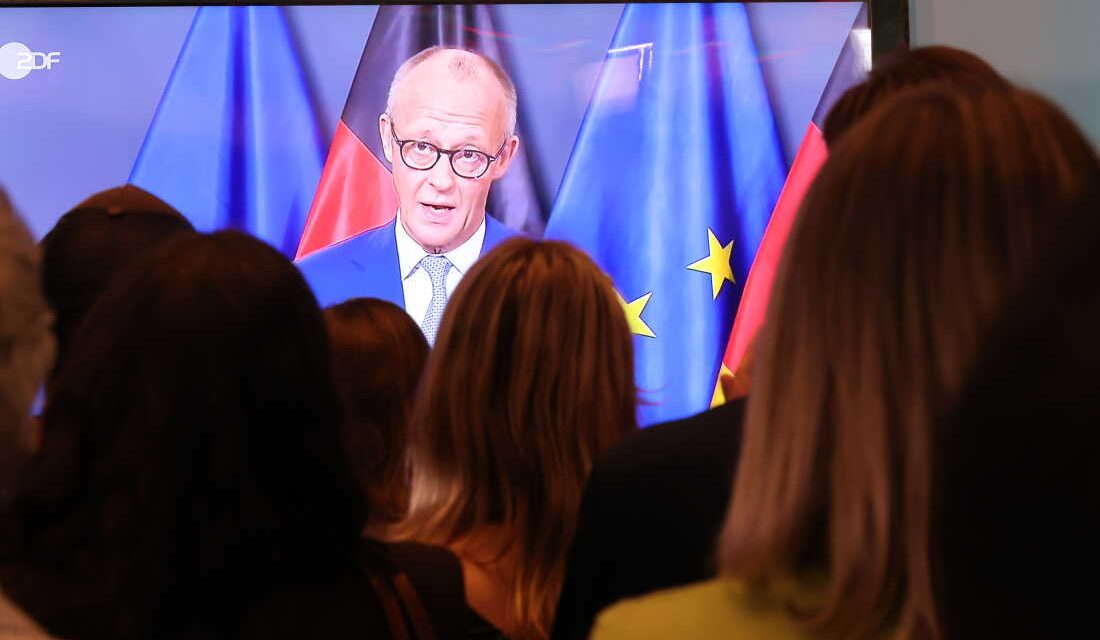
Supporters of the Christian Democratic Union (CDU) witnessed a challenging moment with German Chancellor Friedrich Merz appearing on a screen in a TV studio after polling stations closed in the Mecklenburg-Western Pomerania state elections. Merz was supposed to be traveling to New York for the United Nations General Assembly; however, he stayed at the CDU headquarters in Berlin to address the results. Exit polls from the state elections revealed the CDU’s worst performance since World War II.
In elections held in Mecklenburg-Western Pomerania and Berlin, the far-right Alternative for Germany (AfD) gained significant ground compared to previous state elections in 2021 and 2023. The AfD secured 38.2% of votes in the northeastern state and 16.3% in Berlin, overshadowing Merz’s party. Meanwhile, Berlin saw the far-left Die Linke emerge in first place with 25.7% of the vote, ahead of the CDU by seven percentage points. The CDU only achieved 4.9% in Mecklenburg-Western Pomerania, failing to meet the threshold that prevents fringe parties from entering parliament.
Despite the losses that occurred two weeks after a setback in Saxony-Anhalt, Merz rejected speculation about his resignation. Typically, a German federal chancellor doesn’t comment on state election outcomes, especially for smaller electorates, but the defeats reflected poorly on Merz’s leadership. He labeled the night a ‘disaster’ for centrist politics, yet vowed to pursue federal tax and welfare reforms as a remedy against authoritarianism. Merz emphasized the necessity for determination and patience, promising to showcase these qualities as chancellor.
Alice Weidel, AfD’s federal leader, told ARD, ‘Friedrich Merz is the wrong chancellor for the CDU,’ stating that Merz’s resistance benefits her party.
In Mecklenburg-Western Pomerania, the Social Democrats (SPD)—rather than the AfD—are likely to continue governing. Merz’s coalition partner, SPD, saw the AfD outperform it there. SPD state governor Manuela Schwesig, who finished second with 35%, is expected to find coalition partners to stay in power.
Berlin saw Die Linke achieve its best result ever, with party leader Elif Eralp pledging to make Berlin more affordable, resembling initiatives by New York Mayor Zohran Mamdani. Eralp promised a rent cap and the seizure of properties from large corporate landlords, although the latter promise could prove contentious as coalition talks begin.
Germany’s electoral system combines winner-take-all and proportional representation, meaning coalition governments are necessary for a parliamentary majority. Eralp will need to partner with at least two parties to become mayor. Nationally, Merz—a co-governer alongside the Social Democrats—finds creating such consensus challenging even with just one coalition partner.
Sudha David-Wilp of the German Marshall Fund told NPR, ‘Merz himself has wanted to be chancellor for so long… the bar is very high to oust a chancellor in Germany.’
As political fragmentation complicates stable coalitions and policy implementation, the AfD watches, ready to capitalize in future elections.
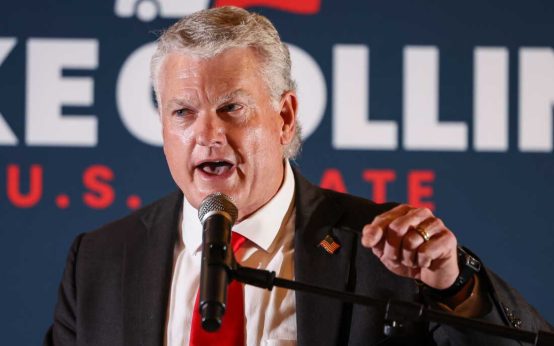 Georgia’s Senate Race Highlights GOP Divide on 2020 Election Claims
 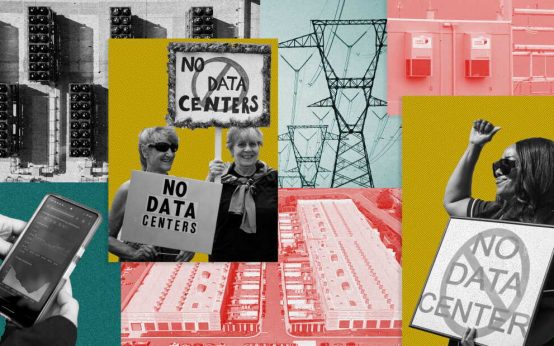 Debate Over Data Centers Sparks Political Divides in American Communities
 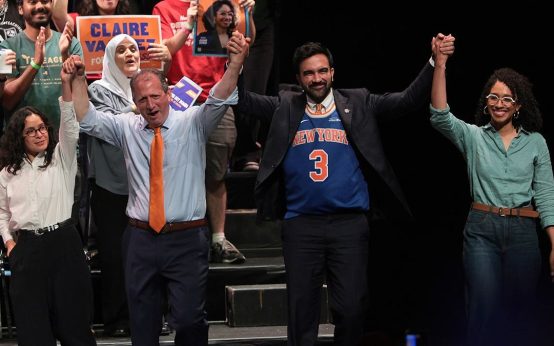 Lara Trump Discusses Democratic Party’s Socialist Influence
 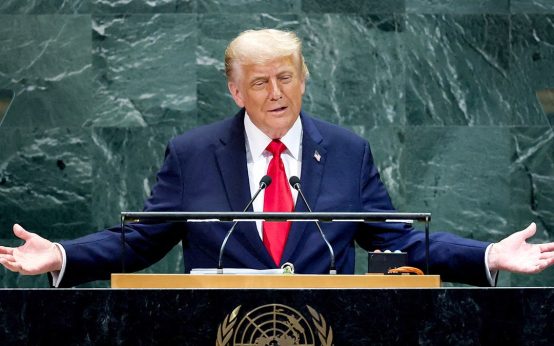 UN General Assembly: Global Leaders Seek Influence Amid International Conflicts
 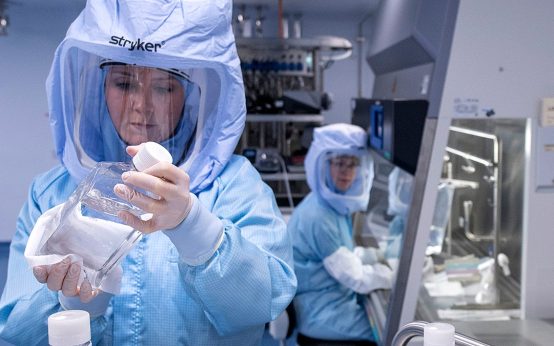 Trump’s Strategy to Lower Prescription Drug Prices
 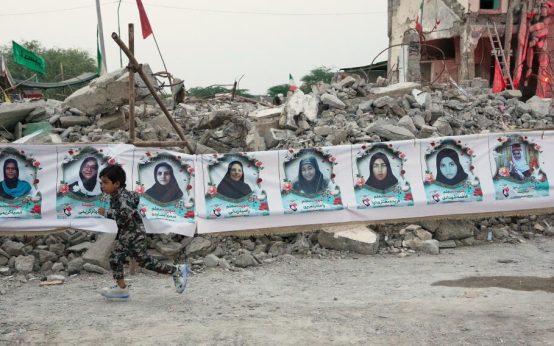 Pentagon Investigation Reveals U.S. Responsibility in Deadly Iranian School Strike