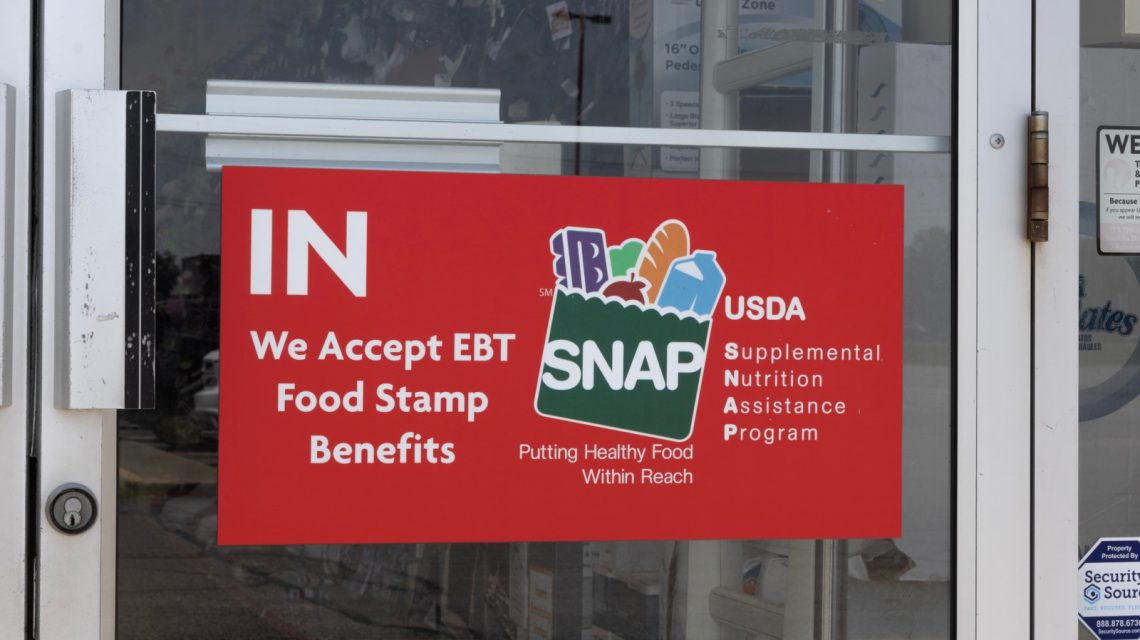
Millions of Americans receiving benefits from the Supplemental Nutrition Assistance Program (SNAP) are set to begin collecting their October payments soon. Wondering when you’ll receive yours?
SNAP, commonly known as food stamps, provides crucial monthly food assistance to qualifying low-income households. Over 36 million individuals across the United States currently benefit from SNAP. The benefits are delivered through an electronic benefit transfer (EBT) account. Beneficiaries use this EBT card, functioning like a debit card, to pay for approved groceries at authorized outlets.
Distribution of SNAP Benefits
The program, led federally by the U.S. Department of Agriculture (USDA), is managed at the state level. This means not every recipient receives their benefits simultaneously.
While SNAP is federally funded, states are responsible for administering the program and setting payment schedules. Benefits are credited to a recipient’s EBT account in a single payment each month.
Some states, mainly those with smaller populations, issue payments to their entire beneficiary list on one set day. For instance, states like Alaska, North Dakota, Rhode Island, and Vermont generally disburse benefits on the first of the month. South Dakota, on the other hand, issues benefits on the 10th.
Other states have staggered payment schedules based on criteria like the recipient’s case number, Social Security number, or last name. In California, for example, CalFresh payments are distributed within the first ten days of the month, depending on the final digit of the case number.
SNP Payments for October 2026
New York’s SNAP benefits are provided according to a staggered payment schedule. Thus, the October dates noted might indicate the start or conclusion of the monthly issuance period, rather than a single state-wide payment day.
Increase in October SNAP Maximums
October signals the onset of the 2027 federal fiscal year, which brings updated SNAP maximum allotments effective as of October 1.
For the 48 contiguous states and Washington, D.C., the maximum monthly benefits will rise to $306 for a one-person household, $562 for two people, $808 for a three-person household, and $1,023 for a four-person household. Separate benefit amounts apply to Alaska, Hawaii, Guam, and the U.S. Virgin Islands.
This adjustment doesn’t guarantee an automatic increase for all recipients, as benefits typically depend on household income. As of June, the average benefit was $186.53 per person, according to USDA figures.
Hawaii is the sole state to witness a marginal SNAP decrease in FY 2027. This is attributed to using a unique Thrifty Food Plan adjustment for Hawaii instead of the standard formula for the contiguous states.
Latest SNAP News
SNAP enrollment fell by over 300,000 between May and June 2026, as reported in fresh USDA data released last week. This trend reflects a significant national reduction following the implementation of the One Big Beautiful Bill Act, which introduced several new eligibility criteria for SNAP claims.
In June 2026, around 36.35 million individuals received benefits, a reduction from 36.69 million the preceding month—a drop of roughly 332,000 recipients. Although 34 states saw a monthly decrease in numbers, 16 states recorded an increase in SNAP beneficiaries.
The decrease partially preceded the OBBBA, enacted by President Donald Trump in July 2025, though states are still applying eligibility and work-requirement amendments included in the bill. This legislation broadened the age range for adults affected by SNAP’s time-limited work conditions and altered several exceptions.
USDA emphasized not attributing enrollment changes to a single policy. Compared to June 2025, a month before OBBBA’s congressional approval, national participation decreased by over 5.3 million, or 12.8%.
A USDA representative informed Newsweek that participation figures are “constantly changing,” citing various influences that might lead individuals to stop receiving SNAP benefits, such as job acquisition, opting out, or shifts in household conditions. Additionally, the agency highlighted that enrollment decreases in some states started before the law’s passage in 2025.
Contact Newsweek editors for further information on this story: Ben Kelly and James Debens.
 Historical Highlights of September 22 in Chicago
  Buffalo Grove Fire Station 25 Embraces Modern Safety and Efficiency
  Air Traffic Communication Breakdown Disrupts Northeast Airports
  Gen Z’s Early Workforce Success Compared to Millennials
  NTSB Launches National Campaign for Railworker Safety in Chicago
  Staten Island Event Sparks Controversy Over Mayor’s Presence