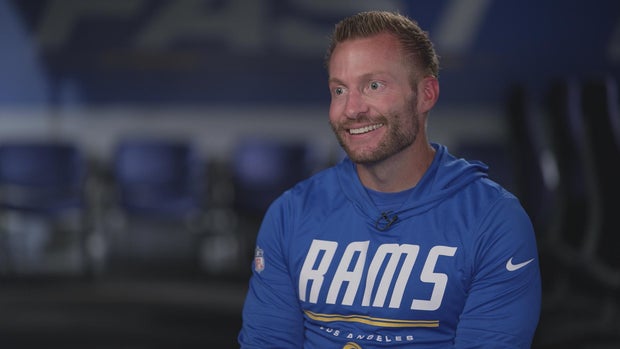
The upcoming Super Bowl will take place in Los Angeles, setting the stage for a unique opportunity for one team to play at home. The Rams stand out as a premier NFL franchise, exemplifying the blue-chip gold standard of professional football. This preseason, observers were granted a closer look at the Rams’ inner workings, revealing an organization overflowing with contradictions. They’ve achieved success through a mix of prudence and bold tactics, embracing both change and continuity. While known for physical prowess, the Rams also excel intellectually, largely guided by the leadership of Sean McVay, the youngest head coach in NFL history.
Since McVay’s appointment a decade ago, he’s emerged as a standout talent in professional sports, comparable to some of the most renowned coaches like Lombardi, Shula, and Belichick. McVay openly acknowledges the pressures that accompany great expectations.
Sean McVay: “Oh, I’m a lot tormented.”
Jon Wertheim: “You’re a lot tormented; what’s tormenting you right now?”
Sean McVay: “The practice that we just had. That’s why I’m in such a great mood.”
Just a month before the NFL season began, McVay expressed dissatisfaction with a practice session that seemed typical to others. Despite the intense focus, McVay’s mind lingered on the practice.
The Rams squad is characterized by an exceptional roster. Quarterback Matthew Stafford, the NFL’s reigning MVP, spearheads the offense. On defense, the acquisition of Myles Garrett, considered the league’s top defender, strengthens their strategy. Additionally, defensive lineman Aaron Donald has returned from retirement to rejoin the team, further enhancing their capabilities.
Sean McVay emphasizes a mentality focused on achievement.
Sean McVay: “We are wired to achieve. And let’s make no mistake about it. When we take the field, the expectations are to win.”
Instead of bowing to external narratives, McVay prioritizes the team’s journey over the end destination. The Rams, rooted in Los Angeles, have evolved significantly since their return from St. Louis, during which the team struggled to secure winning seasons and saw leadership changes.
General Manager Les Snead faced significant challenges in 2016, prompting the organization to take risks by appointing McVay.
Les Snead: “This guy changes the math.”
Jon Wertheim: “What do you mean?”
Les Snead: “Tactically, when he’s in flow, it’s like you’re trying to defend 12 instead of 11.”
McVay quickly turned the team’s fortunes around, earning a playoff berth and Coach of the Year honors in his first season. His strategic prowess is attributed to an exceptional memory and problem-solving ability, driving swift decision-making.
McVay’s path began in Atlanta as a star high school quarterback; however, injuries shifted his career trajectory toward NFL administration. Inspired by his grandfather, John McVay, McVay quickly ascended the ranks, shaping strategy with unique techniques that spotlight open targets for receivers.
Matthew Stafford explains McVay’s approach.
Matthew Stafford: “On every single play, a defender is part of an 11-man team with responsibilities for specific areas, and we’re going to try to create conflicts. That happens through endless studying, talking, understanding defensive responsibilities, and knowing their adjustments.”
Executing plays flawlessly is a rewarding experience for Stafford, though real-time interactions with McVay during games can be overwhelming.
Jon Wertheim: “What’s it like hearing him in your helmet?”
Matthew Stafford: “It’s a lot. It’s a whole lotta fun. No talk back button though.”
In his first season with Stafford, the Rams reached the Super Bowl, marking McVay’s milestone as the youngest head coach to win the championship. Yet, even with success, challenges persisted.
Sean McVay reflects on the impact of the Super Bowl experience.
Sean McVay: “The lies I told myself were, ‘Once we win a Super Bowl, I’ll be happy.’ And the lies I told myself were, ‘I won’t be happy until I win one.'”
Nevertheless, the Rams encountered a losing season following their Super Bowl victory, prompting McVay to reevaluate his identity and consider a shift to broadcasting.
Sean McVay: “I was ready to run away from coaching and hide behind convenient narratives like media opportunities. My wife Veronika’s advice was a wake-up call.”
McVay’s resilience persisted, leading the Rams to playoffs in ensuing seasons. With over 100 wins before turning 40, McVay values continuous improvement, acknowledging the unpredictable nature of success.
Sean McVay offers insights on his coaching philosophy.
Sean McVay: “Success is never linear. It’s always up and down. It’s the awareness of triggers, and how quickly you can snap out of it.”
Understanding the importance of self-awareness is crucial for McVay, who emphasizes a culture of honesty, hard work, and vulnerability within the organization.
Matthew Stafford discusses these principles.
Matthew Stafford: “Within our locker room, we all want to be as close as possible, which often requires vulnerability. There’s false narratives about our sport and people, but openness brings us closer.”
Additionally, McVay’s fitness and vibrant personality enhance his connection with players and add to his leadership capabilities beyond strategic initiatives.
Finally, the Rams benefit from generous ownership led by the Kroenke family. Their commitment includes not only building the opulent SoFi Stadium but investing in innovative solutions like AI to redefine coaching strategies.
Nicolle Blake: “You’ll have significantly more patterns identified by AI that the human eye won’t catch.”
The Rams leverage AI to enhance strategies, yet football remains fundamentally a human-centric game focused on nuance and patterns. Snead’s office serves as a reminder of the ongoing quest for success, embodied in a statue of Sisyphus symbolizing relentless effort against challenges. Sean McVay, as the second-longest tenured NFL coach, acknowledges the continuous journey of growth and excellence.
Sean McVay: “You’re either in a storm, coming out of one, or getting ready to go back into it. But how you handle it is the separator.”
Produced by Aaron Weisz and Ian Flickinger. Associate producer, Mimi Lamarre. Edited by Warren Lustig and Aisha Crespo.
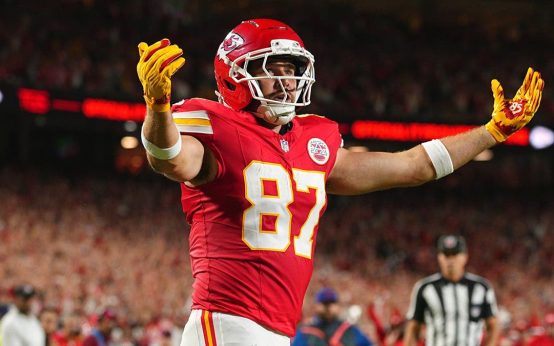 Travis Kelce Sparks Excitement at Arrowhead Stadium
 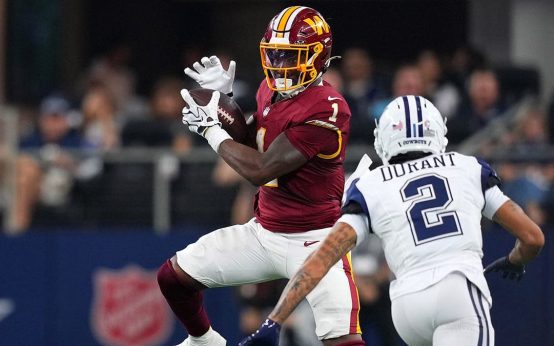 Dallas Cowboys Defeat Washington Commanders Amid Player Injury
 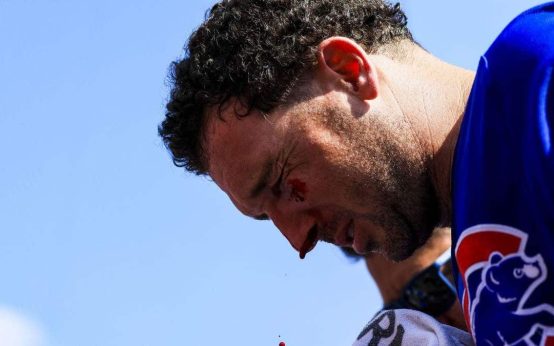 Chicago Cubs’ Alex Bregman Suffers Facial Injury from Foul Ball
 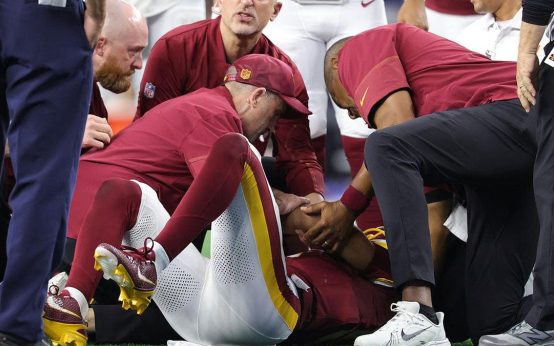 Washington Commanders Face Major Setback as QB Jayden Daniels Suffers Elbow Injury
 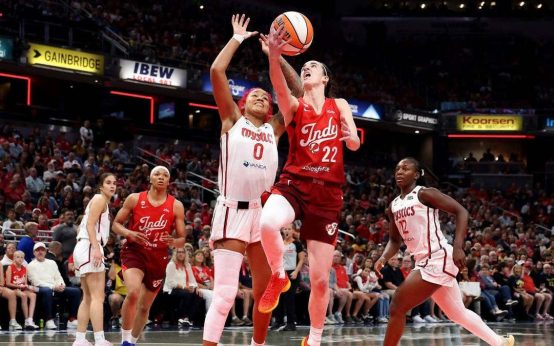 Indiana Fever’s Struggles Against Washington Mystics
 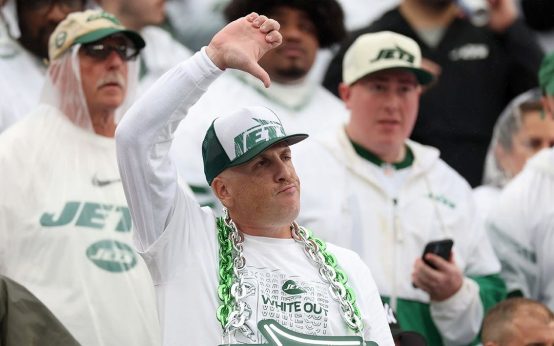 New York Jets Fall to Green Bay Packers After Fourth-Quarter Collapse