Experts are highlighting Africa’s potential to become a significant hub for data centers and Artificial Intelligence (AI). The Trump administration is promoting American companies to set AI development standards globally, focusing on opportunities in Africa due to environmental restrictions affecting data centers in the U.S.
Consultant Abhishek Goyal from Arizton Advisory & Intelligence told Fox News Digital, “Africa is emerging as a prime location for AI infrastructure, especially as mature markets confront power and environmental challenges.” The U.S. is actively pursuing business opportunities in Africa, with American companies winning substantial deals in direct competition with China.
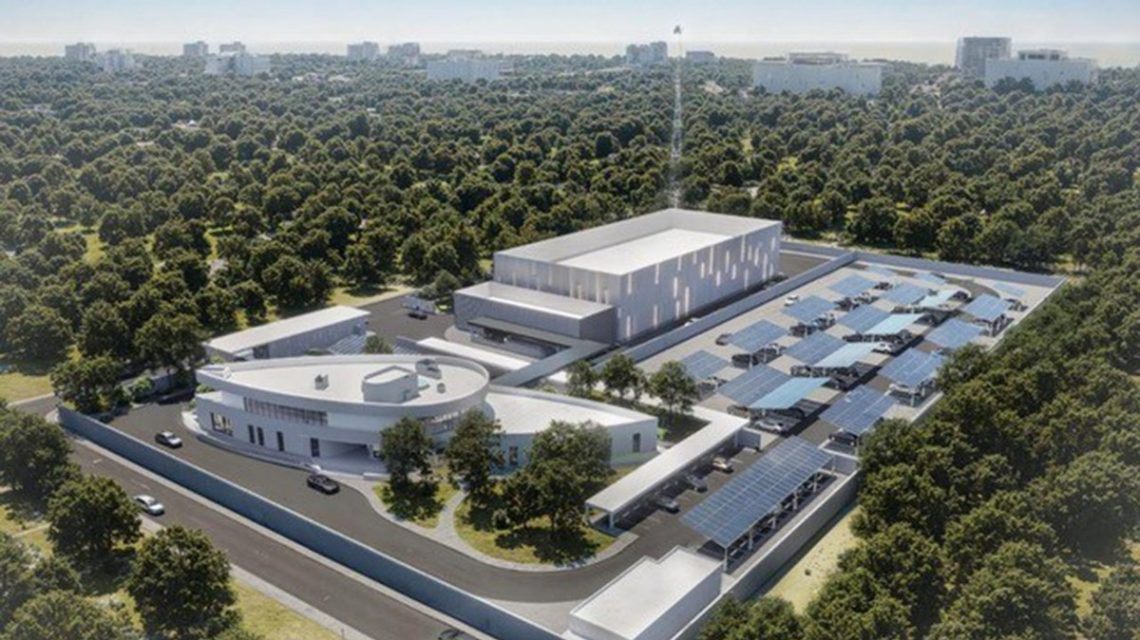
A rendering of the proposed U.S. company Cybastion’s data center in the Ivory Coast highlights a $170 million contract facilitated by the U.S. Embassy. – Image credit: Cybastion
Goyal added that Africa offers a promising frontier because its infrastructure, while underdeveloped, poses an opportunity. A State Department spokesperson reinforced America’s commitment to maintaining its AI infrastructure as the global gold standard.
U.S.-backed companies have successfully secured a $6.2 billion agreement in Lesotho for a data center and hydropower plant. Additionally, business deals amounting to $600 million were finalized in Gabon with further $100 million contracts for data centers and a gas-to-power plant.
The Kobong Hydro project in Lesotho is part of the $6.2 billion deal with the Lesotho government. – Image credit: Convalt Energy
Assistant Secretary of State Frank Garcia stated the United States is assisting businesses in exploring African markets under President Trump’s leadership, amid Africa’s budding data center industry.
Arthur Goldstuck, CEO of World Wide Worx, indicated Africa’s uncompetitive installed capacity compared to the U.S. and Europe. Yet, Africa offers an attractive market potential for developing local cloud services and AI capabilities.
Goldstuck emphasized Africa’s rapid growth in data centers is driven by local demands for cloud and AI services. Increasingly, African governments and businesses wish to store sensitive data locally, further fueling expansion.
Clement Djakey captured a site visit for Cybastion’s new data center construction project in Ivory Coast. – Image credit: Clement Djakey
According to Goyal, countries like South Africa, Kenya, Nigeria, Morocco, and Egypt are drawing significant AI projects. The U.S. Government aims to offer secure solutions utilizing public and private financing in technology areas.
The development of undersea cable networks across the Atlantic could greatly enhance Africa’s connectivity, offering new opportunities.
The Isando Campus serving Teraco Data in Johannesburg showcases data centers across several regions. – Image credit: Leon Sadiki/Bloomberg
Goldstuck believes connecting U.S. and African data centers through undersea AI cables is feasible, yet geographical limitations may impact fast-response services. These facilities could serve as backups, enabling disaster recovery and some intensive AI processing.
Currently, Africa’s regulatory framework is viewed as a “wild west,” lacking robust policies. In South Africa, the absence of a public register for facilities raises concerns about resource usage transparency.
Pitso Tsibolane from the University of Cape Town emphasizes the need for regulation. Transparent disclosures and predictable approvals would benefit communities, the power grid, and investors.
The future for Africa’s data center industry seems promising. Goyal notes numerous African countries possess abundant renewable energy resources such as solar, wind, and geothermal sources. These advantages, coupled with lower development costs, make Africa a prime candidate for growth.
Veteran correspondent Paul Tilsley, based in Johannesburg, can be followed for updates on this developing story.
 The Cost of Challenging Beijing
  Experts Warn Against Alarmism in AI Governance
  Tensions Escalate in Iran Conflict as Global Leaders Weigh Options
  White House Approves F-35 Sales to Saudi Arabia Amidst Regional Tensions
  Inside the Secret Deals Powering the President’s Push to Deport Migrants to Countries Not Their Own
  Navigating the Challenges of Third-Country Deportations