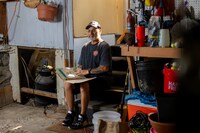
While sorting his garage, Jason Hurdle stumbled upon a hidden crawl space behind a plywood sheet. Within, he found a dusty box of files labeled “SECRET.” The box contained firsthand accounts from American POWs during World War II. Hurdle, a mechanic near Waterloo, New York, encountered classified government documents for the first time.
Rediscovering History
The 80-year-old pages described the harrowing conditions faced by over 120 soldiers in German captivity. These accounts detailed cramped spaces, lack of food, and unsanitary conditions. Hurdle’s discovery preserved nearly 300 pages that might have been lost.
National Archives Involvement
In July, the National Archives announced the recovery of these documents by their Archival Recovery Program. This team also recovered Apollo mission records and other historical documents. These WWII records were particularly significant due to their firsthand nature.
News of the discovery was not widespread, surprising some soldiers’ families. While some had shared their stories, others had kept silent. Kimberly Guise from the National World War II Museum highlighted the importance of these accounts in POW research.
Unexpected Find
The house where Hurdle found the documents had been in his wife’s family for generations. He brought the files to a local museum, which later led to involvement from the National Archives. Two officials visited his home to secure the documents.
“I’m in podunk little Waterloo, New York, and this went all the way to the National Archives,” Hurdle said.
The federal agency was unaware of the documents’ existence, making their discovery crucial for historical preservation.
The Significance of Camp Lucky Strike
By 1945, Camp Lucky Strike in Normandy became a waypoint for freed American POWs. It accommodated 58,000 troops and aimed to process them swiftly. POWs detailed their experiences, providing intelligence for U.S. forces.
Prisoner Accounts
The first document seen by Hurdle was a report from Col. Darr H. Alkire about Geneva Convention violations. POWs described brutal treatment, cramped conditions, and inadequate medical care. Soldiers answered whether they had witnessed atrocities, with many recounting inhumane conditions.
Prisoners like Julian G. Candelaria recalled the dire state of transportation and captivity. Others detailed exposure to bombings and severe mistreatment. Emilio M. Membrila reported unsanitary living quarters unfit for humans.
Legacy and Impact
Years after WWII, families have uncovered the untold stories of their ancestors. Henry Daly’s family learned of his experiences only after reviewing Hurdle’s discovery, revealing his hardships during the Battle of the Bulge.
Pete Dimas, whose father Pete also endured harsh conditions, plans to capture his father’s experiences in a documentary. Discovering these personal narratives has shed light on the sacrifices made by American POWs.
The National Archives intends to digitize these records, ensuring public access to this important chapter of history.
 Community Relief Efforts at New Orleans Free Store
  Girl Scout Troop 35579 Project: Pet Pantry for Woodland Park
  Children’s YouTube Star Ms. Rachel Draws Scrutiny Over Links to Palestinian Photojournalist
  Lonnie G. Bunch III Reflects on His Legacy at the Smithsonian
  Community Initiatives and Updates in Indiana
  The Dark Side of MLB’s Recruitment in the Dominican Republic