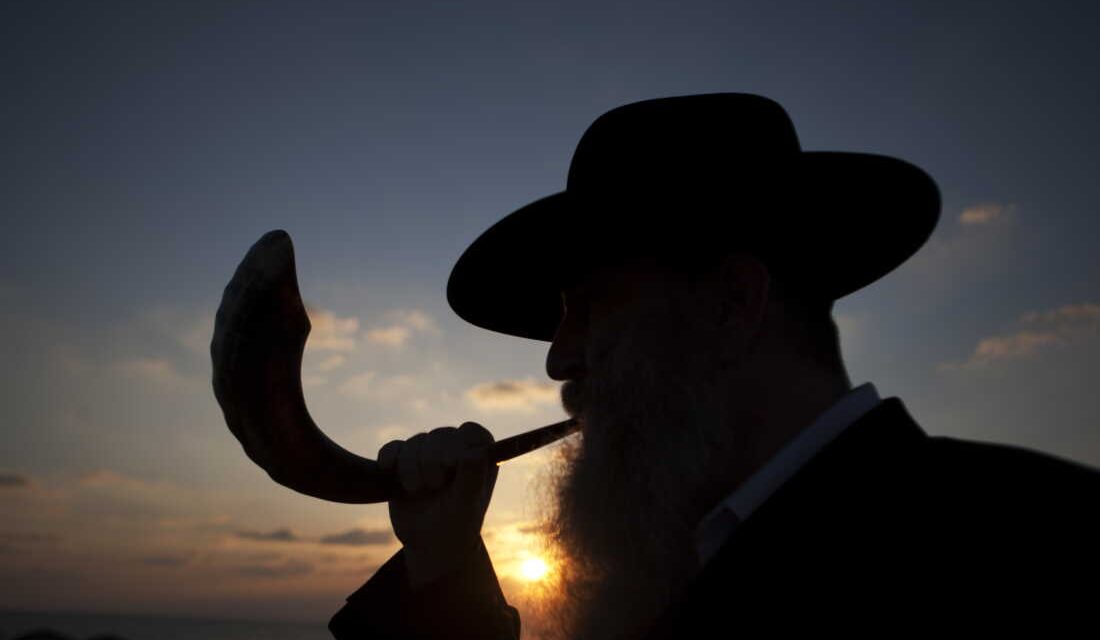
A man in Israel participates in a Rosh Hashanah ritual by blowing a shofar, a ram’s horn. The shofar produces a unique sound, whether it is the small, curved horn of a ram or the dramatic spiral of an African antelope. Rabbi Alicia Jo Rabins, a musician in Portland, Oregon, shares that producing this sound requires some practice. You need to take a deep breath and purse your lips, similar to playing a brass instrument.
Rosh Hashanah, the Jewish new year, begins at sunset on Friday. For Jews worldwide, this two-day holiday involves prayer, reflection, and celebration. A significant moment for many is hearing the shofar, an animal horn blown like a trumpet. This ancient instrument has become a central part of the holiday’s spiritual experience.
The most basic answer is that it makes noise, right? It calls people to attention,said Daniel Picus, an associate professor at Western Washington University who studies religious practices and rituals. The Hebrew Bible illustrates the shofar’s role in marking important events. Shofar blasts announced the revelation of the Torah at Mt. Sinai and the start of the Jubilee year. Priests used shofars as they circled the walls of Jericho, causing the walls to fall. The shofar signifies moments of heightened experience and emotion, especially during Rosh Hashanah.In the Hebrew Bible, Rosh Hashanah is identified as the day of trumpeting and remembrance, Picus explained. Its association with the shofar is deeply rooted in Biblical text. Centuries later, the Mishnah provided detailed instructions in the tractate Rosh Hashanah on how a shofar should be made, repaired, and blown. It even addressed the question of whether the shofar could be blown on Shabbat. The Talmud and later scholars continued to explore the shofar’s meaning.
Rabbi Micha’el Rosenberg from the Hadar Institute in New York City highlighted interpretations comparing the shofar’s sound to a mother’s cry of pain. This includes references to the mother of the slain biblical military commander Sisera and a woman in labor. Rosenberg describes this in the broken staccato blasts, known as “teruah,” which evoke a sense of deep emotion. He referenced Maimonides, the medieval Jewish scholar, who viewed the shofar’s blast as a spiritual wake-up call to strive for personal improvement. The sound encourages people to look beyond their immediate surroundings.
Hasidic theories suggest that blowing the shofar reenacts the breath of life being infused into the world. Rosenberg noted that the shofar transcends words and rational thoughts, offering a profound emotional experience.
Rabins, the Portland-based rabbi and musician, believes the shofar connects individuals across generations. It evokes the experiences of past ancestors, standing as a call through time that speaks to the deep, wordless places within us. According to Rabins, the shofar brings listeners into the present moment and awakens them to the full spectrum of life’s emotions. It demands attention, pointing to both the current moment and the year to come.
This article was produced in collaboration between NPR and Religion News Service.
 Exploring the Lucas Museum of Narrative Art
  Converse Apologizes and Withdraws Controversial Ad Amid Criticism
  Lucas Museum of Narrative Art Unveils in Los Angeles
  Lonnie G. Bunch III Reflects on His Legacy at the Smithsonian
  A Decade of Impact at the National Museum of African American History and Culture
  Urgent Archaeological Efforts in Quinhagak Stay Ahead of Erosion