The Nancy Grace Roman Space Telescope, an ambitious project funded by NASA, launched on Sunday aboard a SpaceX Falcon Heavy rocket. This mission is pivotal for scientific research, aiming to explore some of the universe’s most profound secrets.
With a project cost of $4.3 billion, the telescope is named after Nancy Grace Roman, a distinguished astronomer known as the ‘Mother of Hubble’ for her contributions to NASA’s space astronomy program. The launch signifies one of NASA’s most substantial scientific endeavors in recent history.
Capabilities of the Roman Space Telescope
NASA officials have highlighted the telescope’s vast field of view, which greatly surpasses prior observatories. It promises faster mapping of extensive universe regions, thereby supplementing the Hubble and James Webb space telescopes’ efforts.
Nicky Fox, NASA’s science mission director, predicts the observatory’s findings may include ‘thousands of supernovae, tens of thousands of planets, billions of galaxies, and tens of billions of stars.’ These discoveries are expected to advance understanding of galaxy formation, planet development, and the universe’s evolution over billions of years.
A Legacy of Astronomical Innovation
Who Was Nancy Grace Roman?
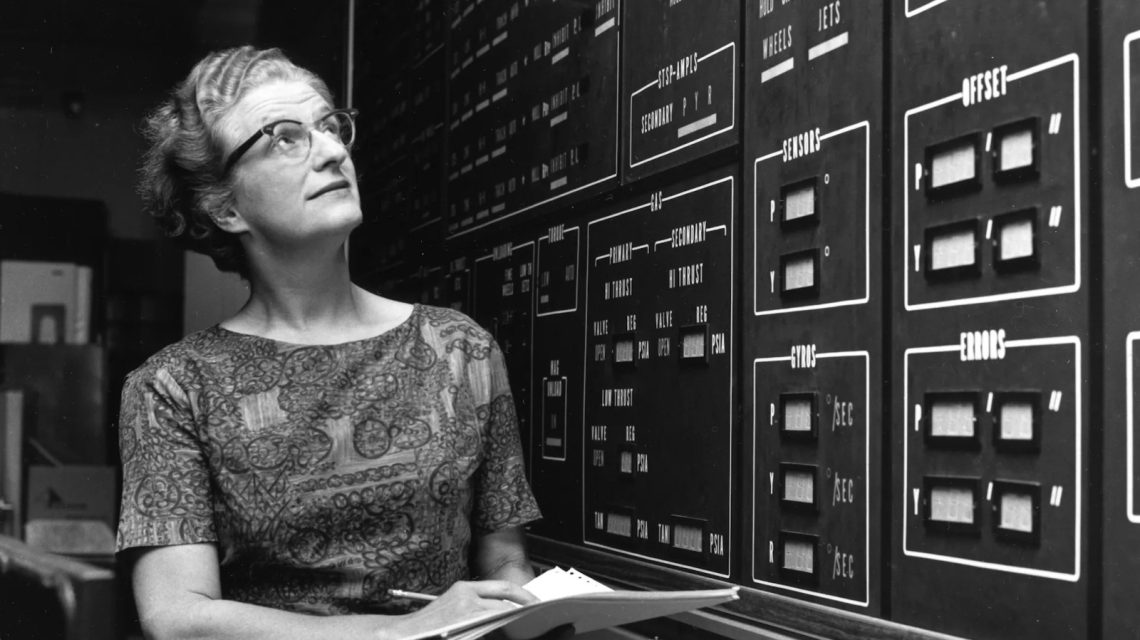
Nancy Grace Roman, NASA’s inaugural chief astronomer, played a crucial role in shaping the U.S. space science landscape. She was born in 1925 and pursued astronomy despite significant gender barriers at the time.
Roman joined NASA in its formative years, establishing its astronomy program and advocating for deploying powerful telescopes beyond Earth’s atmospheric interference. Her vision was instrumental in developing the Hubble Space Telescope, earning her the moniker ‘Mother of Hubble.’ Throughout her career, Roman championed scientific exploration and promoted gender equality in astronomy, leaving a lasting legacy until her passing in 2018 at age 93.
Mission Objectives and Potential Discoveries
What Is the New Telescope Being Used For?
The Nancy Grace Roman Space Telescope will conduct unprecedented wide-field surveys of the cosmos from space. Its field of view is over 100 times larger than the Hubble Space Telescope’s, facilitating rapid imaging of large sky areas while keeping similar sensitivity.
The telescope is set to travel for over three months to its destination near the second Lagrange point, approximately 1 million miles from Earth, also housing the James Webb Space Telescope. During its intended five-year mission, the Roman Space Telescope will search for exoplanets, map countless galaxies, study black holes, and investigate the properties of dark energy and dark matter. Scientists hope these expansive sky scans will uncover novel objects and phenomena previously unseen.
 NASA’s Challenges Amid Goddard Space Flight Center Relocations
  Lost City Linked to Jesus Discovered Near the Sea of Galilee
  NASA’s Launch of the Nancy Grace Roman Space Telescope
  Trump Engages with Astronauts and Honors Artemis II Crew
  NASA’s Nancy Grace Roman Telescope Prepares for Launch
  Spectacular Lunar Eclipse Graces US Skies