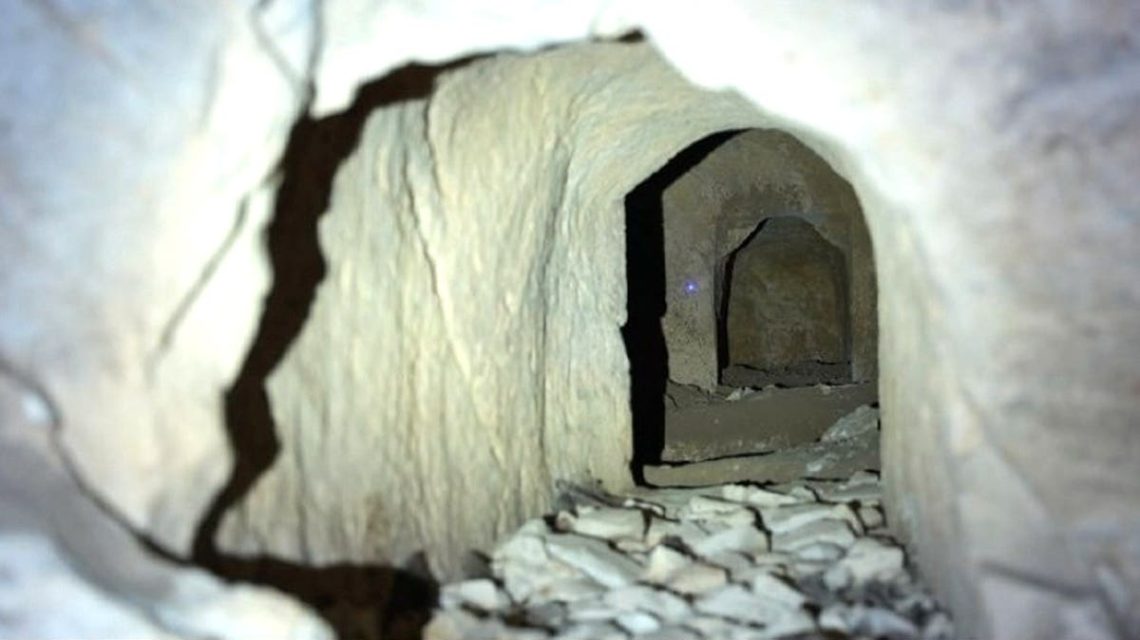
The Israel Police revealed the discovery of an ancient burial cave on August 24, discovered during a security operation in East Jerusalem’s Silwan area. The operation focused on managing a violent confrontation between families. Police reported the cave was accidentally found while seeking individuals connected to the conflict.
During the search, Jerusalem Border Police officers and government representatives identified the burial cave along with several archaeological artifacts beneath a building. The Israel Antiquities Authority examined these finds, determining they date back to the Second Temple period.
The Second Temple period spans from roughly 516 B.C. to 70 A.D., ending with the Roman destruction of the temple. Rock-cut burial caves similar to this one were commonly used in Jerusalem as family tombs during this historical period.
Pictures shared by Israeli police showcase the cave’s interior, packed with debris. The Israel Police and the Israel Antiquities Authority are tasked with securing and assessing the site further.
This cave is part of recent archaeological discoveries in Jerusalem. Previously, charred wooden beams dating back approximately 2,600 years were found. These are believed to be linked to the destruction of Solomon’s Temple. Another significant discovery, revealed last year, was the longest preserved section of Jerusalem’s Hasmonean-era wall.
The ongoing excavations continue to unveil Jerusalem’s ancient history, demonstrating the city’s historical significance over the millennia.
 Inside the Secret Deals Powering the President’s Push to Deport Migrants to Countries Not Their Own
  Navigating the Challenges of Third-Country Deportations
  Midair Altercation on Bangladesh to London Flight
  Ukraine Missile and Drone Barrage Hits Russia Amidst Elections
  U.S. Strategic Goals Remain Unmet Amid Prolonged Conflict
  New Photos Reveal Damage from Iranian Strikes in the Middle East