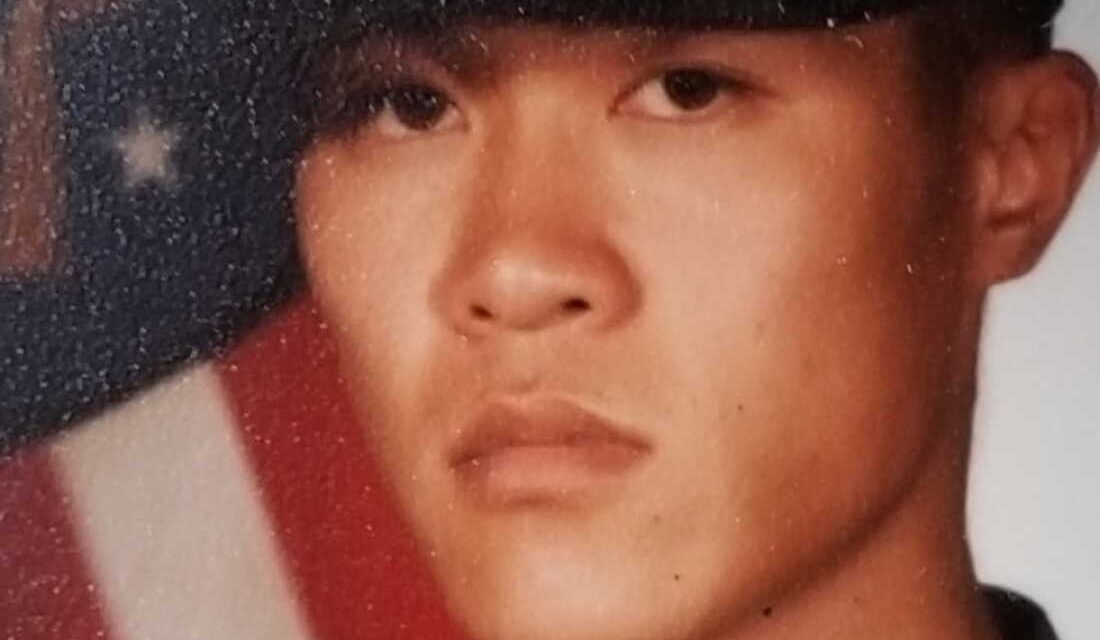
In June 2025, immigration authorities presented Sae Joon Park with a choice: leave the United States voluntarily or face detention and deportation, as reported by his legal team. Park, a Purple Heart veteran, self-deported last year and has now received a pardon, marking a crucial step in his journey to return to the U.S., a country he has called home for nearly his entire life.
New York Governor Kathy Hochul pardoned Park on Friday, erasing his convictions for bail jumping and drug possession. Park is one of six individuals granted clemency due to their demonstrated positive life changes and commitment to improving their communities, according to Hochul’s statement. ‘They earned their second chance through rehabilitation and can now establish their futures once again,’ she stated.
Park expressed his gratitude and hope for a chance to return to the U.S. in a statement. ‘I know there is still work ahead, but today I have hope that I may finally be able to come home,’ Park said. He thanked his legal team, everyone who advocated for him, and the thousands who supported him and his family, affirming that he will always remember their efforts.
Over the past year, Park’s situation has garnered significant national attention. During a congressional hearing in December, Rep. Seth Magaziner from Rhode Island raised Park’s situation while questioning Kristi Noem, former Homeland Security Secretary. Park participated in the hearing via Zoom.
Rep. Seth Magaziner asked Noem, ‘Will you commit to at least looking at Mr. Park’s case to see if you can help him find a pathway back to this country that he sacrificed so much for?’
Noem responded, ‘I will absolutely look at his case.’
Due to his two convictions, a removal order forced Park to move to South Korea, marking his first return in nearly five decades. Park came to the U.S. at age seven and became a legal permanent resident. At nineteen, Park enlisted in the U.S. Army and participated in the 1989 Operation Just Cause in Panama against Manuel Noriega’s regime, where he was injured in combat. Returning home, he was honorably discharged and awarded a Purple Heart.
In subsequent years, Park dealt with undiagnosed PTSD, leading to a drug addiction and legal troubles. He served three years in prison and overcame his addiction, later spending a decade rebuilding his life in Hawaii.
When faced with the immigration ultimatum in June 2025, Park reluctantly moved, leaving behind his two adult children and elderly mother, acknowledging it might be his last time seeing her.
Danicole Ramos, an attorney at the University of Hawaii’s refugee and immigration law clinic, emphasizes the pardon allows reopening Park’s case to request the board of immigration appeals vacate his removal order. ‘This pardon represents a tremendous step forward and gives Mr. Park and his family renewed hope that, after more than a year of separation, he may one day be able to return to the country he has called home since childhood and for which he put his life on the line,’ Ramos said.
 American Public Opinion on Press Freedom
  Media Lawsuit Against Trump Administration for White House Ban
  The Cost of Challenging Beijing
  Analyzing Midterm Elections and Party Dynamics
  Allan Lichtman’s Framework for Assessing Presidential Greatness
  Florida Senate Race Tightens as Recent Polls Show Dead Heat