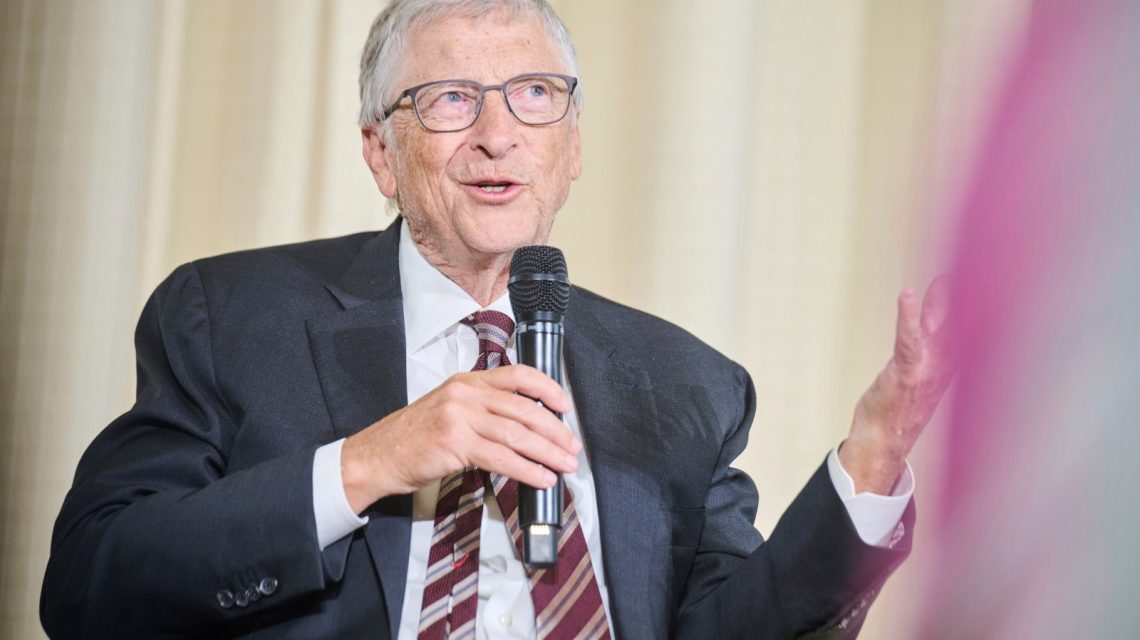
Microsoft co-founder Bill Gates has expressed deep concerns regarding the swift progression of artificial intelligence (AI) and the absence of substantial safeguards. Speaking on CNN with Anderson Cooper, Gates explained his urgency to discuss AI. He emphasized the need for public discourse on AI’s future due to significant risks and opportunities.
Gates highlighted several potential dangers of AI, such as cyberattacks and bioterrorism. He was astonished that stronger safeguards were not yet implemented. Gates argued that simply blocking data centers would be ineffective since companies could establish them elsewhere, maintaining that public involvement is crucial.
We have to take the AI issue, and it’s the bads versus the goods in a very explicit way,Gates remarked to Cooper.
Gates’ statements coincide with a 6,000-word essay in which he warns that AI will soon transform sectors like law, customer service, and medicine. Gates supports a global agreement to slow AI’s growth but acknowledges the difficulty due to economic and geopolitical competition. He suggested taxation of AI and reserving some jobs for humans.
Key Concerns and Proposals
In the interview, Gates outlined three primary risks posed by AI:
- Job Displacement: AI could significantly reduce job availability across various sectors, particularly impacting entry-level workers.
- Enhanced Malicious Acts: AI may enable more powerful cyberattacks, deepfakes, and other harmful actions.
- Impact on Human Relationships: AI companions might replace human interaction, affecting children’s social development.
Texas Congressman Greg Casar responded by highlighting his legislative efforts that align with Gates’ call for taxation to offset AI-triggered unemployment.
Recommendations for Managing AI’s Progression
Gates urges governments to proactively address AI’s rapid growth. He suggests creating new institutions to regulate AI risks, especially those threatening national security. Taxing AI tokens and robots could finance worker retraining and strengthen safety nets. Gates also advocates for reserving roles that require human judgement and care.
Oren Etzioni, a computer science professor, agreed with Gates on AI risks but critiqued some proposals. Etzioni supported taxing robots replacing workers but questioned taxing AI tokens, calling for existing agencies to adapt policies to AI risks.
Gates’ Perspective on AI’s Potential
Describing AI’s potential impact as substantially greater than nuclear, Gates believes the technology could be steered toward positive outcomes. He equated AI’s dual nature to the development of nuclear energy and weaponry, urging action to cultivate beneficial results.
 Data Centers Stir Controversy in Texas Amid Growth Boom
  The Technology Rivalry: Trump’s Meeting with Xi and the AI Ecosystem Clash
  Ways to Protect Your Finances from Cyber Threats
  Interview with Nvidia CEO Jensen Huang: AI Outlook and Business Strategy
  Concerns Rise Over Addictive Design of Sports Betting Apps
  Seton Hall National Security Graduate Fellowship Provides Hands-On Experience