The House Oversight Committee is set to examine claims that the Smithsonian Institution’s exhibits exhibit political bias and attempt to revise American history. A report from the White House suggests the National Museum of American History portrays the nation’s past negatively, leading to congressional scrutiny regarding the museum’s governance and use of federal funds.
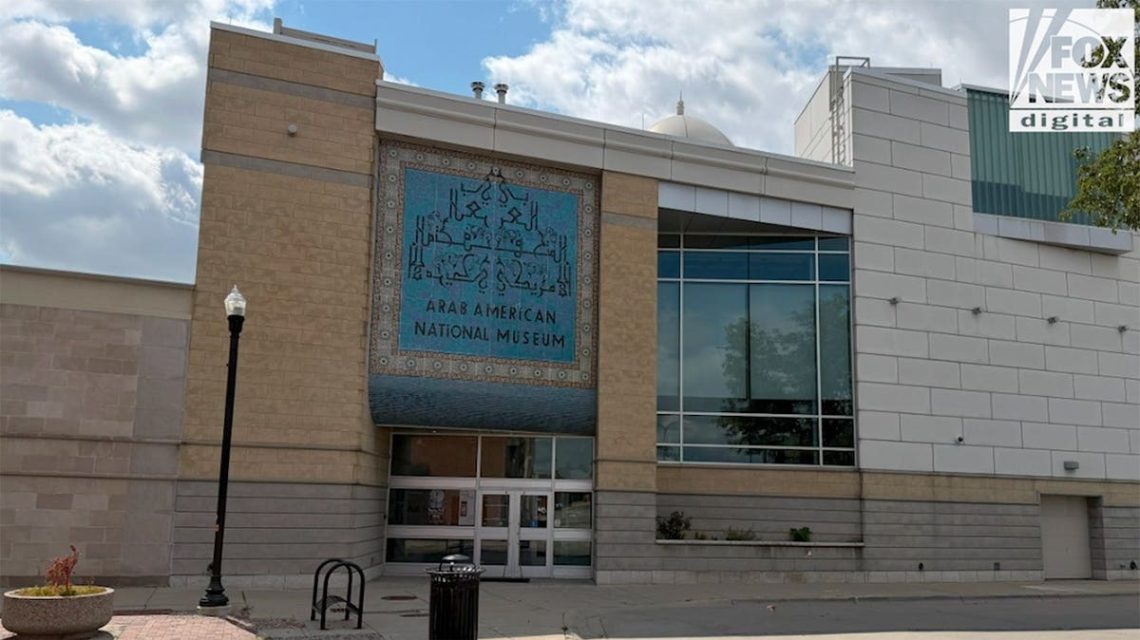
In Michigan, nearly a quarter-century after the September 11 attacks, a Smithsonian affiliate continues to focus on the discrimination and government actions following the attacks. This approach is criticized for giving less attention to the nearly 3,000 people who died on that day. The Arab American National Museum (AANM) in Dearborn argues that Arab Americans experienced dual repercussions from the events of September 11, both from the attack itself and the subsequent treatment by the U.S. government.
The AANM has consistently highlighted what it describes as discriminatory consequences following the U.S. response to the attacks. The museum has received significant grant funding from the National Endowment for the Humanities and maintains an affiliation with the Smithsonian Institution. Recent scrutiny from conservative lawmakers has centered on geopolitical bias within its historical presentations.
“The Arab American community suffered two-fold as a result of the tragic events of September 11th. As with all Americans, they suffered the horror and grief. However, Arab Americans were unfairly held responsible, yet not a single Arab American was found guilty of any connection to September 11th.”
The placard observed by visitors notes that the government detained immigrants suspected of terrorism links, many of whom were never charged. In the months following September 11, authorities detained 762 non-citizens on immigration charges, often treating them harshly despite minimal or nonexistent ties to terrorism.
Public opinion following the attacks revealed complex perceptions. President George W. Bush discouraged blaming Muslims for those events, and attitudes towards Muslim Americans seemed to improve temporarily as seen in polling data from the Pew Research Center.
Beyond its permanent exhibits, AANM annually uses programming around the 9/11 anniversary to explore the impact on Arab and Muslim communities. These events focus on discrimination and law enforcement policies. Descriptions emphasize offering a safe space for discussions concerning harmful prejudices.
The museum also critiques broader U.S. responses and their impact on various communities, fostering dialogues about profiling and targeted law enforcement actions post-9/11. The museum’s programming and exhibits benefit from grants from numerous agencies, highlighting its educational impact within specific communities.
Dearborn is a pivotal political hub in Michigan, with 54.5% of its population identified as Middle Eastern or North African. This demographic plays a significant role in the region’s competitive political landscape.
The AANM’s scope extends beyond 9/11, with recent exhibits criticizing actions by the Israeli government regarding Palestinian territories. Art installations accuse Israel of maintaining apartheid-like conditions and targeting civilians. Controversial placards tie narratives to organizations criticized for their viewpoints regarding Israeli actions.
The museum’s mission aligns with broader cultural and political narratives, creating programming that sometimes challenges mainstream historical interpretations. This position sparks continued debates over the influence of political perspectives in historical documentation.
 American Public Opinion on Press Freedom
  Exploring the Lucas Museum of Narrative Art
  Converse Apologizes and Withdraws Controversial Ad Amid Criticism
  Children’s YouTube Star Ms. Rachel Draws Scrutiny Over Links to Palestinian Photojournalist
  Lucas Museum of Narrative Art Unveils in Los Angeles
  Lonnie G. Bunch III Reflects on His Legacy at the Smithsonian