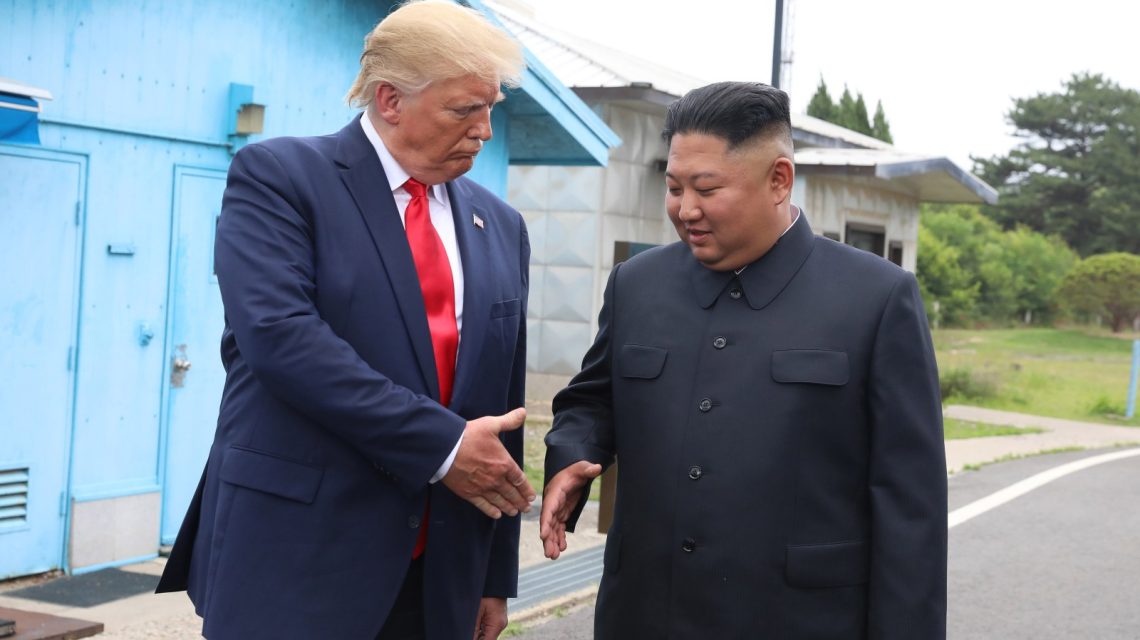
President Donald Trump has signaled a potential shift in US military strategy by threatening to withdraw funding from joint military exercises with South Korea. South Korean analysts caution that this move could undermine trust in the US among key allies in Asia.
In a Truth Social post, Trump expressed dissatisfaction with the “costly” exercises, instructing Secretary of War Pete Hegseth to reduce them. Trump highlighted his “very good relationship” with North Korean leader Kim Jong Un and noted South Korea’s refusal to support US efforts in Iran’s denuclearization.
During Trump’s first term, he met Kim three times to try and reduce North Korea’s nuclear and missile capabilities. He remains open to further talks.
Impact on Alliances
The announcement coincided with the beginning of the 10-day Ulchi Freedom Shield—a joint military exercise by the US and South Korea preparing for possible confrontations with North Korea. Pyongyang condemned these exercises as preparations for aggression.
North Korea is in a stronger position since Trump’s last meeting with Kim in 2019. The regime is advancing its intercontinental ballistic missile tests and integrating nuclear capability into its constitution, gaining experience in warfare that could impact future conflicts.
Scaling back these exercises can portray the US as “fickle and unreliable,” according to Sean King, a New York-based Asia scholar. King argues that Trump is inadvertently helping North Korean and Chinese leaders by separating the US from its traditional allies.
Acknowledging Iran as a concern, King notes North Korea’s historic collaboration with Iran in missile development, potentially exacerbating regional security threats.
Responses from Allies and Adversaries
Trump’s approach has often drawn criticism for aligning with authoritarian figures like Kim, Putin, and Xi while sidelining European allies.
The military dynamics in the Pacific are shifting, as demonstrated by the USS George Washington leaving temporarily, reducing US naval presence. Elbridge Colby, the Pentagon’s policy chief, recently assured allies of the US commitment to regional security, yet Trump’s actions may undermine these assurances.
Kuyoun Chung, a political science professor, suggests that allies might question the reliability of US defense commitments amid conflicting presidential directives.
North Korea’s Viewpoint
In Pyongyang, Trump’s actions reinforce perceptions that pressure is effective against the US administration. Chung indicates this might encourage Kim to seek further concessions without negotiating.
Assistant Professor Ban Kil Joo from the Institute of Foreign Affairs and National Security warns that Trump’s stance could embolden North Korea, China, and Russia, challenging global security.
This article reflects insights from South Korean experts and strategic analyses, contributing to understanding regional security implications.
 Suspected Iranian Drone Plot Pushes U.S. to Evacuate Bombers from British Airbase
  Brett McGurk Discusses Hostage Negotiations and New Book
  Suspected Drone Plot Leads to Evacuation of U.S. Bombers
  Afghanistan’s Economic Crisis and the Impact on Youth
  Jesse Marsch: From U.S. Soccer to Canadian National Team
  Trump and Waltz Point to Immigration in France’s Riots