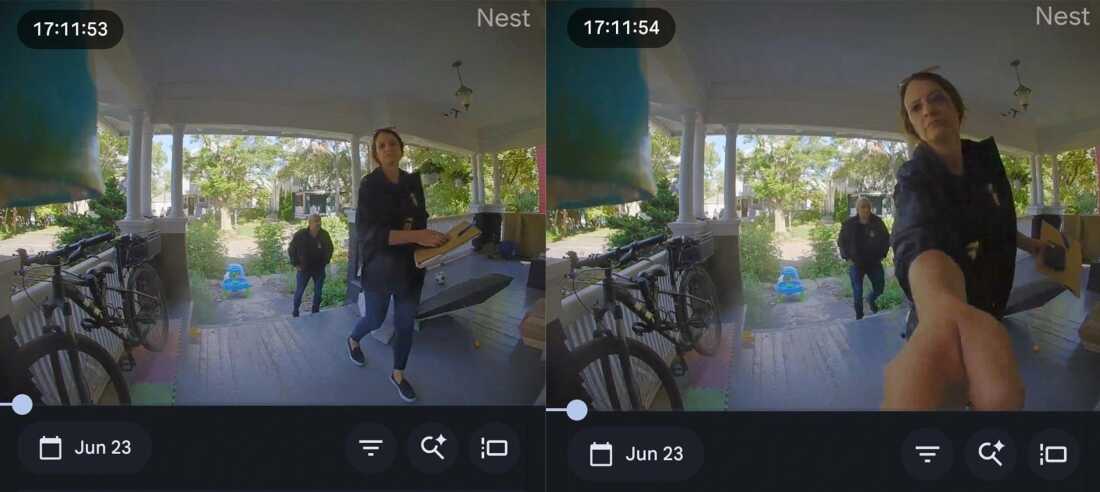
Two federal agents visited David Streever’s home in Rochester, N.Y., as part of an investigation by U.S. Immigration and Customs Enforcement (ICE). The investigation stemmed from an email Streever sent months earlier to the former ICE acting director, Todd Lyons. In the email, Streever criticized Lyons, comparing him to a Nazi official and predicting he would suffer from his own conscience.
The situation escalated when ICE agents attempted to locate Streever at his home, an airport, and a hotel. The visit to his home took place on June 23, when the agents gave his wife a notice for Streever. The notice warned him of potential federal law violations regarding threats to officials. It stated “YOU MAY BE IN VIOLATION OF FEDERAL LAW” and listed relevant federal laws.
Streever filed a lawsuit against the Department of Homeland Security (DHS) and ICE, claiming their actions had caused him to censor himself and violated his First Amendment rights. His attorneys, from the Foundation for Individual Rights and Expression (FIRE), are asking the court to prevent DHS from taking further actions that could intimidate or retaliate against Streever for his protected speech.
The federal government argues that the case should be dismissed. Attorneys from the U.S. Attorney’s office in Washington, D.C., contend that restraining their ability to investigate could hinder their prerogative amid rising threats against public officials. According to them, visits with warnings about federal law are crucial for investigations and do not violate the First Amendment.
In their filings, federal lawyers did not suggest that Streever’s email constituted a prosecutable violent threat or that it warranted investigation beyond its initial review. Adam Steinbaugh, Streever’s attorney, points out that the government’s stance concedes the email as protected political speech. He argues that issuing warning notices in such cases undermines First Amendment principles.
ICE’s rationale stems from a claim that the email had “potential threatening undertones” against ICE personnel. Brent Goodwin, ICE’s assistant director for investigations, explained in a court declaration that, lacking knowledge of Streever at the time, an investigation was deemed necessary. Agents traveled over 330 miles from Jersey City to Rochester in their efforts to question Streever, extending their attempts to confront him at John F. Kennedy International Airport and a hotel.
The investigation concluded on June 30, after agents reported exhausting all leads. This coincided with media coverage beginning to surface about Streever’s case. Steinbaugh notes that the outcome of this case could affect all Americans, questioning what might prevent the government from issuing warnings to others who criticize ICE online.