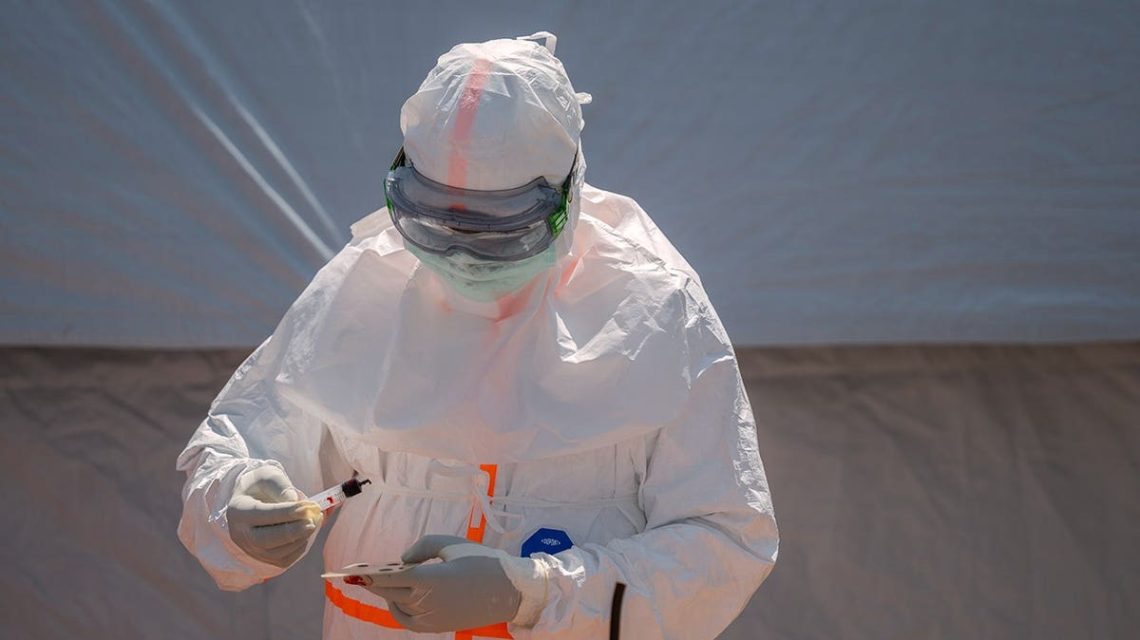
The Ebola outbreak in the Democratic Republic of Congo (DRC) has resulted in over 2,000 deaths. Experts stress the importance for Americans to be informed about this humanitarian crisis, while also recognizing the actual risks domestically.
Spread of the Virus in Africa
Ebola has rapidly spread across eastern and northeastern DRC, with previous cross-border incidents recorded in Uganda. Government data indicates there are 4,381 confirmed cases. Dr. David Wohl, a professor of medicine specializing in infectious diseases at the University of North Carolina at Chapel Hill, highlights the impact on densely populated rural cities housing hundreds of thousands.
This outbreak is progressing at an unprecedented rate, with a significant increase in infections, Dr. Wohl noted.
Dr. Wohl described efforts to control the virus as hindered by numerous challenges. Dense populations, restricted access, and ongoing conflict make it hard to deliver necessary medical care, perform contact tracing, and implement quarantine protocols.
Implications for the U.S.
Despite the situation’s severity in Africa, health officials assure that there is little risk of Ebola for the average American. The current outbreak involves the Bundibugyo ebolavirus strain, distinct from the 2014 Zaire strain, reducing the effectiveness of previous treatments and vaccines. Transmission requires close contact with bodily fluids from a severely ill individual, making casual transmission unlikely.
Dr. Wohl emphasized that even the large-scale 2014 West Africa outbreak resulted in only four U.S. cases. Public health measures in the U.S. are strong, reducing the likelihood of domestic spread.
Viruses like measles, influenza, and RSV present more immediate threats to public health. Researchers are developing vaccines targeting the Bundibugyo strain using advanced mRNA technology, aiming for rapid response.
Challenges in Treatment
Dr. Wohl pointed out difficulties in treating variants. The genetic differences in the Bundibugyo strain mean that approved Ebola treatments have not yet been confirmed effective. New treatments and vaccines are in evaluation, with emerging technologies potentially aiding rapid development.
Organizations like the World Health Organization and the U.S. Centers for Disease Control and Prevention actively monitor the outbreak. Dr. Wohl stresses the need for continued international support and resources to contain the crisis.
This situation is a raging fire out of control, Dr. Wohl said. More efforts are needed to address the ongoing suffering.
Khloe Quill, a Fox News Digital lifestyle writer, and her team cover various topics including health developments.
 Barriers to Accessing GLP-1s in the U.S.
  Support for Medicare for All Reaches Record High in 2026
  Dr. Drew Pinsky Warns About Behavioral Addictions Linked to Smartphones
  Death of Russian Scientist Raises Health Concerns
  Longevity Doctor Shares Tips for Living Healthier Longer
  Choosing the Best Probiotic Powder for Your Gut Health