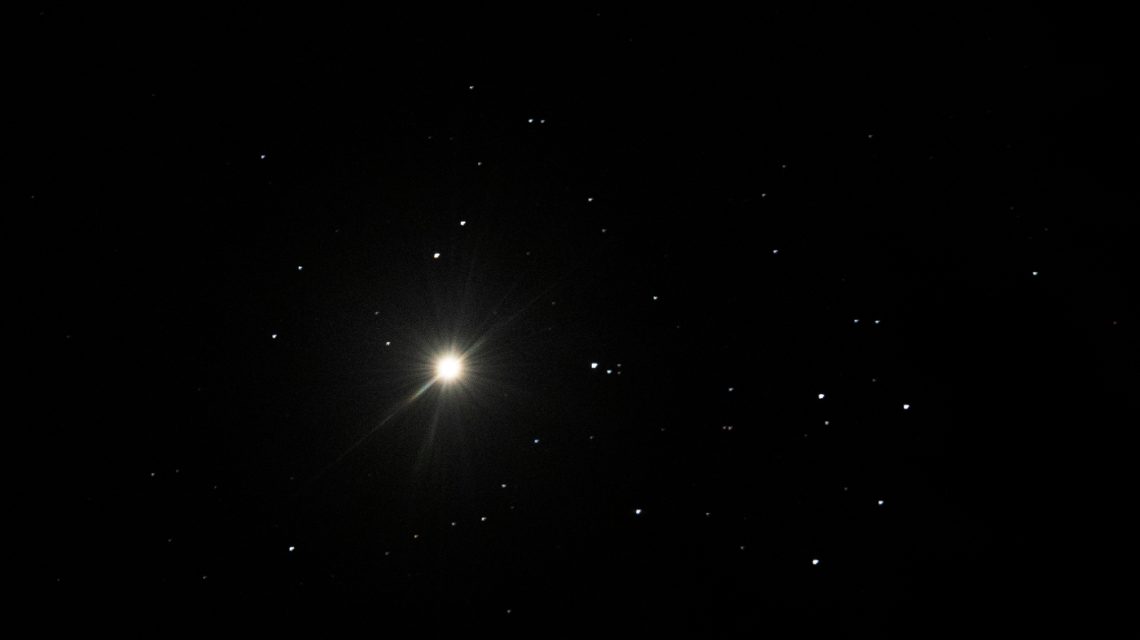
On April 3, 2020, a striking celestial event was visible from Olympia, Washington. Venus appeared in conjunction with the Pleiades star cluster, known as the ‘seven sisters.’ This spectacle occurs roughly every eight years.
While fictional takes on Venus explorations have emerged, such as those in Apple TV’s ‘Star City,’ featuring a Soviet flyby during the 1970s, real-world plans were in the works. Not many realize that NASA had considered a similar mission in the same period. This idea was part of the Apollo Applications Program, which examined potential space missions using Apollo and Saturn equipment.
Before the historic Apollo 11 moon landing, NASA explored various mission concepts, including a daring Venus flyby. The technological limitations and unknowns about long-term space travel made this concept especially ambitious. Bellcomm, a Bell Labs subsidiary in the 1960s, conducted a study for NASA on this proposal. Nuclear and aerospace engineer Kirk Sorenson shared insights from these studies on the Selenian Boondocks blog.
The concept involved launching an Apollo capsule with a Saturn V rocket into low Earth orbit. Instead of a lunar module, an Environmental Support Module would provide necessary equipment and consumables for the long journey. The Saturn’s third stage, the S-IVB, would propel the capsule and module into a flyby trajectory. Any remaining fuel would be discarded.
During the mission, astronauts would transform a fuel tank into a living area, known as the ‘wet workshop.’ Solar panels on the S-IVB would supply power. Space historian Paul Drye detailed the mission’s itinerary in his False Steps blog. Astronauts would travel 123 days to Venus, pass the day side at 6,200 kilometers, and take 273 days to return, making a total of 396 days in space.
Upon nearing Venus, the spacecraft would employ radar and other methods for surface study. Additionally, it would launch an orbiter and 14 probes. These included six atmospheric probes to study density variations, four meteorological balloons, two crash-landing probes for surface images, and two soft-landers for more in-depth analysis.
The journey would conclude with the Apollo command module re-entering Earth’s atmosphere using an enhanced heat shield. Despite the ambitious nature of the Venus flyby mission, it never materialized due to budget cuts before the Apollo 11 landing. NASA’s budget reductions led to the cancellation of the final Apollo missions, with Skylab being the sole project realized.
Uncrewed missions to Venus have continued, with countries like the Soviet Union, Europe, and Japan launching probes. NASA’s upcoming Veritas project aims to explore Venus further. Discoveries have shown Venus to possess extreme conditions, such as atmospheric pressure 90 times that of Earth and temperatures nearing 880 degrees Fahrenheit.
With current focus shifting to the moon and Mars, the feasibility of a crewed mission to Venus remains uncertain. Technologies such as the SpaceX Starship could potentially support such a mission. However, the lack of intention to land on Venus may diminish interest.
Mark R. Whittington, widely recognized for his work on space policy, has authored several studies, including ‘Why is It So Hard to Go Back to the Moon?’ and ‘The Moon, Mars and Beyond.’ He continues to explore these topics through his blog, Curmudgeons Corner.
 New Species of Wild Cat Discovered: Tilcayo Tiger Cat
  Ancient Warhorse Unearthed in Egypt: A Glimpse into Military Life
  Insights into Grief Observed in Humpback Whales
  Scientists Discover Enormous Crater on Moon
  Fat Bear Week 2026: A Celebration of Alaska’s Largest Brown Bears
  Challenges in AI Development