Progressives have proven their ability to secure Democratic primary victories. However, the true challenge lies in the upcoming November midterms. The electorate will decide on numerous closely contested races in the Senate and House, along with some gubernatorial campaigns.
This week, Abdul El-Sayed, supported by influential progressive figures such as Vermont Senator Bernie Sanders and New York Representative Alexandria Ocasio-Cortez, won the Democratic nomination for Michigan’s open U.S. Senate seat. El-Sayed will confront Republican former Representative Mike Rogers in November after narrowly defeating Representative Haley Stevens in a race perceived as a battle between progressive and moderate factions within the Democratic Party.
The outcome grants progressives a significant chance to prove that primary success can translate into general election victories. Recent progressive wins include William Lawrence and Donavan McKinney, who secured House primary victories in Michigan, Chris Rabb’s triumph in Pennsylvania’s 3rd District, and Analilia Mejía’s win in New Jersey’s special House election. These followed Zohran Mamdani’s election as New York City mayor.
However, November presents diverse challenges for these candidates. Some, like El-Sayed and Lawrence, face closely divided contests, while others enjoy safer Democratic domains. Newsweek reached out to El-Sayed’s campaign for comment.
John Geer, Vanderbilt University’s Gertrude Conaway Vanderbilt Professor of Political Science, remarked to Newsweek on progressives demonstrating substantial strength in 2026, attributing it to widespread voter dissatisfaction. He emphasized the importance of appealing to independents and discontented Republicans to secure November victories.
Progressive candidate Cori Bush faced a setback against Missouri Representative Wesley Bell in a primary, while moderate Marie Gluesenkamp Perez and Republican John Braun moved forward to the general election over progressive Brent Hennrich in Washington’s non-partisan top-two primary. These developments prompt questions about progressive candidates’ ability to sway voters beyond party loyalists in competitive races.
El-Sayed’s November Challenge
El-Sayed’s primary challenge will be to unite Democrats after a divisive primary, then capture independents in Michigan, a state President Donald Trump won in 2024. Stevens pledged her support to El-Sayed post-primary, backing him against Rogers.
He overcame substantial outside spending campaigns supporting Stevens, with over $50 million endorsed by groups like the American Israel Public Affairs Committee.
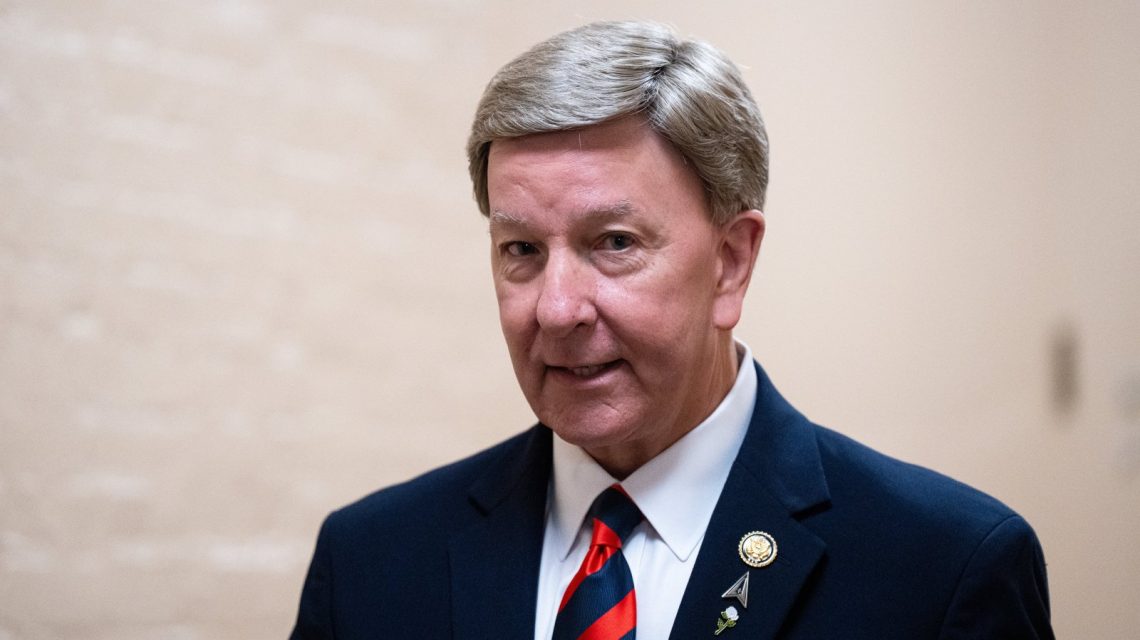
Michigan’s 2024 results illustrate the competition’s intensity — despite Trump’s victory, Democratic Representative Elissa Slotkin defeated Rogers in the Senate race. Current polling shows a tight contest between El-Sayed and Rogers. An EPIC-MRA/MIRS poll found Rogers ahead 46 percent to 43 percent, with a margin of error of 4 percent. A similar MIRS/Mitchell Research poll showed both candidates tied at 45 percent, with a margin of error of 3.77 percent. The RealClearPolling average indicates a close race, with Rogers at 44.3 percent versus El-Sayed at 44 percent.
Geer suggested that El-Sayed’s victory could make winning Michigan’s Senate seat more challenging but not impossible. The campaign approach will be vital — focusing on affordability and corruption may enhance El-Sayed’s chances.
Other Progressive Trials in November
William Lawrence emerges as a key figure, contesting Republican Representative Tom Barrett in Michigan’s 7th Congressional District. Trump narrowly carried the district in 2024, and Barrett won with 50.3 percent of the vote, highlighting Democrats’ targeting of the seat according to The Cook Political Report.
McKinney and Rabb are campaigning in districts with stronger Democratic outcomes. McKinney defeated Shri Thanedar in Michigan’s 13th District, where Thanedar received 68.7 percent of the vote previously. Rabb secured the nomination in Pennsylvania’s 3rd District, where the incumbent ran unopposed in 2024.
Mejía has already faced and triumphed in a general election, overcoming Republican Joe Hathaway in New Jersey’s 11th District special election with about 60 percent of the vote.
Progressive representation might expand after the August 11 primaries, with candidates like Minnesota’s Peggy Flanagan for the Senate and Wisconsin’s Francesca Hong for governor. Their potential victories could provide further chances to test progressive appeal statewide. Lawrence’s campaign, alongside El-Sayed’s Senate bid, will measure the movement’s capacity beyond secure Democratic territories.
 Universities Should Reject Political Influence on Research Funding
  Trump’s Approach to China: Trade Dynamics and Challenges
  Media Outlets Sue After White House Ban
  American Public Opinion on Press Freedom
  Media Lawsuit Against Trump Administration for White House Ban
  The Cost of Challenging Beijing