Observations from the Ground
Over two days, we immersed ourselves in the Michigan U.S. Senate Democratic primary, featuring congresswoman Haley Stevens and former public health director Abdul El-Sayed. Our aim was to evaluate their impact in Michigan and understand any implications for Democrats in November.
We found both candidates more compelling in person than portrayed in media. Stevens showcased exceptional stamina, reinforcing her commitment to working for Michigan. In contrast, El-Sayed demonstrated the ability to inspire young, progressive voters with his energy and intelligence.
Campaign Events and Audiences
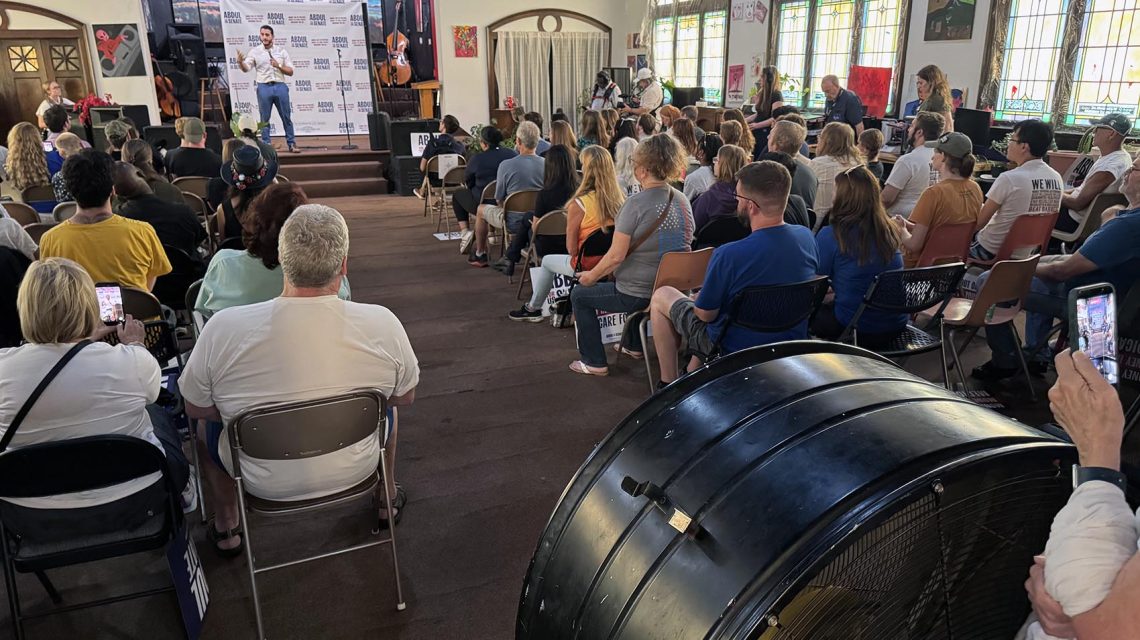
El-Sayed addressed his supporters at The Fledge, a transformed church now serving as an arts venue. The gathering included around 100 attendees in a relaxed, informal setting. Stevens, conversely, held her event in a Chamber of Commerce room with about 23 people, later engaging with the Democratic women’s club, the “Blue Brigade,” in the suburbs with 16 people.
Key Voter Concerns
Michigan voters voiced concerns about money in politics, economic issues, and U.S.-Israel relations. Jason Peck, a United Auto Workers member, highlighted economic challenges. Dorice Steiner, a University of Michigan mother, expressed frustration with both parties and the influence of significant financial contributions in politics. Andy Rogers underscored the need to challenge the power of money in decision-making.
Haley Stevens’ supporters, like Tyler McCastle and Cindy Groene, echoed similar worries regarding healthcare and campaign finances. Zach Nessel expressed concerns about rising antisemitism within the party, which intensified after the Hamas attacks on Israel.
The Centrist-Progressive Divide
Despite concerns over the centrist-progressive divide, only one Democrat we met stated they would not support the other candidate in November. This divide seemed less severe in person compared to online debates, reminiscent of the 2016 Clinton/Sanders split.
The focus remains on the Republican contender, Mike Rogers, who has secured President Trump’s endorsement without fully aligning with the MAGA movement.
Implications for the Future
This race is not a definitive pivot point, but reflects a data point in broader trends. Progressives and democratic socialists continue to gain ground nationally, yet this race contributes only modestly to those trends.
While some Democrats maintain strong preferences, many appreciated ideas from both candidates, indicating potential for unity. Voters expressed a desire for change and a readiness to embrace political risks, potentially favoring El-Sayed, though unity after the primary remains crucial for success in November.
A free press is essential for democracy.
Support journalism that fosters informed dialogue.
 Mayor Mamdani and President Trump Discuss Major Housing Project in NYC
  Poll Reveals MAGA’s Increasing Popularity Over DSA as Democrats’ Future Debated
  North Korea’s Hypersonic Weapon Test Amid Global Tensions
  Debate Over ICE Action in Austin Escalates
  President Trump Warns of Escalating War with Iran at UN Assembly
  Tariffs and Their Impact on Everyday Products