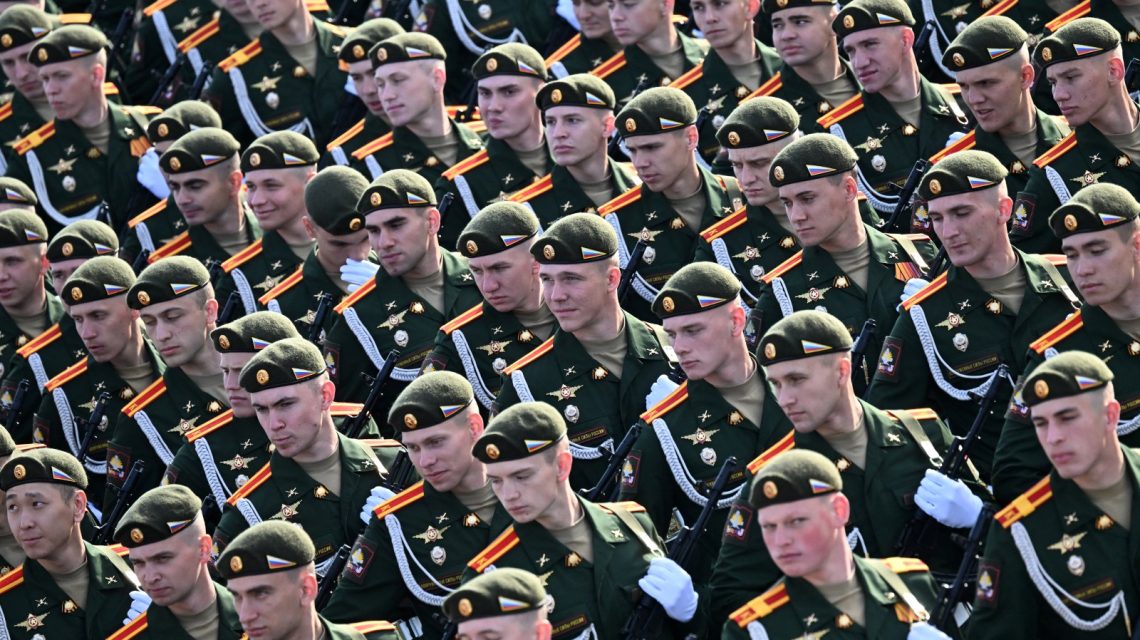
In September 2022, Vladimir Putin announced a partial mobilization to support his invasion of Ukraine. This mobilization remains quietly managed without being officially revoked. Recent reports indicate a potential new draft of up to 500,000 troops, suggested by unnamed Moscow officials. Such a draft may introduce new dimensions to the ongoing conflict.
Kremlin’s Mobilization Strategy
Russian opposition news outlet Verstka reports that the Kremlin considers various measures for troop recruitment. These include imposing martial law to curb civil unrest and increasing population restrictions. Ukrainian President Volodymyr Zelensky indicated that between 300,000 and 500,000 troops might be conscripted following Russia’s parliamentary elections in September. This signals Putin’s commitment to continue the conflict.
John Hardie, deputy director at the Foundation for Defense of Democracies, commented that further mobilization might extend the war but probably not change its fundamental outcome. A significant draft, as warned by Zelensky, poses strategic concerns for Ukraine and its allies. Yuriy Boyechko of Hope for Ukraine noted that the sheer numbers could allow Moscow to sustain a lengthy war of attrition, absorb substantial losses, and strengthen defensive positions.
Former Russian President Dmitri Medvedev denied any imminent mobilization. He claimed that 200,000 volunteers had already joined the armed forces in the year’s first half. Newsweek has reached out to the Kremlin for comments on these developments.
Implications of Parliamentary Elections
Russia’s parliamentary elections scheduled for September 18-20 might reinforce the ruling United Russia party. This outcome could empower Putin to further militarize society for an enduring conflict. Speculation about a post-election draft has grown throughout the summer as Russia seeks to recover from significant battlefield casualties. Zelensky noted significant Russian losses, which have heightened concerns.
Hardie suggested that an additional mobilization would imply Putin acknowledging a losing trajectory in the war but choosing to intensify efforts. He added that this could prompt a massive exodus from Russia and potential domestic unrest due to the war’s growing unpopularity.
In response, the Kremlin aims to prevent a repeat of the September 2022 draft-related exodus. Measures include a law, effective November 2025, that changes military conscription to a year-round cycle, simplifying the drafting process. Digitization and automation of the mobilization system enhance monitoring people’s movements and military registration. Hardie explained that expanding forces presents challenges beyond recruiting, such as equipping and training new personnel, which affects force quality.
Challenges for Ukraine
According to defense analyst Giorgi Revishvili, without mobilization, creating new Russian military formations remains virtually impossible. Building a large offensive force would be unattainable without additional measures. This possibility presents continued challenges for Ukraine.
However, Russia faces obstacles. Economic issues, high casualties, and Ukrainian attacks on crucial sites apply pressure on the Kremlin. The challenges of training, equipping, and commanding new troops suggest that additional mobilization might not lead to swift victories.
In response to mobilization rumors, Medvedev dismissed them as enemy propaganda. The Institute for the Study of War stated the decision to draft more troops depends on Putin’s battlefield perception.
Exiled activist Mikhail Khodorkovsky expressed concerns about newly drafted troops being a mere ‘meat shield’ due to limited training. Even as Ukraine advancements in drone technology continue, Russia’s refusal to train adequately does not promise strategic gains but rather increases casualty rates.
Boyechko emphasized that Russia’s strategy of mass conscription continually pressures Ukraine. It requires vast resource consumption from Ukraine, increasing reliance on Western support for precision artillery, drone technology, and air defense to counteract Russian troop volumes.
 The Cost of Challenging Beijing
  Analyzing Midterm Elections and Party Dynamics
  Allan Lichtman’s Framework for Assessing Presidential Greatness
  Tensions Escalate in Iran Conflict as Global Leaders Weigh Options
  Florida Senate Race Tightens as Recent Polls Show Dead Heat
  Ethics Complaint Targets Colorado Representative Lauren Boebert