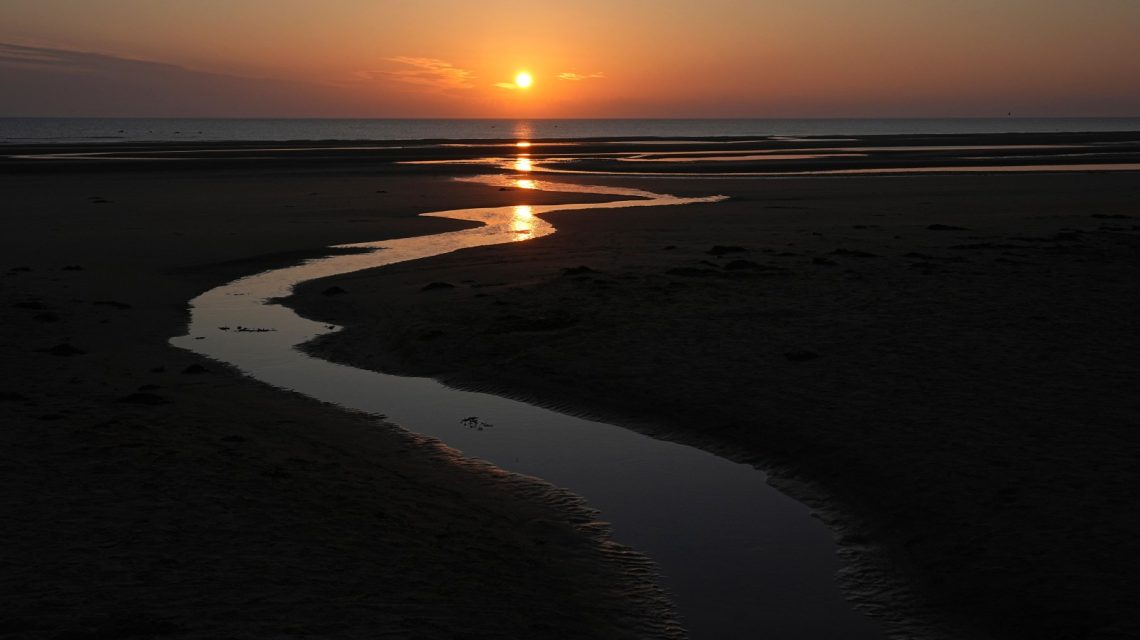
The beaches of Normandy, renowned for the Allied D-Day invasion during World War II, now hold a place on UNESCO’s World Heritage List. Added along with Greece’s Mount Olympus and other significant sites, the designation was announced at a UNESCO World Heritage Committee meeting in Busan, South Korea, following reviews of various global nominations. This listing acknowledges sites for their extraordinary cultural, historical, or natural significance, aiming to promote long-term preservation.
Prominent entries include the Normandy landing beaches—Omaha, Utah, Sword, Gold, and Juno—and Pointe du Hoc, a key assault site from the Allied invasion of Nazi-occupied France on June 6, 1944. More than 150,000 troops landed in this region, initiating a crucial campaign in Western Europe.
ICOMOS, responsible for evaluating nominations, noted the preserved evidence of the landings at these sites, from German defenses to Allied infrastructure and sunken vessels. It highlighted the Normandy sites as embodying a pivotal event that signaled freedom and peace for Europe. Nonetheless, ICOMOS emphasized concerns like tourism, climate change, and development pressures threatening these historical sites, advocating stronger conservation.
Ahlem Gharbi, France’s permanent UNESCO delegate, remarked on the Normandy landings’ significance in transitioning towards a peaceful global order. Amid ongoing conflicts, this acknowledgment holds special importance. Historian David Edgerton emphasized the operation’s magnitude, noting its singularity.
Mount Olympus Achieves Long-Awaited Recognition
Also gaining UNESCO acknowledgment is Greece’s Mount Olympus, the mythological abode of the 12 Olympian gods. After a 12-year campaign by Greek authorities, the mountain is now recognized as both a cultural and natural heritage location. Mounting to 9,573 feet, it merges mythological history with ecological diversity.
Local officials expressed gratitude for the recognition, acknowledging the conservation responsibilities accompanying it. Evangelos Geroliolios, mayor of Dion-Olympus, emphasized UNESCO status should enhance conservation and manage visitor numbers carefully. Greek delegate Georgios Koumoutsakos affirmed Greece’s dedication to safeguarding Mount Olympus.
Ancient Japanese Capitals Gain Recognition
UNESCO approved sites in Japan’s Nara Prefecture, including the ancient capitals of Asuka and Fujiwara. Consisting of 19 archaeological sites from the sixth to eighth centuries, they showcase Japan’s early state formation influenced by China. These remains encompass royal palaces, administrative structures, temples, and burial sites.
Japanese Vice Culture Minister Shigeki Kobayashi expressed gratitude for the nomination approval, promising ongoing preservation efforts. Prime Minister Sanae Takaichi expressed hopes that the recognition would draw more visitors. Professor Yoshiyuki Aihara highlighted the archaeological insights into early Japanese state development, adding that these sites may be challenging for ordinary visitors to fully appreciate.
South Sudan’s First World Heritage Site
South Sudan’s Boma-Badingilo Migratory Landscape was also inscribed, marking a milestone as the country’s first World Heritage Site. This landscape’s vast wetlands, floodplains, and savannas host one of the largest mammal migrations globally, including species like elephants and gazelles.
UNESCO emphasizes this ecosystem’s crucial role in supporting local communities dependent on herding, farming, and fishing. The recognition marks a significant achievement for South Sudan, potentially attracting more international conservation support amidst environmental and economic challenges.
Significance of UNESCO Designation
UNESCO World Heritage status is a prestigious acknowledgment of cultural and natural sites. Although it does not provide funding directly, it raises awareness, boosts tourism, and strengthens preservation efforts. This year’s additions showcase UNESCO’s diverse mission, honoring moments in history, mythology, archaeology, and biodiversity.
As the committee continues evaluating nominees in Busan, additional sites may join the World Heritage List. The newly designated sites must now focus on international recognition while facing the challenge of preserving these treasures for future generations.
 The Curious Case of Mark Jackson’s NBA Hoops Card
  Communities Continuing Recovery from Hurricane Helene Explored through Graphic Novel
  Art Institute of Chicago Returns Nazi-Looted Painting to Heirs
  Chicago History Museum Responds to Protest with Aquí en Chicago Exhibit
  Ari Emanuel’s Memoir Explored
  Benito Juarez Community Academy Students Celebrate Día de los Muertos Through Art