For decades, U.S. presidential candidates made it a tradition to visit Israel on their path to the White House. This visit usually included laying a wreath at Yad Vashem, meeting with the prime minister, and emphasizing the strong bond with Israel. In 2008, Barack Obama showcased this tradition by speaking in Sderot about protecting his daughters. Mitt Romney demonstrated similar sentiments in 2012 by placing a note in the Western Wall. Such visits signal to Jewish and evangelical voters back home that the candidate supports Israel.
These visits also allow politicians with limited foreign policy experience to project themselves as statesmen. In 1998, then-Texas Governor George W. Bush’s visit over Israel in a helicopter provided him with a presidential image. Israel represented a real conflict and a loyal ally, providing minimal risk for American politicians. However, a significant misstep occurred in 1979 when Rev. Jesse Jackson’s embrace of Yasser Arafat overshadowed his campaign due to negative reactions from American Jews.
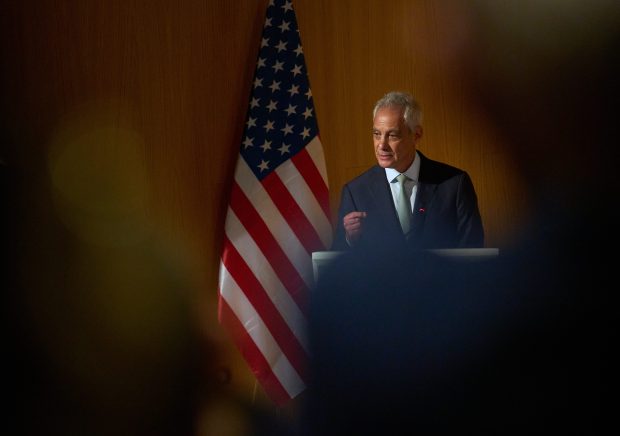
A new trend is emerging in which political figures criticize Israel during their visits. On July 8, while Iranian missiles targeted American sites, Rahm Emanuel delivered a critical speech at Tel Aviv University, denouncing Israel’s government policies. Concurrently, U.S. Rep. Ro Khanna entered a militarized zone in the West Bank, claiming he was detained by settlers. The purpose appeared more focused on domestic political messaging than tangible international engagement.
Locally, this stance has stirred tension. In Khanna’s district, there was a reported assault on Israeli Americans, and figures like Daniel Klein from Jewish Silicon Valley attribute this development to rhetoric that Khanna amplified. Despite Israeli-founded companies supporting local jobs and income, Khanna spent his time abroad away from these contributions, choosing instead to criticize Israel.
This pattern among Democratic candidates reflects a shift in voter expectations, where distance from traditional pro-Israel stances garners favor. For instance, in 2020, no major candidates visited Israel, and political dynamics shifted further after events in October 2023, turning Israel into a contentious topic among Democrats.
Both Rahm Emanuel and Khanna missed meetings with significant Israeli government officials, underscoring the visit’s primary audience as being back home. Israel, once a place to bolster foreign policy credentials, now serves as a platform to impress far-left voters.
“American officials criticize allies every day. It is allies themselves, like Israel, who also offer intelligence, military support, and job creation.”
The enduring partnership between the U.S. and Israel has seen strategic collaborations such as the American-funded Iron Dome system, which now protects American and allied forces globally.
For potential 2028 candidates, visiting and witnessing the diverse landscape of Israel is crucial. Engaging with both Israeli and Palestinian societies furthers understanding. Visiting educational and medical facilities where different communities work together can inform more nuanced diplomatic approaches.
Ultimately, leaders need to listen more than speak during these visits, prioritizing understanding over political theater.
Aaron Kaplowitz is the president of the United States-Israel Business Alliance. Correspondence to the editor is encouraged.
 Media Outlets Sue After White House Ban
  American Public Opinion on Press Freedom
  Media Lawsuit Against Trump Administration for White House Ban
  The Cost of Challenging Beijing
  Analyzing Midterm Elections and Party Dynamics
  Allan Lichtman’s Framework for Assessing Presidential Greatness