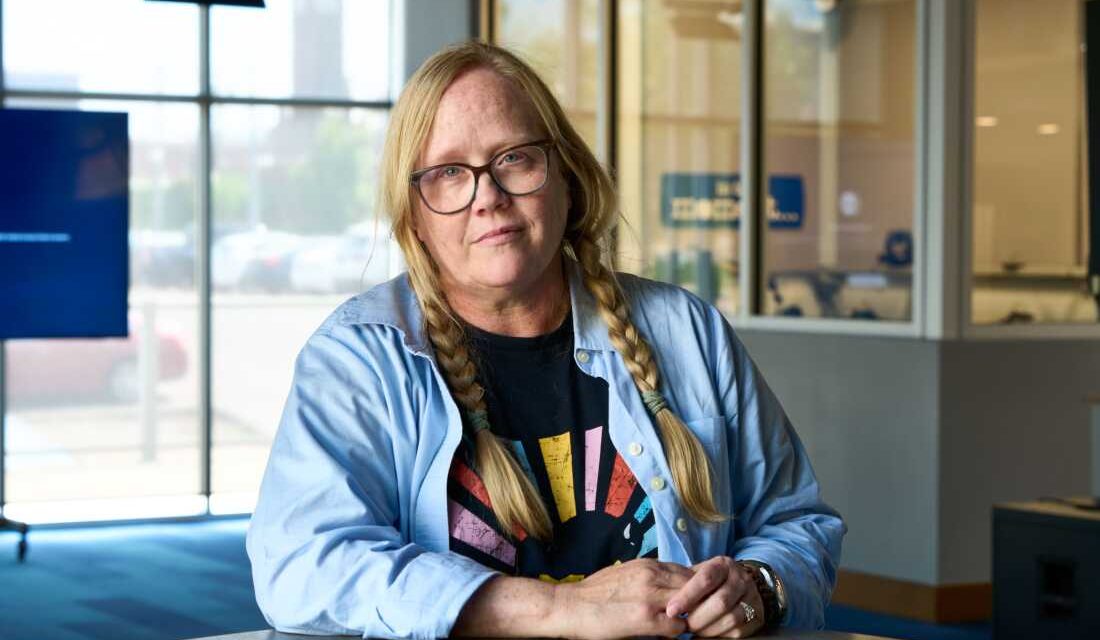
Lori Walsh faced job loss when her public affairs show was canceled due to the end of federal funding for South Dakota Public Broadcasting. However, thanks to strong listener support, she returned as a podcaster. This change came after widespread federal funding cuts for public media, driven by President Trump’s directive, leading to public radio and television stations losing almost all federal aid.
Following the cuts, over 500 public media staffers were laid off. Despite this, stations have been responding with urgency, hope, and anxiety. Public support rose, with PBS CEO Paula Kerger emphasizing the importance of viewer contributions in sustaining operations.
The Impact of Funding Cuts
Although NPR received less than 2% of its revenue from federal sources, public radio stations, on average, relied on federal funding for 8 to 10% of their budgets. PBS stations depended even more on these funds. Rural stations, having fewer donors, were most affected. For instance, South Dakota Public Broadcasting quickly felt the impact, resulting in the cancellation of Walsh’s show and layoffs of many staff members.
Executive Director Julie Overgaard pledged continued coverage of local government and community events to retain state funding, leaving the newsroom to face cuts. Yet, amid these challenges, Ryan Howlett described a phenomenon of “rage-giving” from angsty audiences, resulting in increased donations.
The station accumulated $8 million in donations and rehired Walsh. Though scaled down, she continues her work through a podcast and a segment on Morning Edition, covering significant local topics and stories.
Inventive Responses Across the U.S.
Elsewhere, KSUT in southwestern Colorado also turned to its audience for support. Faced with potential staff and programming cuts, KSUT managed to fund solar panels and create its first endowment thanks to increased donations, reducing long-term costs and fostering sustainability.
After a legal victory against Trump’s initial funding cuts, enhanced support from Congress restored some aid to stations serving tribal audiences. Despite the ongoing challenges, stations like KSUT avoided making significant cuts, showcasing resilience and adaptation amidst financial pressures.
Diverse State Experiences
In Indiana, WNIN faced severe budget cuts but managed to raise over $1 million in donations, which helped maintain operations and fostered a promising conversation about restoring state funding.
Across various states, public media adjusts to changing landscapes, reflecting on their mission and operational strategies. Key questions remain about the sustainability of this new, donation-driven model.
Uncertain Future for Public Media
Though a few stations left NPR and PBS, the major networks retained most of their affiliations. NPR faced fewer program drops than anticipated and sought ways to bolster its network through digital innovation and member support.
Significant donations helped stabilize NPR, yet questions loom about the long-term viability of this philanthropy-driven model.
Stations like KCRW are transforming with podcasts and digital engagement, embracing a hybrid role that combines traditional content with new media experiences. Yet, the uncertain future of sustaining public media’s operations without federal funding persists.
Despite the challenges, public media remains vital, adapting creatively and relying on the same public support networks that have always valued their contributions.
Source: NPR Correspondent David Folkenflik, NPR Deputy Business Editor Emily Kopp, and Managing Editor Gerry Holmes.
 Retired Navy Petty Officer Reflects on National Anthem Performance
  The Impact of Extended Job Searches on Mental Health
  Concerns Over AI’s Impact on Higher Education Learning
  Young Chinese Girl Sets World Record in Rubik’s Cube Speedcubing
  Google Fined for Breaching EU Privacy Rules
  AI-Powered Malware Raises Concerns Over Security