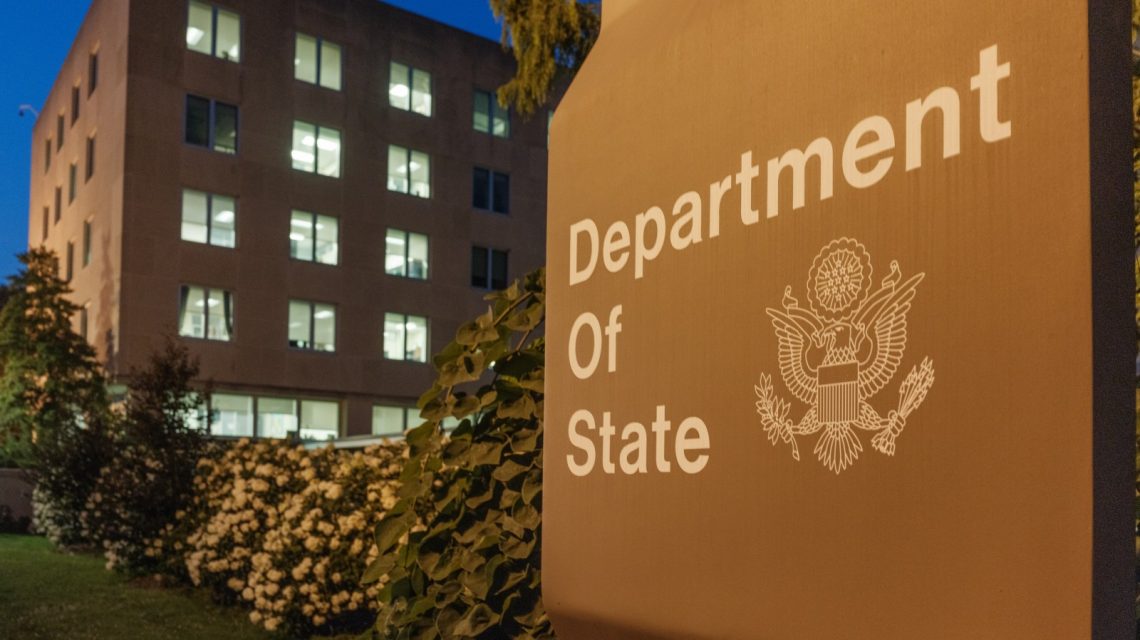
The U.S. State Department announced on Thursday that it will further tighten visa restrictions on individuals involved in cybercrime and sextortion. This includes denying visas to those engaged in these activities and sometimes extending these restrictions to their relatives.
In its announcement, the State Department focused on investment scams linked to Chinese transnational criminal groups. This move is part of a broader effort to prevent individuals who aim to harm American citizens from accessing the U.S. Over the past 18 months, the administration has implemented multiple immigration rule changes, many of which restrict legal pathways or increase the vetting of visa applicants.
“This policy targets individuals responsible for, or complicit in, cybercrime and cyber-enabled crime, such as those involved in cyberscams, and sextortion,” the department said in a press release. “Immediate family members of individuals engaged in such illicit activities may also be subjected to visa restrictions.”
Wider Visa Vetting Efforts
The new cybercrime visa policy by the State Department extends an increasingly common strategy of using visa access as punishment and deterrence. This approach targets people accused of enabling threats beyond traditional immigration violations. Earlier this year, the department imposed visa restrictions on individuals accused of supporting political violence, undermining regional stability, aiding U.S. adversaries in the Western Hemisphere, and connecting with cartel networks. In several cases, immediate family members were also restricted, similar to the current policy’s warning.
The policy is part of broader efforts to tighten the visa system before and after application submission. The State Department has extended online presence vetting for student and exchange applicants, emphasizing that every visa adjudication is a national security decision. It has also expanded visa bonds for some business and tourist applicants from countries associated with overstay risks.
Are Cybercriminals Obtaining Visas?
Public records indicate that cyber-enabled crime is often transnational, and foreign suspects are being prosecuted in U.S. courts. However, there is no clear public count of cybercriminals who successfully obtained U.S. visas. DOJ records include foreign nationals extradited to the U.S. for cyber-enabled fraud and extortion, as well as those arrested at U.S. airports for cryptocurrency fraud. Yet, these records generally do not specify whether the defendants held valid U.S. visas. The State Department notes that thousands attempt to illegally obtain U.S. visas each year for criminal purposes or to escape prosecution, but it doesn’t provide a cybercrime-specific breakdown.
Washington’s China Concerns
These visa restrictions come during increasing concern in Washington about China’s cyber threat. U.S. intelligence and law enforcement agencies consider China one of the most sophisticated and persistent foreign cyber threats. The Cybersecurity and Infrastructure Security Agency (CISA) highlights that Chinese government-linked actors have targeted government, telecommunications, transportation, and critical infrastructure networks. These actions extend beyond traditional espionage and include potential disruptions to essential services.
U.S. officials have focused on campaigns like “Salt Typhoon” and “Volt Typhoon.” According to assessments by CISA, FBI, and NSA, these Chinese-linked actors aim to gain long-term access to telecommunications and infrastructure networks, assisting intelligence gathering and potentially preparing to disrupt key systems in a future crisis. The FBI has accused “Salt Typhoon” actors of compromising telecommunications providers, conducting significant cyberespionage, and affecting communications infrastructure. In a recent advisory, the FBI urged organizations globally to bolster defenses against such long-term infiltration efforts.
 Gorillaz and Macklemore Respond to Controversy Over Israel-Palestine Statements
  Data Centers Stir Controversy in Texas Amid Growth Boom
  Investigation into Lion Deaths in Tanzania
  Merz Stays Resolute Amid Electoral Shifts in Germany
  U.S.-Iran Relations and Diplomacy at Upcoming U.N. Assembly
  US-China Relations Under Scrutiny: Expert Warns of Escalating Tensions