After 246 years, Pvt. John Pumphrey is no longer an unknown name. Thanks to DNA testing and thorough investigation, the Maryland teenager who died during one of the last significant battles of the American Revolution now stands recognized, coinciding with the 250th anniversary of the nation he helped to build.
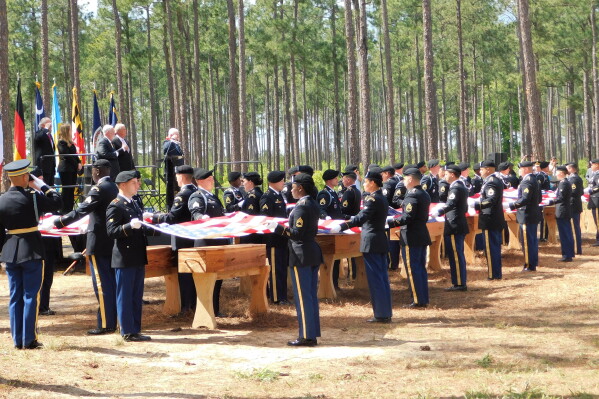
Allison Peacock, founder of FHD Forensics, a key contributor to the discovery, remarked, “There was a sense of divine timing.” On April 22, 2023, military personnel conducted a memorial service, honoring 12 Continental soldiers fallen at the Battle of Camden, South Carolina. Pumphrey passed on August 16, 1780, during this battle — a major defeat for the Continental Army where British Gen. Charles Lord Cornwallis overcame patriot forces under Maj. Gen. Horatio Gates. Approximately 900 soldiers died and were left exposed to wildlife, intense heat, and humidity.
In 2020, archaeologists found human bones at the site. They identified 14 sets of remains — 12 linked to Continental soldiers, while others were British and reburied on the battlefield. The Richland County Coroner’s Office partnered with FHD Forensics. Peacock dubbed the investigation “America’s oldest John Doe.” She explained, “We applied techniques similar to any John Doe case.” The genetic profiles seemed unlikely due to the age of the remains, but success followed.
Pumphrey and four colleagues had a superficial burial under minimal soil and were labeled “Camden 9B,” the second set retrieved from site nine. Their remains were catalogued and examined. Later, Continental soldiers enjoyed honors during reburial, marked “UNKNOWN. REV WAR. BATTLE OF CAMDEN. AUG 16 1780.”
DNA samples went to Astrea Forensics, California, for examination. Usually, teeth protect DNA due to their position, but nothing arose here. “The DNA was affected by soil microbes and environmental water,” said Kelly Harkins Kincaid, Astrea co-founder. Despite extracting DNA from samples up to 10,000 years old, Pumphrey’s was a new record. A petrous segment behind the ear yielded DNA that provided his entire genome.
Peacock’s team uploaded data to FamilyTreeDNA and GEDmatch tracing autosomal, X, and Y chromosomes. “There were 20,000 matches to sift through,” said Peacock.
Among matches was Russ Hudson, a retired federal agent from Gettysburg, Pennsylvania, who aided archival research. This uncovered Pumphrey, an orphan from Maryland’s Anne Arundel County, seeking purpose in his life. Hudson learned Pumphrey likely joined the militia at age 13 in Baltimore. His age at enlistment remains uncertain, as a birth record is lacking. His reenlistment involved a mark, “X,” and when he died, his knee growth plates hadn’t closed.
The 7th Maryland Regiment, including Pumphrey, weathered cold at Valley Forge under George Washington. They engaged in Northern Theater battles like Brandywine, Germantown, and Monmouth. Peacock estimated Pumphrey walked 1,000 miles before dying in South Carolina’s pine woods. Sadly, his exact death cause remains unknown due to the absence of specific injuries on his remains.
Research persists on Camden 11A’s remains with a surprise connection: Peacock herself. “Running my DNA often reveals if I’m related to remains. This time, I’m connected to Camden 11A, which motivates identification efforts,” she said.
Peacock had enough evidence to name Camden 9B. At June’s Benson-Hammond House event in Anne Arundel County, relatives expressed deep gratitude. Becky Berman shared the excitement, “It’s remarkable that archaeologists unearthed bones and managed identification despite challenges.” Hudson, Pumphrey’s descendant, stresses official recognition, “John Pumphrey sacrificed for this new nation.”
 Influencer Brothers Logan and Jake Paul Visit the Pentagon
  Florida Reports First Dengue Fever Death as Outbreak Expands
  American Public Opinion on Press Freedom
  St. Laurence High School’s Transformative Journey
  Significant Events in Chicago History on September 21
  Presley Gerber Passes Away at 27 in Rehab Facility