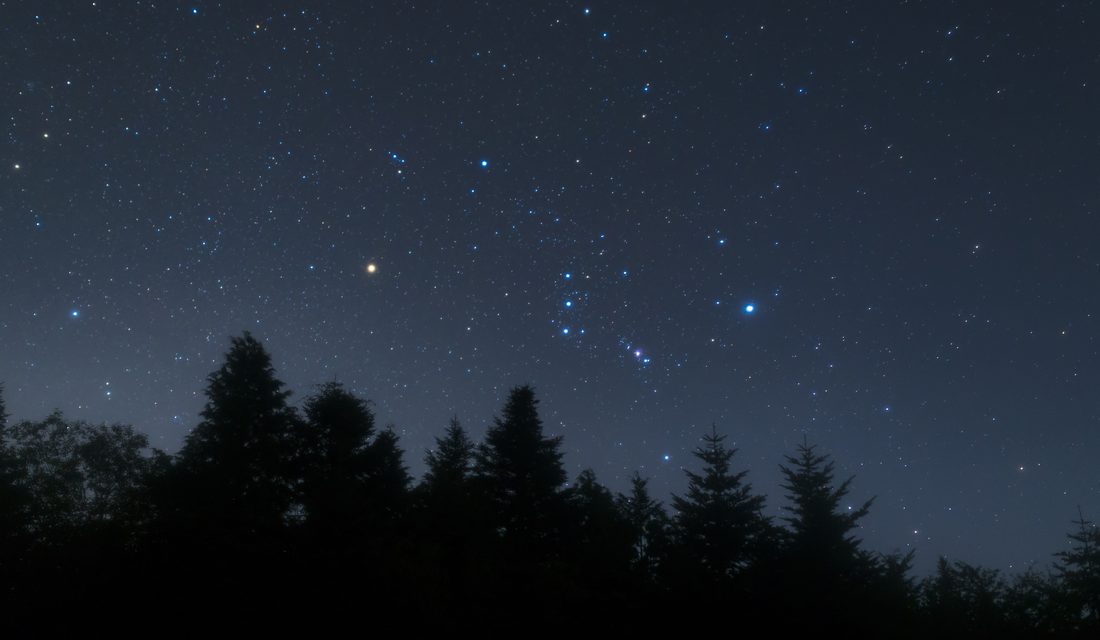
As the sun sets during winter nights in the northern hemisphere, Orion appears near the eastern horizon. In Greek mythology, Orion is regarded as a renowned hunter. A myth suggests he was cast into the sky for bragging about his hunting prowess. He continuously pursues Taurus the bull and the Pleiades sisters with his hunting dogs, a chase that never ends. Another myth tells of the goddess Artemis, who was deceived into killing Orion. She immortalized him in the stars.
If the sky is clear, try to spot the three stars forming Orion’s belt. One star, Betelgeuse, captures the interest of astrophysicist Sarafina El-Badry Nance. This red supergiant, located on Orion’s left shoulder, is nearing the end of its life cycle and is expected to go supernova.
The Birth of a Star
Stars originate within dust clouds found throughout galaxies. “They are regions of gas and dust that congeal due to gravity,” explains El-Badry Nance. As these areas accumulate more gas and dust, gravitational pressure causes them to condense into protostars, forming nascent stars. These protostars then commence the process of hydrogen fusion into helium in their cores. This fusion generates energy, preventing the star from collapsing.
“The energy is emitted as light, visible to us as starlight, or sunlight in the case of our sun,” says El-Badry Nance.
Stars spend most of their existence in a stable, middle-age phase. For example, our sun is middle-aged, with scientists estimating another five billion years of hydrogen burning ahead.
The End of a Star’s Journey
When a star exhausts its hydrogen supply, its core collapses, marking the beginning of its end. The star’s outer layers expand and cool, becoming massively bloated.
Betelgeuse is at such a stage, and according to El-Badry Nance, will conclude its life with a spectacular supernova. Though the exact timing remains uncertain, this event will be visible from Earth for an extended period.
El-Badry Nance reflects on the significance of stars’ life cycles, stating, “Everything changes. Nothing is static in the universe, despite the appearance due to our shorter lifespans. Turbulence and chaos often give rise to beauty.”
Explore the night sky further by contacting [email protected]. Tune into Short Wave on Spotify, Apple Podcasts, and Google Podcasts. Today’s episode is credited to Rachel Carlson, edited by Rebecca Ramirez, fact-checked by Brit Hanson, and engineered by Ko Takasugi-Czernowin.
 Ice Age Mastodon Tooth Unearthed in California Creek
  The Unique Challenges of the Pumpkin Toadlet
  Animal Self-Medication Insights
  Carlo Rovelli’s Perspective on Physics and Ultimate Reality
  Department of Defense Legal Waiver Promotes UAP Disclosure
  Ancient Ring Offers New Insight on Pontius Pilate’s Authority