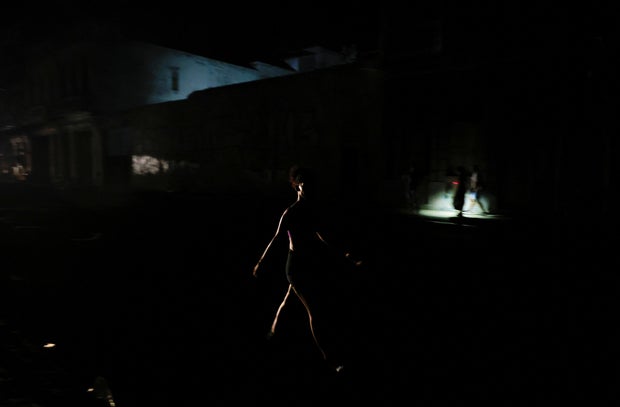
July 7, 2026. Cubans struggled with widespread power restoration on Tuesday after experiencing the year’s third nationwide power outage. The outage occurred amid an ongoing energy crisis driven by a U.S. fuel blockade.
Despite efforts, the communist island had difficulty maintaining power supplies. President Trump halted oil deliveries in January, further depleting Cuba’s dwindling fuel resources. Union Electrica (UNE), Cuba’s state electricity company, announced a complete power disconnection on Monday, affecting the entire island. UNE provided no explanation for the outage but confirmed that power had been restored to over 30 percent of the capital on Tuesday. This restoration included 43 medical centers and nine water distribution facilities.
This latest blackout marks the eighth since late 2024. Lazaro Guerra, director of electricity at the Ministry of Energy and Mines, mentioned on state television that fuel shortages hinder the restoration process. No timeline for repairs was offered.
Cuban President Miguel Diaz-Canel attributed this crisis to the U.S. sanctions policy. He accused the U.S. of trying to incite social unrest by limiting fuel access to Cuba. While the UNE works to recover the National Electric System, he praised the efforts of electrical workers amid what he termed a “genocidal energy blockade.”
Amid this backdrop, Cuba is enforcing stricter power cuts to preserve fuel. Parts of Havana face over 30-hour outages, while rural areas endure over 70-hour disruptions. Meyboll Font, a Havana resident, described living conditions as “agonizing,” with her neighborhood receiving only a few hours of power daily. A young software programmer shared similar frustrations, emphasizing work disruptions due to lack of electricity and WiFi.
For years, Cuba’s power system, reliant on aging Soviet-era plants, has faced challenges. The fuel blockade has worsened these issues, with only one Russian oil tanker permitted by Washington to dock since January. This blockade is part of a broader campaign against more than sixty years of communist rule in Cuba. President Trump sees the U.S. intervention in Venezuela as a model for potential changes in Cuba.
Cuba remains firm in its political stance, resisting any foreign intervention. The combined effect of U.S. sanctions and the blockade is pushing Cuba deeper into crisis. Shortages of food, water, and medicine are rising, and surgeries face delays. The United Nations has issued warnings about a humanitarian emergency. Transport has nearly come to a halt on the island.
In response, Cuba recently proposed significant economic reforms to reduce state control. However, the U.S. State Department dismissed these plans as insufficient, seeking more substantial reforms that would support investment and political freedom in Cuba.
Despite several rounds of negotiations, progress in resolving the stalemate remains elusive. Cuban Foreign Minister Bruno Rodriguez reported no significant advances in talks with the U.S. Meanwhile, Cuba accused the U.S. of blocking a United Nations debate on its sanctions.
 Ukraine Missile and Drone Barrage Hits Russia Amidst Elections
  A Mother’s Tragic Journey Under Abortion Ban
  U.S. Strategic Goals Remain Unmet Amid Prolonged Conflict
  New Photos Reveal Damage from Iranian Strikes in the Middle East
  Assassin of Chilean Diplomat Orlando Letelier Faces Deportation 50 Years After Assassination
  Gorillaz and Macklemore Respond to Controversy Over Israel-Palestine Statements